
Destination Guide · Chile · Updated 2025
The Complete Chile Travel Guide 2025:
Cities, Weather, Food, Hotels and Everything You Need
Introduction
Why Chile Is Unlike Any Country on Earth
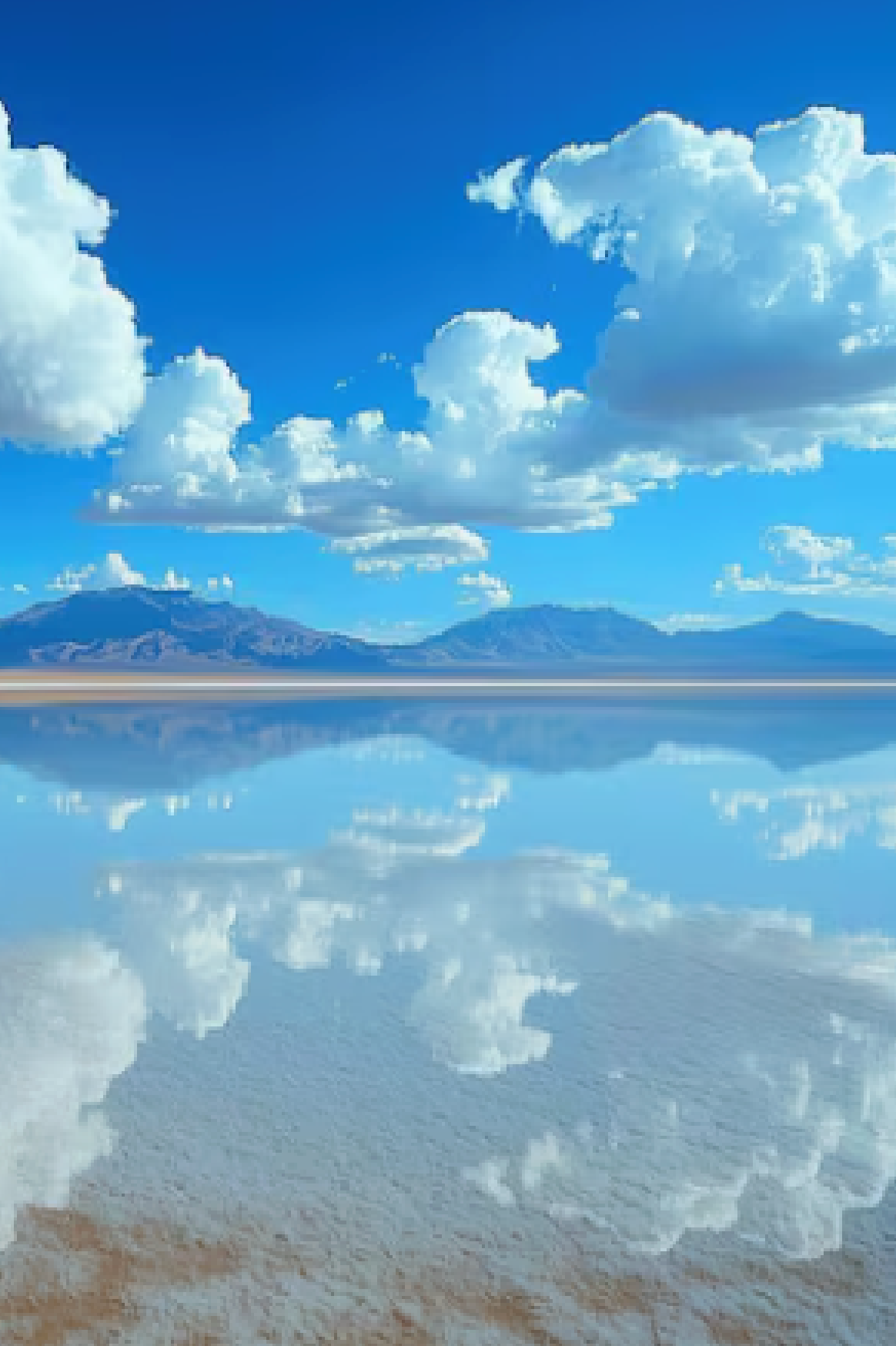
Pull out a map and look at Chile. Really look at it. A ribbon of land 4,300 kilometres long and never more than 350 kilometres wide, pressed between the Andes mountains and the Pacific Ocean. It contains the driest non-polar desert on earth in the north, the world’s most dramatic granite spires in the south, one of the most sophisticated wine regions in the Western Hemisphere in the centre, and a remote Pacific island with monolithic stone statues that remains one of the great mysteries of human civilisation. Chile is not one country. It is a dozen entirely different worlds stacked vertically on a map.
What makes Chile particularly remarkable among South American destinations is the quality of its infrastructure, the reliability of its institutions and the extraordinary diversity of its natural environments. Chile consistently ranks as the most stable and well-organised country in South America — which means you can focus your energy on experiencing its breathtaking landscapes rather than navigating logistical chaos. The roads work. The buses run on time. The restaurants have menus. The hotels have hot water. For travellers who want true Andean wilderness without the infrastructure anxiety of more remote destinations, Chile is the answer.
“Chile is the country that makes you reconsider your assumptions about what a landscape can look like. The Atacama will make you feel like you are on Mars. Patagonia will make you feel like you are at the end of the world. Easter Island will make you feel like you have stepped outside of history entirely.”
This guide covers everything you need to know before and during your visit — entry requirements, the cities that matter most, honest hotel prices, safety by neighbourhood, the festivals worth building your trip around, and the practical money and transport realities that most travel content glosses over. Chile rewards the prepared traveller generously. Let us make sure you are prepared.
Find Your Flight
Fly to Chile — Compare Every Airline
Santiago is one of the best-connected cities in South America, with direct flights from Miami, New York, Los Angeles, Madrid and Toronto. Compare 1,200+ airlines on Skyscanner — zero fees, real-time prices.
Entry Requirements and Chilean Immigration
Chile is one of the most straightforward countries in South America to enter for international travellers. Its immigration procedures are efficient, its border controls are well organised and the requirements for most Western passport holders are minimal.
Passport and Visa Requirements
Citizens of the United States, Canada, United Kingdom, European Union, Australia and New Zealand do not require a visa to visit Chile as tourists. You receive a stamp on arrival permitting a stay of up to 90 days. Your passport must be valid for the duration of your intended stay — Chile does not apply the standard six-month validity rule strictly, though it is advisable to have at least three months of validity beyond your planned departure date.
Most Latin American nationals can enter Chile with a national identity card rather than a passport, making it one of the most accessible destinations within the region. Citizens of most Asian and African countries require advance visas — always verify your specific requirements at the Chilean consulate website before booking.
The 90-Day Stay and Extension
The standard tourist entry is 90 days. Unlike Bolivia, Chile’s 90 days resets with each entry rather than being an annual total — meaning you can theoretically exit and re-enter after a brief stay in a neighbouring country and receive a fresh 90-day stamp, though immigration officers exercise discretion and repeated border runs may draw scrutiny. For a formal extension beyond 90 days, applications must be submitted to the Departamento de Extranjería y Migración in Santiago or regional offices before your stamp expires. Extensions are granted for an additional 90 days and cost approximately $100 USD.
The Tourism Fee — Reciprocity Charges
Chile previously charged a reciprocity fee to citizens of countries that charged Chilean nationals for visas — most notably the United States (which was charged $160 USD), Canada ($132 USD) and Australia ($117 USD). These fees have been suspended since the COVID-19 pandemic and had not been reinstated as of early 2025 — but this policy can change. Verify the current status at the official Chilean immigration website before travel if you hold one of these passports.
The Tarjeta de Turismo
On arrival by air, you will be given a Tarjeta de Turismo (tourist card) to complete. Keep the copy you receive back — you will need to surrender it on departure. Losing it requires a replacement from the PDI (Policía de Investigaciones) at the airport, which takes time. Photograph it immediately after receipt as a backup.
Other Entry Requirements
- Agricultural Declaration Form: Chile enforces strict biosecurity controls and requires all travellers to declare any food, plant material, soil or animal products. Declaration is taken seriously — penalties for undeclared items can be substantial. Do not bring fresh fruit, vegetables, meat or dairy products across the border.
- Return or Onward Ticket: Immigration may ask for evidence of departure. Have your return booking accessible.
- Travel Insurance: Not legally required but strongly recommended, particularly for trekking in Patagonia and the Atacama where emergency evacuation costs are very high.
| Nationality | Visa Required? | Max Stay | Tourism Fee? | Notes |
|---|---|---|---|---|
| USA / Canada | No | 90 days | Suspended (verify) | Reciprocity fee history — check current status |
| UK / EU | No | 90 days | No | Straightforward entry |
| Australia / NZ | No | 90 days | Suspended (verify) | Verify reciprocity fee before travel |
| Colombia / Peru / Bolivia | No | 90 days | No | National ID card accepted |
| China / India | Yes | Varies | Varies | Apply at Chilean consulate in advance |
Biosecurity at Chilean borders: Chile’s agricultural inspection is among the strictest in South America. X-ray machines scan all luggage and dogs patrol arrival halls. Undeclared food items result in fines of up to $200 USD. Declare everything and discard prohibited items before reaching immigration — there are bins provided specifically for this purpose.
The Most Important Cities in Chile
Chile’s extreme geography means its cities are as varied as its landscapes. From the sophisticated metropolitan energy of Santiago to the bohemian port art of Valparaíso, the colonial elegance of the lake district towns and the frontier grit of Punta Arenas at the bottom of the world — each city exists in its own distinct world.
Santiago — The Andean Metropolis
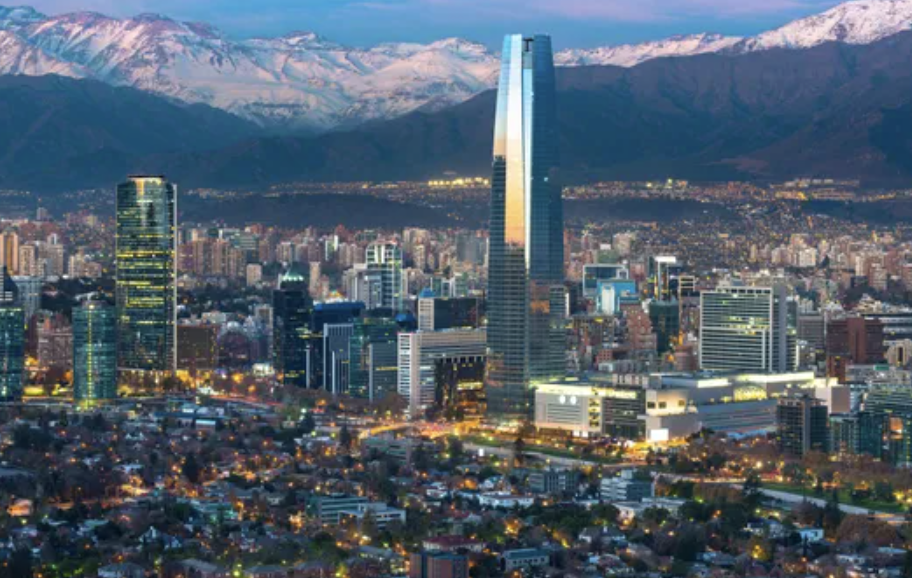
Chile’s capital is a city of serious ambitions and genuine achievements — a modern, sophisticated South American metropolis of 7 million people, sitting in the Central Valley at 520 metres above sea level with the snow-capped Andes rising dramatically to the east on clear days. Santiago has world-class restaurants (particularly in the neighbourhoods of Vitacura, Las Condes and Lastarria), an excellent metro system, outstanding wine bars, first-rate museums and a cultural scene that punches well above its regional weight. The Barrio Italia and Barrio Lastarria neighbourhoods are the city’s creative and gastronomic hearts — full of independent cafes, bookshops, restaurants and galleries. The Mercado Central downtown is a magnificent Victorian iron-and-glass structure housing some of the finest seafood restaurants in the city. Give Santiago at least three full days — travellers who dismiss it as merely a transit city are consistently surprised by how much they enjoy it.
Valparaíso — The City That Climbs
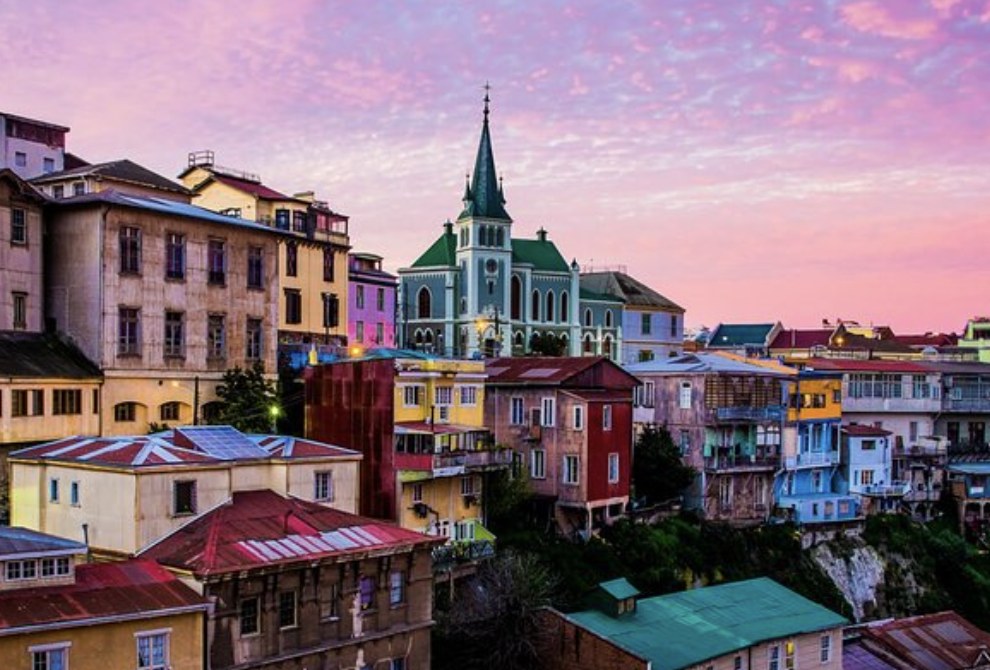
An hour and a half from Santiago on the Pacific coast, Valparaíso is one of the most visually extraordinary cities in South America — a UNESCO World Heritage Site built on 42 hills (cerros) cascading down to a working port, covered in a centuries-old accumulation of street art, coloured tin houses, funicular elevators (ascensores) and the kind of lived-in, creative chaos that inspires poets and painters. Pablo Neruda had one of his houses here (La Sebastiana, now a museum). The city is rough around some edges and genuinely poor in parts, but its energy and visual character are completely unique. The nearby beach town of Viña del Mar is where Chileans go to the beach and offers a completely different, more polished coastal experience just 10 minutes away.
San Pedro de Atacama — Gateway to the Driest Place on Earth
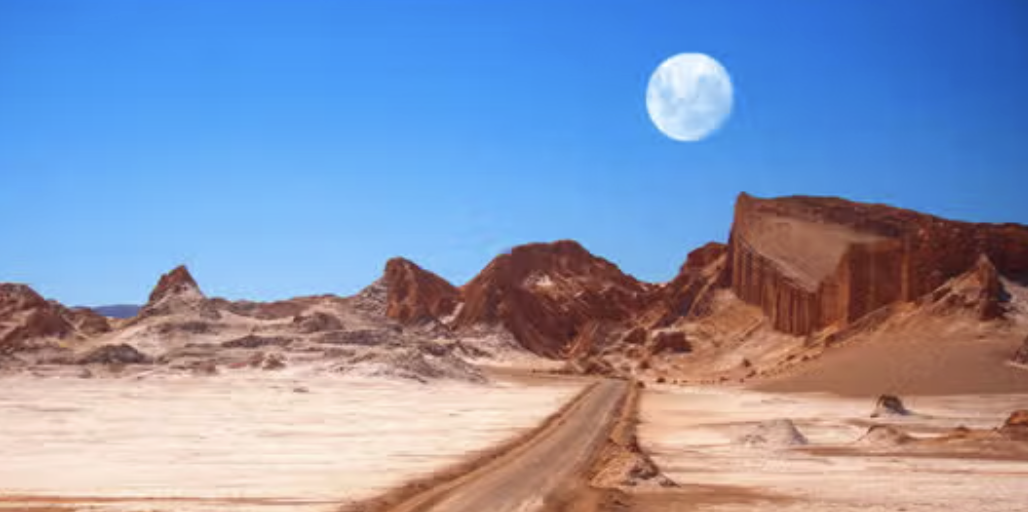
San Pedro is a small desert town of adobe buildings that serves as the base for exploring the Atacama Desert — the driest non-polar desert on earth and one of the most otherworldly landscapes imaginable. The surrounding altiplano contains the Valle de la Luna (Valley of the Moon), the El Tatio geysers at 4,320 metres (spectacular at dawn when the steam columns rise in the sub-zero air), the Salar de Atacama salt flat, high-altitude lagoons with flamingo colonies, and stargazing that is considered among the finest on the planet due to the extraordinary clarity of the atmosphere at altitude. San Pedro itself is small, tourist-oriented and relatively expensive by Chilean standards — but its position as the gateway to one of the world’s great natural environments makes it essential.
Puerto Natales and Torres del Paine — The End of the World
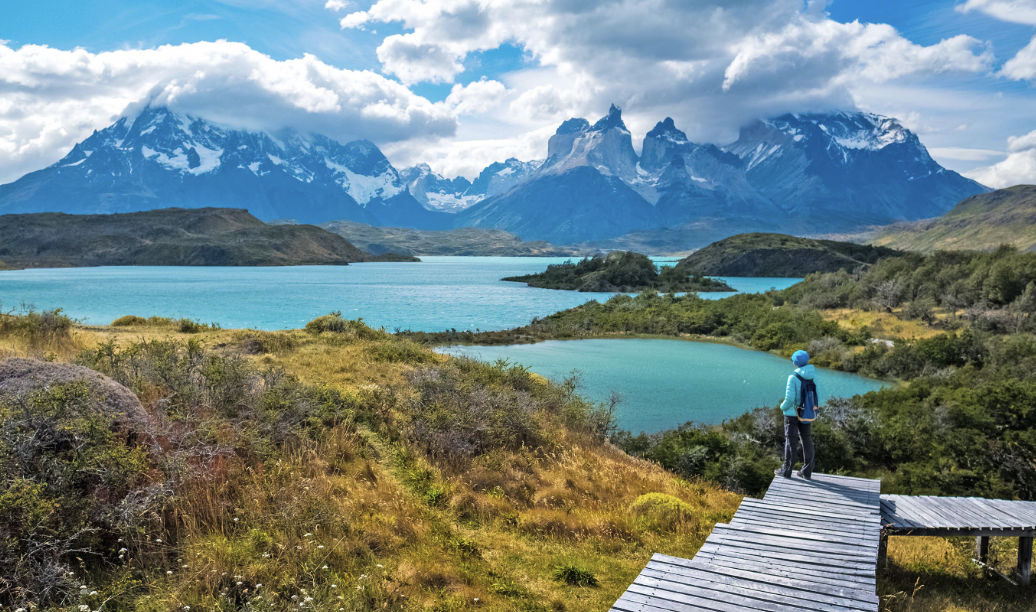
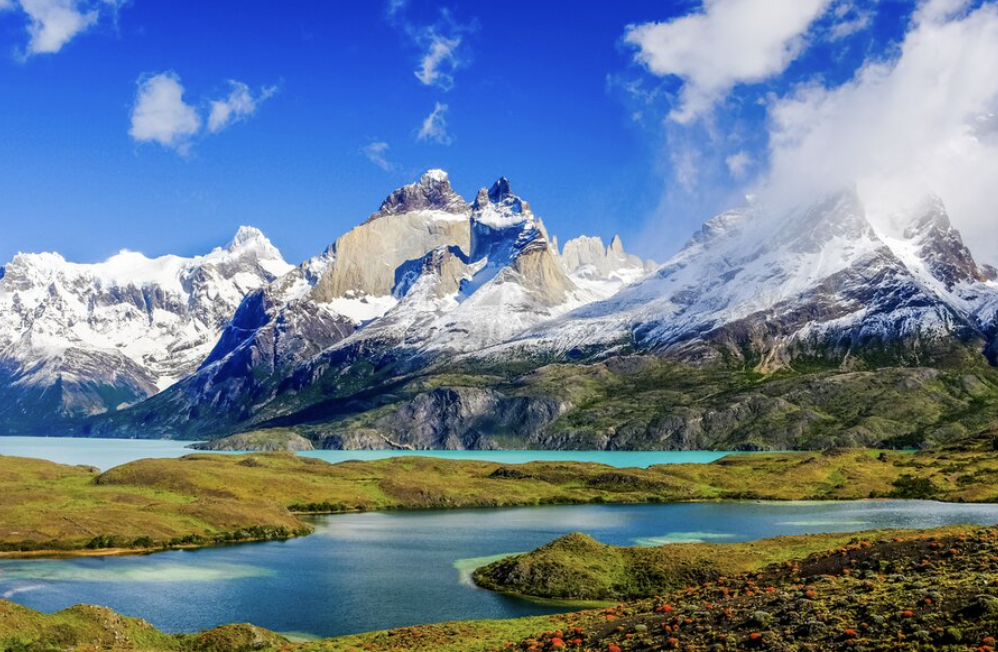
Puerto Natales is the gateway town for Torres del Paine National Park — universally considered one of the most spectacular national parks on earth. The park’s iconic granite towers (torres) rising from the Patagonian steppe, the electric blue icebergs of Grey Glacier, the vivid turquoise of Lake Pehoé and the sheer visual assault of the landscape make Torres del Paine a once-in-a-lifetime trekking destination. The famous W Trek (4–5 days) and the full Circuit (8–10 days) are the standard routes, with refugio and camping accommodation along the trail. Book well in advance — peak season (November–March) sees the park reach capacity and accommodation sells out months ahead.
Puerto Montt and the Lake District — Volcanoes, Lakes and German Heritage
The Chilean Lake District — centred around the cities of Temuco, Villarrica, Pucón and Puerto Montt — is a region of extraordinary natural beauty: perfectly conical snow-capped volcanoes rising from deep blue lakes, dense temperate rainforest and a distinctive cultural heritage shaped by German and Swiss immigration in the 19th century. Pucón is the adventure capital of the region — white water rafting, volcano climbing (Villarrica volcano is one of the most active in South America), mountain biking and thermal hot springs are all within easy reach. Puerto Varas is the most beautifully situated town in the district, sitting on the shore of Lago Llanquihue with direct views of Volcan Osorno.
Easter Island (Rapa Nui) — The World’s Most Remote Inhabited Island
Easter Island sits in the South Pacific, 3,700 kilometres from mainland Chile — making it one of the most remote inhabited places on earth. It is technically Chilean territory and is reached by LATAM flights from Santiago (approximately 5 hours). The island’s 1,000 moai — the massive stone statues erected by the Rapa Nui civilisation between the 13th and 16th centuries — are among the most iconic and mysterious human-made structures in the world. The island itself is small (only 25km long), the population is around 8,000, and the landscape of volcanic craters, rocky coastline and rolling grassland studded with ancient statues creates an atmosphere unlike anywhere else on earth.
| City / Region | Altitude | Vibe | Best For | When to Go |
|---|---|---|---|---|
| Santiago | 520 m | Cosmopolitan | Food, wine, culture, day trips | Sept–Nov, Mar–May |
| Valparaíso | Sea level | Bohemian / Gritty | Street art, culture, Pacific coast | Year-round |
| San Pedro de Atacama | 2,407 m | Desert / Remote | Atacama Desert, geysers, stargazing | Apr–Nov |
| Torres del Paine | Sea level–2,600 m | Wild / Epic | Trekking, glaciers, wildlife | Nov–Mar |
| Pucón / Lake District | 227 m | Adventure / Scenic | Volcanoes, lakes, hot springs | Dec–Mar, Jun–Aug (ski) |
| Easter Island | Sea level | Unique / Remote | Moai, Rapa Nui culture, Pacific | Year-round |
Main Airports and Transit Hubs
Chile has one dominant international hub and a well-developed domestic network that makes moving around this extremely long country straightforward. Flying is almost always preferable to overland travel for distances over 500 kilometres.
Arturo Merino Benitez Airport, Santiago (SCL)
Santiago’s international airport is Chile’s primary hub and one of the busiest in South America, handling over 22 million passengers annually. Direct international routes connect Santiago with Miami (8.5h), New York JFK (10h), Los Angeles (10h), Toronto (11h), Madrid (13h), London (15h), Frankfurt (14h), Sydney (14h via Auckland) and throughout South America. The airport was expanded significantly in recent years and operates efficiently. The airport sits approximately 26 kilometres west of the city centre — allow 45–60 minutes in normal traffic, up to 90 minutes during peak hours. The Centropuerto and Turbus airport bus services offer comfortable, affordable connections to the city for under $5 USD.
Key Domestic Airports
- Calama (CJC): The nearest airport to San Pedro de Atacama, about 100km away. Daily connections from Santiago (2h). Transfer from Calama to San Pedro takes approximately 90 minutes by shared shuttle or taxi.
- Punta Arenas (PUQ): The main airport for Chilean Patagonia, gateway to Torres del Paine. Daily flights from Santiago (3.5h). Puerto Natales, the park gateway town, is 3 hours by bus from Punta Arenas.
- Puerto Montt (PMC): Gateway to the Lake District. Multiple daily flights from Santiago (1.5h).
- Hanga Roa, Easter Island (IPC): The only airport on Easter Island. LATAM operates daily (sometimes twice daily) flights from Santiago (5h). No other airline serves this route.
- Iquique (IQQ) and Antofagasta (ANF): Northern Chile desert region airports, useful for accessing the Atacama from northern entry points.
Torres del Paine logistics: The park does not have its own airport. Most travellers fly Santiago to Punta Arenas, spend a night, then take a 3-hour bus to Puerto Natales, then a further 1.5 hours to the park entrance. Budget a full travel day from Santiago to the park entrance. Book park accommodation (refugios) months in advance for peak season — EcoCamp, Refugio Grey and the Las Torres Hotel sell out entirely by August for the following December–March season.
Guided Experiences
Book Your Chile Tours Before They Sell Out
Torres del Paine guided treks, Atacama Desert night sky tours, Easter Island moai walking tours and Santiago wine valley day trips — all with vetted operators through Viator.
Weather and Best Time to Visit by Region
Chile’s 4,300-kilometre length means it spans multiple climate zones simultaneously — from the hyperarid Atacama in the north to the sub-Antarctic conditions of Tierra del Fuego in the south. The best time to visit depends entirely on which part of the country you plan to explore.
Northern Chile — Atacama Desert
The Atacama is essentially rainless year-round — annual precipitation in some areas is measured in millimetres. April through November is the most comfortable visiting period, with mild days (18–24°C) and cold but manageable nights. December through March can bring the invierno boliviano (Bolivian winter) — afternoon thunderstorms that originate from the Bolivian highlands and can close high-altitude roads and flood the Valle de la Luna temporarily. The Atacama is worth visiting year-round, but the April–November window offers the most reliable conditions.
Central Chile — Santiago, Wine Regions, Valparaíso
Central Chile enjoys a classic Mediterranean climate — warm, dry summers (December–March, 28–35°C) and mild, rainy winters (June–August, 8–15°C). September through November (spring) and March through May (autumn) are arguably the best times to visit Santiago and the wine regions — comfortable temperatures, lower tourist numbers than summer and beautiful seasonal colours. Summer (December–March) is peak domestic holiday season when beaches and the wine valleys are packed and accommodation prices peak.
The Lake District
The Lake District receives significant rainfall year-round due to its temperate rainforest environment. December through March offers the warmest, driest conditions for hiking and outdoor activities. June through August is ski season — Pucón’s Villarrica ski resort and the larger Portillo resort near Santiago attract skiers from across South America. Autumn (April–May) provides stunning golden foliage in the beech forests around the lakes.
Patagonia — Torres del Paine
Patagonia’s weather is legendarily unpredictable — four seasons in one day is not a cliché but a daily reality. The trekking season runs November through March, with the most stable weather typically in December and January. Winds in Patagonia are extraordinary — gusts of 100km/h are not unusual in the park, and even summer days can see rapid changes from sunshine to blizzard. November and March are shoulder season — fewer visitors, lower prices, good weather and the park’s landscapes at their most dramatic. Winter (May–September) sees most park facilities close and many trails become impassable.
| Region | Best Season | Months | Temperature | Key Notes |
|---|---|---|---|---|
| Atacama Desert | Dry Season | Apr – Nov | 5°C – 24°C | Avoid Dec–Mar (Bolivian winter storms) |
| Santiago / Central | Spring / Autumn | Sep–Nov, Mar–May | 14°C – 28°C | Summer = peak prices and crowds |
| Valparaíso | Any time | Year-round | 10°C – 22°C | Summer most lively; winter rainy but atmospheric |
| Lake District | Summer / Ski | Dec–Mar, Jun–Aug | 8°C – 24°C | Summer for hiking; winter for skiing |
| Torres del Paine | Trekking Season | Nov – Mar | 2°C – 18°C | Book refugios months ahead; wind is constant |
| Easter Island | Any time | Year-round | 16°C – 28°C | Jan–Mar warmest; Apr–Jun fewer crowds |
Chilean Food: Honest, Coastal and Deeply Satisfying
Chilean cuisine does not have the international celebrity of Peruvian or the emotional warmth of Colombian food. It is not a cuisine that tries to impress you. It is a cuisine that feeds you well, leans heavily on the extraordinary bounty of the world’s longest coastline, and possesses a quiet, confident distinctiveness that rewards the traveller who explores beyond the tourist menu. The seafood in Chile is among the finest in the world — the cold Humboldt Current that runs along the Pacific coast produces some of the most flavourful fish, shellfish and molluscs available anywhere.
Dishes You Must Try
- Pastel de Choclo: Chile’s most iconic baked dish — a casserole of ground beef, chicken, olives, boiled eggs and onions, topped with a thick layer of creamed corn and baked until golden. Comforting, generous and deeply Chilean. Available in virtually every traditional restaurant in the country.
- Cazuela: A clear, nourishing broth with a large piece of bone-in beef or chicken, potato, corn on the cob, pumpkin and rice or noodles. The quintessential Chilean home-cooked meal — the kind of thing that tastes like someone’s grandmother made it, because in most cases, someone’s grandmother did.
- Empanadas de Pino: Chile’s definitive baked empanada — a large, crescent-shaped pastry filled with ground beef (pino), olives, boiled egg and raisins, flavoured with cumin and paprika. Eaten at celebrations, asados and every Chilean national holiday. The version from the Peumo and Colchagua valleys is particularly renowned.
- Locos al Matico: Chilean abalone — one of the rarest and most prized molluscs in the world — typically served simply boiled with mayonnaise or in a light tomato sauce. Available in traditional seafood restaurants along the coast and in Santiago’s Mercado Central.
- Completo: Chile’s answer to the hot dog — a frankfurter in a soft bun loaded with avocado, mayonnaise, tomatoes and sometimes sauerkraut. Apparently simple, completely addictive, available everywhere and eaten at all hours. The Completo Italiano (avocado, tomato, mayonnaise — the colours of the Italian flag) is the classic version.
- Chilean Wine: Not a dish, but absolutely essential. Chile produces world-class wines — particularly Carménère (a grape variety thought extinct in France until rediscovered in Chile), Cabernet Sauvignon and Sauvignon Blanc from the Colchagua, Maipo and Casablanca valleys. A quality Chilean wine in a Chilean restaurant costs a fraction of what the same quality bottle would cost elsewhere in the world.
Regional Specialties
In the north near the Atacama, you encounter influences from Bolivia and Peru — llama meat, quinoa, and the herbal tea made from desert plants that locals use for altitude adjustment. In the Lake District, the significant German immigrant heritage manifests in exceptional smoked meats, artisan cheeses, kuchen (German fruit tart, now considered a Chilean classic) and excellent craft beers. In Chiloé Island, south of Puerto Montt, the famous curanto — a feast of shellfish, meats and potato pancakes slow-cooked in a pit of hot stones — is one of the most ancient and spectacular food traditions in South America.
Wine region day trips: The Casablanca Valley (45 min from Santiago, ideal for whites and Pinot Noir) and the Colchagua Valley (2.5h south, ideal for reds) both offer outstanding winery visits with tastings. Many wineries require advance reservations. GetYourGuide and Viator offer organised wine tour day trips from Santiago that include transport and tastings — a worthwhile investment.
Find Your Perfect Stay
Hotels in Santiago, Atacama and Patagonia — Best Prices
From design hotels in Santiago’s Lastarria to desert lodges in San Pedro and Patagonia eco-camps. Compare hundreds of Chile properties on Booking.com with no hidden fees.
Currency, Exchange Rates and Money Tips
Chile’s currency is the Peso Chileno (CLP). As of mid-2025, the approximate exchange rate is 1 USD = 920–960 CLP. Chile is the most expensive country in South America for travellers — prices in Santiago, San Pedro de Atacama and Torres del Paine are significantly higher than in Bolivia or Peru, and in some categories (luxury hotels, adventure tours, Easter Island) approach European pricing. That said, local food, public transport and everyday services remain genuinely affordable.
Accessing Money in Chile
ATMs (redbanc machines) are widely available throughout Chile, including in smaller towns. They dispense Chilean Pesos directly from foreign cards. Daily withdrawal limits are typically around 200,000–300,000 CLP per transaction. In San Pedro de Atacama, ATMs exist but run out of cash frequently during peak season — withdraw sufficient pesos in Calama or Santiago before heading into the desert. Exchange houses in Santiago (particularly in the Agustinas street area downtown) offer competitive rates for USD and EUR. Credit cards are widely accepted throughout Chile — more so than in Bolivia or Peru.
| Currency | Approx. Rate (2025) | Notes |
|---|---|---|
| 1 USD | 940 CLP | Chile is South America’s priciest destination |
| 1 EUR | 1,025 CLP | Good value relative to European prices |
| 1 GBP | 1,190 CLP | Strong buying power for British visitors |
| 1 CAD | 690 CLP | Reasonable value for Canadian travellers |
Tipping Culture in Chile
Restaurant bills in Chile do not automatically include a service charge. The customary tip is 10% in restaurants — it is not compulsory but is expected in sit-down establishments and warmly appreciated. For tour guides, tip approximately $10–20 USD per person per day depending on the quality of the experience. For trekking guides in Patagonia, $15–25 USD per day is appropriate given the technical demands of the work. Taxi drivers do not expect tips but rounding up is a kind gesture.
Safety: Safest, Wildest and Quietest Destinations
Chile is consistently ranked as the safest country in South America for travellers — a distinction it has held for many years and which reflects genuine institutional stability, reliable emergency services and relatively low rates of violent crime targeting tourists. That said, Chile is not without its risks and has seen increased petty crime in some tourist areas in recent years.
| City / Region | Safety Level | Main Risks | Safe Areas | Take Care |
|---|---|---|---|---|
| Santiago | Generally Safe | Pickpocketing, phone theft in crowded areas | Vitacura, Las Condes, Providencia | La Pintana, parts of Santiago Centro at night |
| Valparaíso | Moderate | Theft on cerros at night, bag snatching | Cerro Alegre, Cerro Concepción (day) | Avoid cerros alone after dark |
| San Pedro de Atacama | Safer | Tourist overcharging, sunburn, altitude | Town centre, all main sites | High-altitude sites — acclimatise first |
| Torres del Paine | Safer | Weather, physical injury, hypothermia | All designated trails | Weather changes rapidly — always carry layers |
| Lake District | Safer | Volcanic activity, road conditions in winter | Pucón, Puerto Varas, Frutillar | Check Villarrica volcano alert levels before climbing |
| Easter Island | Very Safe | Sunburn, strong ocean currents, remote location | All of the island | Swimming — some beaches have dangerous currents |
Key Safety Considerations for Chile
- Santiago phone theft: As in all major Latin American cities, walking while using your phone in crowded areas makes you a target. Be particularly careful in the historic downtown, on public transport and in tourist-heavy areas like Plaza de Armas and the Mercado Central.
- Valparaíso at night: The cerros (hills) that make Valparaíso so beautiful can be dangerous after dark, particularly away from the tourist-focused Cerro Alegre and Cerro Concepción. Take taxis between hilltops at night rather than walking.
- Patagonia weather preparedness: The most significant risk in Torres del Paine is not crime but nature. Hypothermia, falls and becoming lost in fog are realistic risks. Always register your trek with park rangers, carry appropriate gear and never underestimate how quickly Patagonian weather can turn from benign to dangerous.
- Atacama altitude and sun: San Pedro de Atacama sits at 2,407 metres and the surrounding sites reach 4,000–5,000 metres. UV radiation is extreme at altitude. Sunscreen, sunglasses, a hat and acclimatisation before visiting high-altitude sites are essential.
Best Hotels by Region — With Real Prices
Chile’s accommodation market reflects the country’s position as South America’s most expensive destination. That said, quality across all price points is generally high — Chile’s hospitality infrastructure is more reliable than most of its neighbours, and even budget options tend to be clean and well managed.
Santiago — Best Hotels
| Hotel | District | Category | Price/Night (USD) | Highlights |
|---|---|---|---|---|
| The Singular Santiago | Lastarria | 5-Star Boutique | $280–450 | Converted industrial building, rooftop pool, exceptional design |
| W Santiago | Las Condes | 5-Star Luxury | $250–420 | Andes views, rooftop bar, bold contemporary design |
| Hotel Magnolia | Paris-Londres | 4-Star Boutique | $120–200 | Historic building, elegant interiors, exceptional central location |
San Pedro de Atacama — Best Hotels
| Hotel | Location | Category | Price/Night (USD) | Highlights |
|---|---|---|---|---|
| Explora Atacama | San Pedro | 5-Star Luxury Lodge | $800–1,400 | All-inclusive, private excursions, legendary Atacama experience |
| Alto Atacama Desert Lodge | Puritama Valley | 5-Star Boutique | $450–750 | Adobe architecture, natural hot springs on site, stunning setting |
| Hotel Altiplanico San Pedro | San Pedro | 4-Star Boutique | $180–300 | Desert architecture, pool, excellent value for Atacama region |
Torres del Paine / Puerto Natales — Best Hotels
| Hotel | Location | Category | Price/Night (USD) | Highlights |
|---|---|---|---|---|
| EcoCamp Patagonia | Inside the Park | 5-Star Eco-Lodge | $350–600 | Geodesic domes inside Torres del Paine, fully guided experience |
| Las Torres Patagonia | Park Entrance | 5-Star Luxury | $400–700 | At the base of the towers, full trekking support, outstanding food |
| Hotel Indigo Patagonia | Puerto Natales | 4-Star Design | $200–350 | Stunning architecture, views of Last Hope Sound, excellent base |
Torres del Paine booking: The park’s internal accommodation — refugios, glamping tents and the luxury lodges — must be booked through Vertice Patagonia and Fantastico Sur systems, which open bookings for the following season in July–August each year. If you plan to trek during December–February, you need to book in August. Waiting until October or November means most accommodation is gone.
Cost of Travel and Budget by Region
Chile is the most expensive country covered in this series — significantly more costly than Bolivia and Peru, and somewhat pricier than Colombia. The gap is particularly pronounced in the Atacama and Patagonia, where remote locations and high demand create premium pricing across all accommodation and activity categories.
| Region | Budget/Day (USD) | Mid-Range/Day (USD) | Luxury/Day (USD) | Most Expensive Item |
|---|---|---|---|---|
| Santiago | $50–80 | $130–220 | $350–600+ | Luxury hotels, fine dining |
| Valparaíso | $40–65 | $100–180 | $250–400 | Boutique cerro hotels |
| San Pedro / Atacama | $70–110 | $180–320 | $500–1,400 | Explora-style all-inclusive lodges |
| Torres del Paine | $80–130 | $200–400 | $500–900 | Luxury park lodges, guided treks |
| Lake District | $45–75 | $120–220 | $300–500 | Lakeside luxury lodges |
| Easter Island | $100–160 | $220–380 | $450–800 | Flights from Santiago, all accommodation |
Top Festivals and Celebrations in Chile
Chile’s festivals reflect its diverse geography and the distinct cultural identities of its regions. From the northern desert’s Andean traditions to the central valley’s harvest celebrations to the island cultures of Easter Island and Chiloé, the country’s festive calendar contains experiences that are genuinely unlike anything found elsewhere in South America.
Fiestas Patrias — Chilean Independence Days · Nationwide · September 17–19
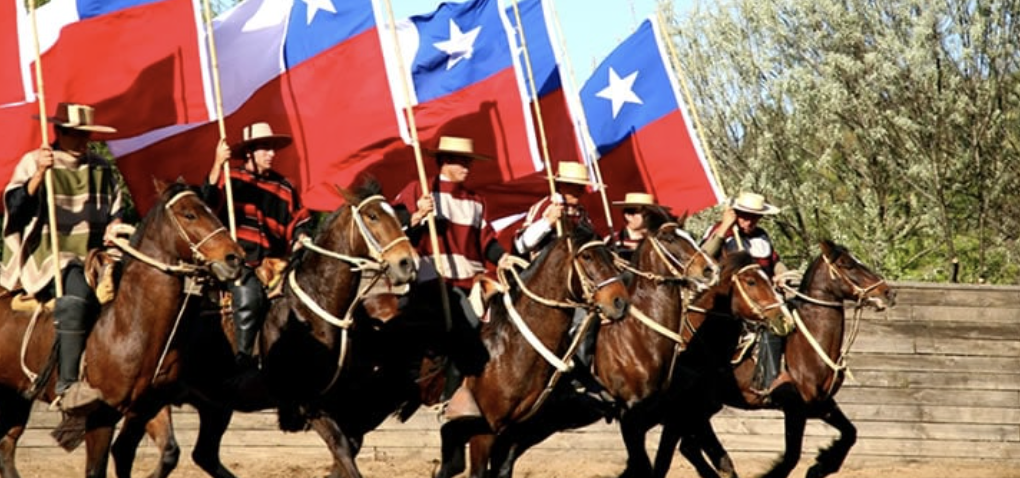
Fiestas Patrias — the celebration of Chilean independence — is without question the most important and beloved festival in the country’s calendar. For at least a week centred around September 18 (Independence Day) and September 19 (Army Day), the entire country transforms. Fondas and ramadas (temporary festive enclosures) spring up in parks and public spaces everywhere, filling with the smell of choripán (chorizo sandwich) on the grill, the sound of cueca (Chile’s national dance — a courtship dance involving handkerchiefs and theatrical footwork), rivers of chicha (fermented grape or apple cider) and pisco sour, and the sight of Chileans in traditional huaso (cowboy) costume dancing with infectious enthusiasm. Fiestas Patrias is the one time of year when Chilean reserve completely dissolves. Being in Chile for September 18 is one of the finest experiences the country offers.
Tapati Rapa Nui — Easter Island Cultural Festival · February (Two Weeks)
Easter Island’s most important cultural celebration takes place over two weeks in February and represents the most spectacular and authentic expression of Rapa Nui indigenous culture available to visitors. The festival centres on a competition between two communities led by candidate queens, with points awarded for traditional skills — wood carving, painting, weaving, body decoration, traditional canoe racing, a descent of a volcanic crater slope on banana stalks (haka pei), and performance of traditional music and dance. The culminating event is the coronation of the Queen of Tapati. The festival completely transforms the atmosphere of Easter Island, and the performances of traditional Rapa Nui song and dance in costume are deeply moving and rare experiences that connect visitors directly to a living culture of extraordinary antiquity.
Festival de Viña del Mar — International Song Festival · February
The Festival Internacional de la Canción de Viña del Mar is one of the most watched and celebrated music events in Latin America, held annually in late February in the Quinta Vergara amphitheatre in Viña del Mar. Broadcast live across the continent and watched by an estimated audience of over 500 million viewers across Latin American television, the festival combines an international song competition with performances by major Latin American and international artists. The audience — the monstruo (monster) as it is affectionately known — is famous for its passionate, vocal and sometimes ruthless responses to performers. Attending the festival in person requires advance ticket purchase and represents one of the great shared cultural events of the Chilean year.
La Tirana — Desert Festival of the Virgin · La Tirana, Tarapacá · July 16
Deep in the Atacama Desert, the tiny village of La Tirana (population around 500) transforms for three days around July 16 into one of the most extraordinary religious and cultural events in the Americas. The Festival de La Tirana draws over 200,000 pilgrims and performers to venerate the Virgen del Carmen, Chile’s patron saint — filling the desert with over 200 dance groups performing diabladas, tobas, morenadas and other Andean dances in elaborate costumes that reflect both the indigenous Andean traditions of the north and the Catholic colonial overlay. The contrast between the silent, vast desert landscape and the explosive colour and sound of 200,000 people dancing in it is an image that stays with you permanently.
Vendimia — Wine Harvest Festival · Colchagua Valley · March
Chile’s wine regions celebrate the annual grape harvest throughout March with vendimia festivals that welcome visitors into the vineyards for harvest participation, traditional pisadas (grape stomping), asados, live music and extended wine tastings. The Colchagua Valley Vendimia in Santa Cruz is the largest and most elaborate, but smaller celebrations in the Maipo, Casablanca and Elqui valleys are equally charming and often more intimate. For wine lovers, March in the Chilean wine regions is close to paradise.
| Festival | Location | Dates | Why Go |
|---|---|---|---|
| Fiestas Patrias | Nationwide | September 17–19 | Chile’s greatest celebration, cueca, fondas, chicha, huaso culture |
| Tapati Rapa Nui | Easter Island | February (2 weeks) | Living Rapa Nui culture, competitions, traditional performance |
| Festival de Viña del Mar | Viña del Mar | Late February | Latin America’s biggest song festival, 500m TV viewers |
| La Tirana | Atacama Desert | July 12–16 | 200,000 pilgrims, 200 dance groups, extraordinary desert setting |
| Vendimia | Wine Valleys | March | Grape harvest, stomping, asados, wine tastings in the vineyards |
| Carnaval con la Fuerza del Sol | Arica, Atacama | January | Northern Andean carnival, Bolivia and Peru influenced, vivid costumes |
Essential Traveller Tips for Chile
Chile Is Long — Plan Your Transport Accordingly
Chile’s extraordinary length means that trying to travel the entire country overland is a journey measured in days, not hours. Santiago to Punta Arenas by road is over 3,000 kilometres — a journey that takes multiple days even on the fastest routes. Flying is not a luxury in Chile; it is a practical necessity for anyone planning to visit both the north (Atacama) and the south (Patagonia) in the same trip. LATAM Chile and Sky Airline operate an extensive domestic network with multiple daily flights between Santiago and all major destinations. Book domestic flights at least 3–4 weeks ahead during peak season (January–February, July) for the best prices.
Patagonia Packing Is Non-Negotiable
Torres del Paine’s weather is genuinely capable of all four seasons in a single day — warm sunshine followed by horizontal sleet followed by gale-force wind followed by calm blue skies. The essential kit is: a quality waterproof jacket (not water resistant — waterproof), thermal base layers, trekking poles, gaiters, waterproof trekking boots and a warm hat and gloves regardless of the season. Rental gear is available in Puerto Natales but quality varies — bringing your own is always preferable. The wind in Patagonia is a physical force. On exposed sections of the W Trek, gusts can knock you off your feet. This is not hyperbole.
Book Everything for Peak Season Early
Chile’s most popular destinations — Torres del Paine, San Pedro de Atacama, Easter Island and Santiago during Fiestas Patrias — reach capacity during peak periods. The Atacama lodges sell out in January and February. Torres del Paine refugios sell out for December through February by September of the preceding year. Easter Island’s small number of hotels fill completely during Tapati in February. If you are travelling in December, January or February, booking 4–6 months ahead is not excessive — it is necessary.
The Carretera Austral — Chile’s Greatest Road Trip
The Carretera Austral (Route 7) is one of the great road journeys in the world — a 1,240-kilometre gravel and paved road built through Chilean Patagonia connecting Puerto Montt to Villa O’Higgins, passing through some of the most remote and spectacular mountain, glacier and fjord scenery on the planet. Travelling the Carretera Austral requires at least 10–14 days, a suitable vehicle (4×4 recommended), advance planning for fuel (stations are scarce) and a spirit of genuine adventure. The reward is access to landscapes — the Queulat hanging glacier, the marble caves of Puerto Tranquilo, the Cerro Castillo massif — that few travellers ever see.
Chile Does Not Wait. Neither Should You.
There is a glacier at the end of a four-day walk in southern Chile that calves icebergs the colour of sapphires into a lake of impossible turquoise, surrounded by mountains that look like they were designed by someone who had never heard the word restraint. There is a desert in northern Chile where the night sky is so clear and so dense with stars that you genuinely lose your bearings in it. There is an island in the middle of the Pacific Ocean covered in stone faces that have been staring at the horizon for seven hundred years, waiting for something no one has yet figured out. Chile contains all of this and a country of serious, proud, quietly warm people who built it all into one of the most stable, well-functioning nations in the Americas. You do not need a reason to go to Chile. The country is the reason. Find the flight. Go.
Find My Flight to ChilePlan Your Chile Trip
Trusted Partners We Recommend
GetYourGuide Chile
Easter Island moai tours, Atacama stargazing nights, Santiago wine valley day trips and Patagonia glacier treks — all with trusted local guides and free cancellation.
Book experiencesCivitatis Chile
Spanish-language guided tours across Santiago, Valparaíso, the Atacama and Patagonia. Expert local knowledge for a deeper, more authentic experience of Chile.
Browse toursIATI Travel Insurance
Adventure activities cover for Patagonia trekking, Atacama expeditions and volcano climbing. Medical evacuation from remote Chilean locations included. Essential for Chile.
Get insuredAffiliate Disclosure: This article contains affiliate links. When you book through our links, Uncover the Andes may earn a small commission at no additional cost to you. We only recommend services we genuinely believe serve our readers well. All opinions are our own.