
Destination Guide · Ecuador · Updated 2025
The Complete Ecuador Travel Guide 2025:
Cities, Weather, Food, Hotels and Everything You Need
Introduction
Why Ecuador Packs a Continent into One Country
There is a monument in Ecuador that marks the precise location where the equator crosses the surface of the earth. It is called La Mitad del Mundo — the Middle of the World. And standing there, with one foot in each hemisphere, you feel something that is difficult to articulate but impossible to deny: a sense that this small country, roughly the size of Colorado, has managed to concentrate within its borders more geographic, biological and cultural diversity than most countries many times its size. Ecuador is the most biodiverse country per square kilometre on the planet. It is the country that contains the Amazon rainforest, the Andes mountains, the Pacific coast and the Galapagos Islands simultaneously — each one of which, individually, would constitute a world-class travel destination in its own right.
Ecuador is also the most accessible entry point into the Andean world. Quito is just five hours by air from Miami and four hours from New York — closer than many European destinations. There is no visa requirement for most Western passport holders. The currency is the US dollar. The infrastructure in the main tourist regions is solid. And the sheer density of extraordinary experiences available within a country you can drive across in a day is staggering.
“Ecuador is the country that makes you realise you have been thinking about South America all wrong. You do not need months here. You need focus. Because in two weeks, you can stand in the Amazon, walk the rim of an active volcano, watch a giant tortoise move through Galapagos scrubland at geological speed, and eat ceviche on a Pacific beach. That is not a continent. That is one small, extraordinary country.”
This guide covers everything you need before you go — entry requirements, the cities and regions that matter most, honest hotel prices, safety assessments, the best festivals, food you absolutely cannot miss, and the money realities on the ground. Ecuador rewards preparation. Here is yours.
Find Your Flight
Fly to Ecuador — Closer Than You Think
Quito is just 5 hours from Miami and 4 hours from New York. Compare 1,200+ airlines on Skyscanner — zero fees, real-time prices, direct routes from major US cities.
Entry Requirements and Ecuadorian Immigration
Ecuador is one of the simplest South American countries to enter for most international visitors. The entry process is straightforward, the requirements are minimal, and the country uses the US dollar — eliminating any currency conversion anxiety on arrival.
Passport and Visa Requirements
Citizens of the United States, Canada, United Kingdom, European Union, Australia and New Zealand do not need a visa to enter Ecuador as tourists. You receive an entry stamp on arrival valid for up to 90 days. Your passport must be valid for at least six months beyond your intended date of entry. Most Latin American nationals can also enter visa-free for 90 days, in many cases using only a national identity card.
The 90-Day Stay Rule
Ecuador allows most tourists to stay for up to 90 days per year. Unlike Chile’s per-entry system, Ecuador’s 90 days is calculated as a cumulative total within any 12-month rolling period — so if you enter for 30 days, leave, and return, your remaining balance is 60 days. Extensions beyond 90 days require application to the Ministerio de Relaciones Exteriores and are assessed case by case. Overstaying results in fines and potential entry bans on future visits.
The Migration Card (Tarjeta Andina de Migración)
On arrival you will complete a Tarjeta Andina de Migración — either in paper form (distributed on the aircraft or at the border) or increasingly through digital pre-registration. Keep your copy securely — it is required on departure. Photographing it immediately as a backup is strongly advised.
Galapagos Islands Special Requirements
The Galapagos Islands have additional entry requirements beyond standard Ecuador immigration. All visitors must:
- Pay a Galapagos National Park entrance fee of $200 USD per adult (reduced fees for children and certain nationalities) on arrival at the island airport.
- Complete a Galapagos Transit Control Card (TCT) — obtainable online or at the airport in Quito or Guayaquil before departure to the islands.
- Have proof of accommodation booked on the islands — immigration checks this.
- Submit luggage to biosecurity inspection — the islands enforce strict controls on what can be brought in to protect the ecosystem.
Galapagos $200 fee: This must be paid in cash (USD) at the airport on arrival in the Galapagos — credit cards are not always accepted at the National Park fee counter. Ensure you have the exact amount ready in US dollars before boarding your domestic flight to the islands.
| Nationality | Visa Required? | Max Stay | Galapagos Fee | Notes |
|---|---|---|---|---|
| USA / Canada | No | 90 days/year | $200 USD | Passport valid 6+ months |
| UK / EU | No | 90 days/year | $200 USD | TAM card required on arrival |
| Australia / NZ | No | 90 days/year | $200 USD | Standard tourist entry |
| Colombia / Peru | No | 90 days/year | $200 USD | ID card may be accepted |
| China / India | Yes | Varies | $200 USD | Apply at Ecuadorian embassy |
The Most Important Cities and Regions in Ecuador
Ecuador is divided into four natural regions — the Sierra (Andes highlands), the Costa (Pacific coast), the Oriente (Amazon jungle) and the Insular region (Galapagos). Each operates on its own timeline, its own climate, its own food culture and its own pace. Understanding which region you are entering is the foundation of planning any Ecuador trip well.
Quito — The Capital at the Roof of the World
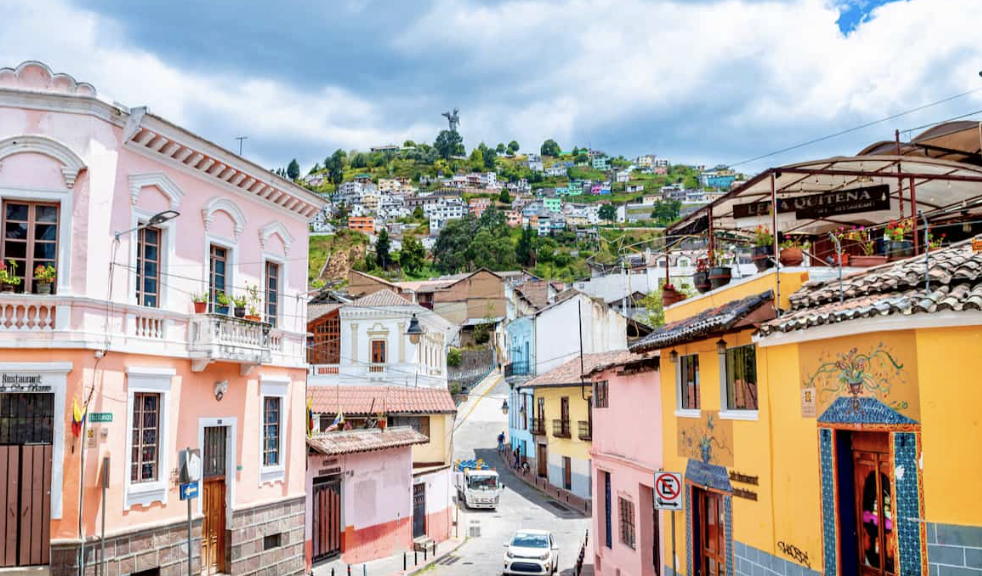
Ecuador’s capital sits at 2,850 metres above sea level in a narrow Andean valley, making it the second-highest capital city in the world after La Paz. It is also the closest capital city to the equator on earth. Quito’s Centro Histórico (Historic Centre) is the best-preserved colonial city centre in Latin America — a UNESCO World Heritage Site of extraordinary baroque churches, monasteries, plazas and colonial mansions stacked on steep hillsides, many of which were built by indigenous craftsmen on pre-Columbian Incan foundations. The neighbourhood of La Mariscal is the modern backpacker and restaurant hub, while the more refined Gonzalez Suarez and Quito Tenis areas house the city’s better restaurants and hotels. The view from the Teleferico cable car — rising from 2,950 metres to 4,100 metres on the flanks of the Pichincha volcano — is one of the finest urban viewpoints in South America. Give Quito at least two full days — the colonial centre alone merits a full day of serious exploration.
Cuenca — The Colonial Jewel of the South
Consistently ranked among the most beautiful cities in South America, Cuenca sits at a comfortable 2,550 metres above sea level in the southern Andes, its colonial centre a UNESCO World Heritage Site of elegant white-painted buildings, cobblestone streets and four rivers running through the city. Cuenca has a strong expatriate community, outstanding artisan craft traditions (the famous Panama hat is actually made in Ecuador, primarily in the Cuenca region), excellent restaurants and a relaxed, graceful atmosphere that stands in pleasant contrast to Quito’s highland intensity. The Cajas National Park on the city’s doorstep — a high-altitude moorland of volcanic lakes, cloud forest and extraordinary birdlife — is one of Ecuador’s finest and least-visited parks.
Banos de Agua Santa — The Adventure Capital
Sitting at the base of the active Tungurahua volcano at 1,820 metres, Baños de Agua Santa is Ecuador’s adventure tourism capital and one of the most energetically charged small towns in the Andes. The town itself is small, loud and tourist-forward — but its position at the transition point between the highlands and the Amazon basin creates extraordinary opportunities. White water rafting on the Pastaza River, waterfall canyoning, paragliding, volcano trekking, mountain biking the famous Ruta de las Cascadas (Route of the Waterfalls) and zip-lining are all within easy reach. The thermal baths fed by Tungurahua’s volcanic heat are genuine and deeply relaxing. Baños is the classic Ecuador stopover between Quito and the Amazon.
The Amazon — Tena, Misahualli and the Oriente
Ecuador’s Amazon region — the Oriente — is one of the most biodiverse areas on earth. The Yasuni National Park in Orellana Province contains more tree species per hectare than all of North America combined. The most accessible entry points into the Ecuadorian Amazon are the town of Tena (a 3-hour bus from Quito, increasingly popular for community-based jungle tourism and white water rafting) and the nearby village of Misahualli on the Napo River. For a deeper jungle experience, lodges on the Napo River accessible only by motorised canoe offer multi-day immersions in primary rainforest with extraordinary wildlife viewing — pink river dolphins, anacondas, caimans, hundreds of bird species and, if you are very fortunate, jaguars.
The Pacific Coast — Montanita, Manta and the Cloud Forest
Ecuador’s Pacific coast stretches over 2,000 kilometres and contains beach environments ranging from the internationally known surf village of Montanita (Ecuador’s most famous beach party destination, beloved by backpackers and surfers across South America) to the whale-watching paradise of the Puerto Lopez peninsula, to the sophisticated port city of Manta with its deep-sea tuna fishing culture and excellent seafood. The transition from the coast up into the Andes passes through extraordinary cloud forest — the Mindo Cloud Forest near Quito is one of the finest birdwatching destinations in the world, with over 500 bird species in a tiny area including the exquisite Andean cock-of-the-rock.
The Galapagos Islands — Darwin’s Living Laboratory
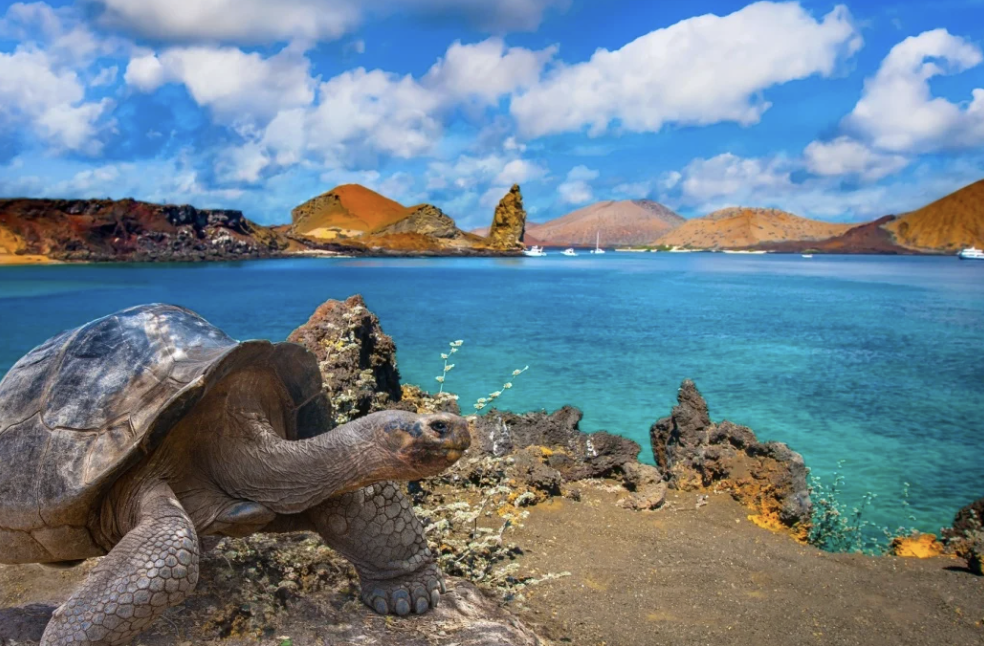
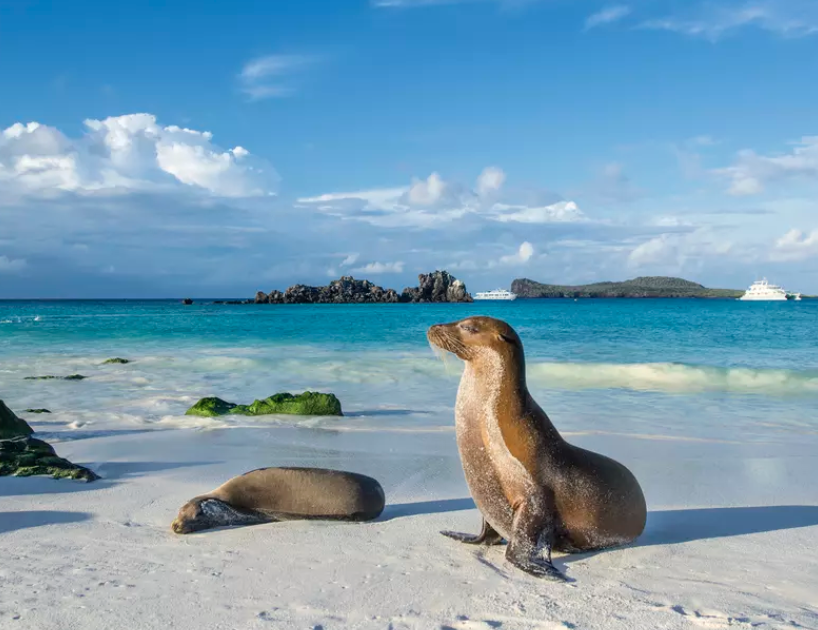
The Galapagos Islands sit 1,000 kilometres off Ecuador’s Pacific coast and represent one of the last truly pristine ecosystems on earth. The archipelago of 19 major islands was the inspiration for Charles Darwin’s theory of natural selection following his 1835 visit, and the extraordinary tameness of the wildlife — animals that have evolved without natural land predators and therefore have no instinctive fear of humans — creates wildlife encounters unlike anything available anywhere else. Blue-footed boobies perform their courtship dances three metres from your feet. Marine iguanas ignore you completely as they bask on the rocks. Giant tortoises move with majestic indifference through the scrubland. Sea lions sleep on benches. The snorkelling with sea lions, sea turtles and hammerhead sharks is extraordinary. The Galapagos is expensive, logistically complex and absolutely worth every penny and every complication.
| City / Region | Altitude | Vibe | Best For | When to Go |
|---|---|---|---|---|
| Quito | 2,850 m | Historic / Intense | Colonial centre, day trips, volcanoes | Jun–Sep, Dec–Jan |
| Cuenca | 2,550 m | Elegant / Relaxed | Colonial architecture, crafts, Cajas | Year-round |
| Banos | 1,820 m | Adventure / Energetic | Rafting, waterfalls, volcano, Amazon gateway | Year-round |
| Amazon / Tena | 550 m | Wild / Biodiverse | Jungle lodges, wildlife, communities | Jun–Sep |
| Pacific Coast | Sea level | Laid-back / Coastal | Surf, whales, seafood, cloud forest | Dec–May |
| Galapagos | Sea level | Unique / Pristine | Wildlife, snorkelling, Darwin history | Year-round |
Main Airports and Transit Hubs
Ecuador has two main international airports and two airports serving the Galapagos Islands. The country is compact enough that domestic flights are short — Quito to Guayaquil is just 45 minutes.
Mariscal Sucre International Airport, Quito (UIO)
Quito’s modern international airport opened in 2013 and is located approximately 37 kilometres northeast of the city centre — a 45-minute to 1-hour drive in normal traffic, potentially longer during rush hours. The airport handles direct international flights from Miami (4.5h), New York JFK (5.5h), Fort Lauderdale (4.5h), Atlanta (5h), Houston (5h), Bogotá (1h), Lima (2.5h), Madrid (11h) and Amsterdam (12h). It is a well-designed, efficient facility. The Aeroservicios and Aerosucre airport bus services offer affordable connections to the city centre, though taxis and ride-share apps (InDriver operates in Quito) are more practical for travellers with luggage.
Jose Joaquin de Olmedo Airport, Guayaquil (GYE)
Ecuador’s second international hub serves the country’s largest and most commercially important city. Guayaquil’s airport is located within the city itself — just 5 kilometres from the waterfront Malecon 2000 — making it one of the most conveniently located airports in South America. It handles direct flights from Miami, New York, Bogotá, Lima, Panama City and throughout Ecuador. For travellers primarily interested in the Pacific coast or entering from the south, Guayaquil is often a more convenient entry point than Quito.
Galapagos Airports
There are two airports in the Galapagos: Seymour Airport on Baltra Island (GPS) and San Cristobal Airport (SCY). Most cruises and tours depart from Baltra; Santa Cruz island (the most visited) is accessed via a short bus and ferry ride from Baltra. LATAM Ecuador and Avianca operate daily flights from both Quito and Guayaquil to both Galapagos airports. Flight duration is approximately 2 hours from either mainland airport. Flights sell out well in advance during peak season — book as early as possible.
Other Key Domestic Airports
- Cuenca (CUE): Daily connections from Quito (45 min) and Guayaquil (30 min).
- Coca / Francisco de Orellana (OCC): Gateway to the deep Amazon / Yasuni region. Daily flights from Quito (45 min).
- Manta (MEC): Pacific coast hub. Connections from Quito and Guayaquil.
Quito airport altitude: Quito’s airport sits at approximately 2,400 metres above sea level. Combined with the city’s altitude of 2,850 metres, some travellers experience mild altitude symptoms on arrival. Rest well your first evening, hydrate generously and avoid strenuous activity on day one — you will feel considerably better by day two.
Guided Experiences
Book Your Ecuador and Galapagos Tours
Galapagos day tours, Amazon lodge packages, Quito colonial walking tours, Otavalo market excursions and Cotopaxi volcano treks — all with vetted local guides through GetYourGuide.
Weather and Best Time to Visit by Region
Ecuador straddles the equator, which means it has no summer or winter in the conventional sense — instead, each region has its own wet and dry cycle, and the country’s four geographic zones behave entirely independently of one another.
The Sierra — Quito, Cuenca and the Andes
The highlands experience two dry seasons: June through September (the main dry season, with clear skies and cool days) and December through January (a shorter dry window). The rainy season runs October through May with afternoon showers, though mornings are often clear. Temperature in Quito year-round ranges from 8°C at night to 22°C in the afternoon — layers are essential regardless of the month. The famous verano de los Andes (Andean summer) from June to September brings the most reliable weather for volcano trekking and highland exploration.
The Galapagos Islands
The Galapagos has two seasons that affect visitor experience differently. The warm wet season (January–June) brings warmer water temperatures (24–27°C), calmer seas and better snorkelling visibility, with occasional short rain showers that make the islands lush and green. This is considered the best season for snorkelling and seeing young animals. The cool dry season (July–December) brings cooler water (18–22°C), stronger currents (better for diving and seeing larger marine species like whale sharks), and the dramatic landscapes of the dry season with bluer skies. There is genuinely no bad time to visit the Galapagos — the choice depends on what you most want to experience.
The Amazon — Oriente
The Ecuadorian Amazon is hot and humid year-round (25–33°C). The drier season from June to September sees lower water levels — easier land trails but harder canoe access to some areas. The rainy season (October–May) brings higher water, allowing deeper river penetration and different wildlife viewing opportunities. Wildlife is present year-round — the Amazon never goes quiet.
The Pacific Coast
The coast has a pronounced dry season from June through November (cooler, misty, less rain south of Manta) and a warm wet season from December through May (warmer water, more sun, better for beach holidays). The humpback whale season — when thousands of whales migrate along Ecuador’s coast — runs from June through September, making the Puerto Lopez peninsula extraordinary during those months.
| Region | Best Season | Months | Temperature | Key Notes |
|---|---|---|---|---|
| Quito / Sierra | Dry Season | Jun – Sep, Dec – Jan | 8°C – 22°C | Best for volcano trekking and clear skies |
| Galapagos (snorkel) | Warm Season | Jan – Jun | 24–27°C water | Best visibility, young animals, calmer seas |
| Galapagos (dive) | Cool Season | Jul – Dec | 18–22°C water | Whale sharks, stronger currents, dramatic skies |
| Amazon / Oriente | Drier Season | Jun – Sep | 25°C – 33°C | Better trails; wet season = better canoe access |
| Pacific Coast | Beach Season | Dec – May | 24°C – 32°C | Warmer water, more sun, humpbacks Jun–Sep |
| Cuenca | Any time | Year-round | 10°C – 22°C | Most pleasant year-round climate in Ecuador |
Ecuadorian Food: The Underrated Cuisine of the Andes
Ecuadorian cuisine sits in the shadow of Peru’s global gastronomy dominance — and it really should not. Ecuador’s food is regional, seasonal, deeply connected to its extraordinary biodiversity, and in coastal areas particularly, produces some of the finest seafood preparations in South America. Ecuadorian ceviche is different from Peruvian ceviche and deserves to be judged on its own extraordinary terms — the tomato-based coastal version, served with toasted corn and popcorn, is one of the great seafood experiences on the continent. The country also benefits from access to ingredients — hundreds of unique Andean potato varieties, jungle fruits unavailable anywhere else, freshwater fish from the Amazon, and seafood from the cold Humboldt Current — that most of the world’s chefs would travel significant distances to work with.
Dishes You Must Try
- Ceviche de Camaron (Shrimp Ceviche): Ecuador’s coastal ceviche is made with cooked shrimp in a tomato and lime juice base, served at room temperature with toasted corn kernels (cancha) and popcorn. It is utterly different from Peruvian ceviche and utterly delicious on its own terms. Available at cevicherias along the entire Pacific coast and in Guayaquil — always fresh, always made to order.
- Seco de Pollo: Ecuador’s most beloved everyday dish — chicken slow-stewed in a rich sauce of beer, naranjilla juice, tomato and spices, served over rice with lentils and sweet plantain. Every family has their own version. Every version is comforting and good.
- Llapingacho: Pan-fried potato cakes stuffed with cheese, typically served with fried egg, chorizo, sliced avocado and a peanut sauce. A staple of highland market food and one of the most satisfying breakfasts or lunches in the Andes.
- Locro de Papa: A thick, rich potato and cheese soup unique to Ecuador’s highlands — thickened with the starchy Andean potato varieties that grow only at altitude, finished with avocado and fresh herbs. On a cold Quito morning, it is everything.
- Encocado de Pescado: Fresh fish in a rich coconut milk sauce with Afro-Ecuadorian spices and peppers — the signature dish of the Esmeraldas province on the northern Pacific coast, reflecting the region’s African cultural heritage. Served over rice with patacones (twice-fried plantains).
- Jugo de Naranjilla: Not food but essential. The naranjilla (little orange) is a fruit native to Ecuador with a flavour unlike anything else in the world — sharp, citrusy, tropical and slightly tart. Freshly squeezed naranjilla juice is available at markets and restaurants throughout the country and is one of the sensory memories of Ecuador that stays with you permanently.
Galapagos and Amazon Food
In the Galapagos, the food scene centres on fresh seafood — lobster (in season), fresh fish and ceviche from Santa Cruz and San Cristobal’s restaurants are excellent quality. Prices are significantly higher than the mainland due to shipping costs. In the Amazon, jungle cuisine features fresh river fish, yuca in every conceivable preparation, hearts of palm, jungle fruits and, in indigenous community settings, traditional preparations using ingredients that have been harvested from the forest for thousands of years.
The Otavalo Market food experience: The indigenous market at Otavalo, 2 hours north of Quito, is one of the most famous artisan markets in South America. The surrounding food market is equally extraordinary — local women in traditional dress selling fresh juices, roasted corn, hornado (whole roasted pig) and local cheeses from the Imbabura highlands. Combine the Saturday artisan market with lunch in the food section for a complete cultural experience.
Currency, Exchange Rates and Money Tips
Ecuador adopted the US Dollar (USD) as its official currency in 2000, replacing the sucre following a severe economic crisis. For American travellers this eliminates currency exchange entirely. For everyone else, it means exchanging your home currency to USD before arrival — either at home or at exchange houses in Quito or Guayaquil. Ecuador does not have its own currency and uses US banknotes and coins directly.
Practical Money Considerations
ATMs dispense US dollars and are widely available in Quito, Guayaquil, Cuenca and major tourist towns. In the Galapagos, ATMs are available on Santa Cruz and San Cristobal but can run out of cash during peak season — bring sufficient cash from the mainland. In the Amazon, cash is often the only payment method accepted. Credit cards are widely accepted in hotels, restaurants and tour operators in major cities and tourist areas. In smaller towns and markets, cash is essential.
| Currency | Approx. Rate vs USD (2025) | Notes for Ecuador |
|---|---|---|
| USD | 1:1 (Ecuador’s currency) | No exchange needed for American visitors |
| 1 EUR | 1.09 USD | Exchange to USD before arrival or at airport |
| 1 GBP | 1.27 USD | Strong buying power throughout Ecuador |
| 1 CAD | 0.74 USD | Exchange to USD — Canadian dollars not accepted |
Tipping Culture in Ecuador
Many restaurants in Ecuador automatically add a 12% VAT and 10% service charge to bills — check before adding additional tip. In restaurants without automatic service charge, 10% is appreciated. For tour guides, tip $10–15 USD per person per day for mainland tours and $15–25 per day for Galapagos guides (the cost of living in the islands is significantly higher). Amazon lodge guides typically receive $10–15 per day plus any additional tips for outstanding service from naturalist guides.
Safety: Safest, Wildest and Quietest Destinations
Ecuador’s safety situation has become more complex in recent years. The country has experienced increased crime levels since 2022, partly linked to spillover from drug trafficking routes through the country. This does not mean Ecuador is dangerous for tourists — the vast majority of visitors travel without incident — but it does require more awareness and precaution than was necessary five years ago, particularly in Guayaquil and some coastal areas.
| City / Region | Safety Level | Main Risks | Safe Areas | Take Care |
|---|---|---|---|---|
| Quito | Moderate | Pickpocketing, phone theft, scams in La Mariscal | Gonzalez Suarez, La Floresta, New City | La Mariscal at night, Old City after dark |
| Cuenca | Safer | Petty theft in markets | Historic Centre, El Ejido park area | Outskirts after dark |
| Guayaquil | Requires Care | Higher crime, phone theft, express kidnapping risk in some zones | Malecon 2000, Las Penas, Urdesa | Downtown away from tourist zones |
| Banos | Safer | Adventure activity risks, petty theft | Town centre, main tourist streets | Verify operator safety records for activities |
| Galapagos | Very Safe | Biosecurity violations, strong ocean currents | All islands | Swimming in unsupervised areas |
| Amazon / Oriente | Safer | Natural risks, use reputable operators | Lodge areas, guided tours | Never explore jungle alone without a guide |
Key Safety Rules for Ecuador
- Phone security: Ecuador has seen a significant increase in phone theft, particularly in Quito and Guayaquil. Keep your phone in your pocket in crowded areas, avoid using it while walking and consider a cheap local SIM in a secondary phone for navigation.
- Guayaquil vigilance: Guayaquil has a higher crime rate than Quito. Stick to the renovated Malecon 2000 waterfront, Las Penas hillside neighbourhood and the Urdesa and Kennedy residential areas. Use app-based taxis (InDriver, Cabify) and avoid street taxis at night.
- Never hike volcanoes alone: Cotopaxi, Chimborazo and other Ecuadorian volcanoes require guides by law — and for good reason. Weather changes rapidly at altitude, rescue services are limited and altitude illness is a genuine risk above 5,000 metres.
- Galapagos biosecurity: Do not remove anything from the islands — shells, rocks, sand, plant material or animals. Violations carry severe fines and immediate deportation. The park rangers are diligent and enforcement is real.
Best Hotels by Region — With Real Prices
Ecuador offers excellent value on the mainland and premium pricing in the Galapagos — where remoteness, logistics and strict visitor limits combine to make accommodation significantly more expensive than anywhere else in the country.
Quito — Best Hotels
| Hotel | District | Category | Price/Night (USD) | Highlights |
|---|---|---|---|---|
| Casa Gangotena | Historic Centre | 5-Star Boutique | $280–450 | Restored 1920s mansion on Plaza San Francisco, finest colonial hotel in Quito |
| Hotel Plaza Grande | Historic Centre | 5-Star Luxury | $300–500 | On Plaza de la Independencia, presidential suites, colonial grandeur |
| Illa Experience Hotel | Gonzalez Suarez | 4-Star Boutique | $130–220 | Contemporary design, valley views, excellent restaurant, quieter neighbourhood |
Galapagos Islands — Best Hotels
| Hotel | Island | Category | Price/Night (USD) | Highlights |
|---|---|---|---|---|
| Finch Bay Eco Hotel | Santa Cruz | 5-Star Eco-Lodge | $450–750 | Only hotel on a private beach, yacht access, outstanding naturalist guides |
| Royal Palm Galapagos | Santa Cruz | 5-Star Luxury | $500–850 | Highland location, volcano views, most luxurious hotel in the archipelago |
| Hotel Silberstein | Santa Cruz | 3-Star Comfortable | $120–200 | Best mid-range on Santa Cruz, reliable, pool, excellent location in Puerto Ayora |
Cuenca — Best Hotels
| Hotel | District | Category | Price/Night (USD) | Highlights |
|---|---|---|---|---|
| Carvallo Hotel | Historic Centre | 4-Star Boutique | $110–180 | Beautifully restored colonial house, rooftop terrace, central location |
| Hotel Santa Lucia | Historic Centre | 4-Star Classic | $95–160 | Colonial courtyard, excellent breakfast, prime historic centre location |
| Mansion Alcazar | Historic Centre | 5-Star Boutique | $200–320 | Cuenca’s finest hotel, restored 19th-century mansion, exceptional service |
Book Your Hotel in Ecuador
Find the Best Prices — Quito, Galapagos and Beyond
From colonial boutique hotels in Quito’s historic centre to Galapagos eco-lodges and Amazon jungle camps. Compare hundreds of Ecuador properties on Booking.com — no hidden fees, free cancellation on most rooms.
Galapagos liveaboard cruises: Many visitors experience the Galapagos not from a land-based hotel but from a liveaboard cruise vessel — a yacht or catamaran that moves between islands each night, providing access to visitor sites that day-trippers from Santa Cruz cannot reach. Prices range from $250–500 USD per person per day on budget vessels to $800–2,000 on luxury yachts. Last-minute cruise deals are occasionally available in Quito’s travel agencies, but booking 3–6 months in advance gives you the best selection.
Cost of Travel and Budget by Region
Ecuador’s mainland is excellent value for international visitors — broadly comparable to Colombia and significantly cheaper than Chile. The Galapagos is a separate economic reality and should be budgeted for independently as a premium experience.
| Region | Budget/Day (USD) | Mid-Range/Day (USD) | Luxury/Day (USD) | Most Expensive Item |
|---|---|---|---|---|
| Quito | $30–50 | $80–160 | $250–500 | Historic centre luxury hotels |
| Cuenca | $25–40 | $70–130 | $180–320 | Boutique colonial hotels |
| Banos | $25–40 | $65–120 | $150–280 | Multi-activity adventure packages |
| Pacific Coast | $25–45 | $70–140 | $180–350 | Whale-watching and surf camps |
| Amazon Lodge | $80–120 | $150–280 | $350–600 | Deep jungle multi-day packages |
| Galapagos | $150–250 | $300–600 | $700–2,000 | $200 park fee + liveaboard cruise |
Top Festivals and Celebrations in Ecuador
Ecuador’s festivals blend pre-Columbian Andean traditions with Catholic colonial celebrations in ways that produce events of extraordinary colour, music and spiritual intensity. The country’s indigenous communities — particularly the Kichwa-speaking communities of the Sierra — maintain festival traditions of ancient origin that are among the most authentic and visually spectacular in South America.
Inti Raymi — Festival of the Sun · Imbabura Province · June 21–29
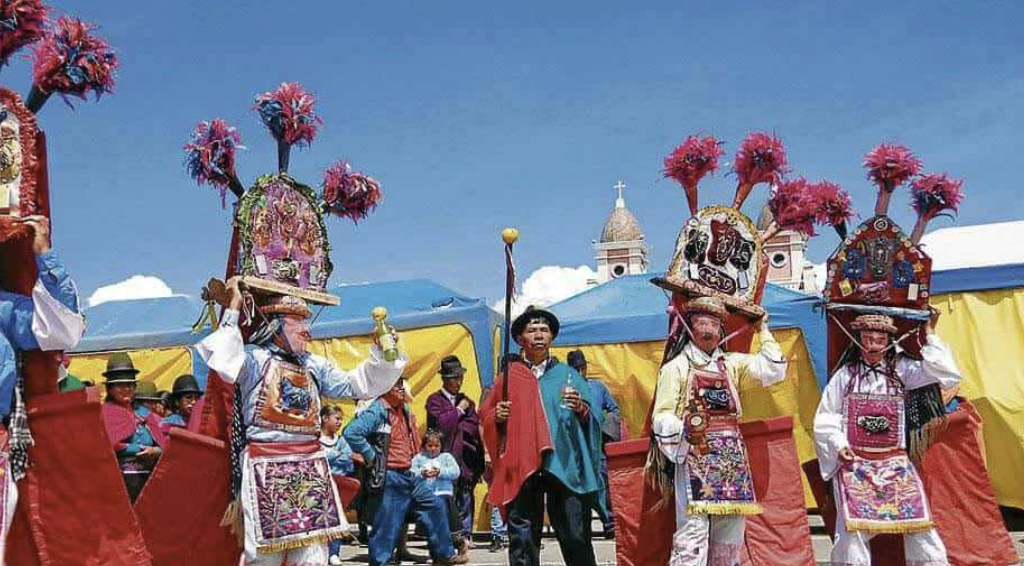
The Inti Raymi (Festival of the Sun in Quechua) is celebrated across the Andean world but reaches particular intensity and authenticity in the indigenous communities of Imbabura province north of Quito — particularly in Otavalo, Cotacachi and Peguche. Unlike the more theatrical re-enactment in Cusco, Ecuador’s Inti Raymi is a living community celebration rooted in the agricultural calendar — the winter solstice harvest festival that has been observed by Andean communities for over a thousand years. The celebration in Cotacachi involves ritual bathing in the sacred waterfall at Peguche, communal feasting, traditional music on flutes and drums, and a deeply spiritual communal dance that continues for days. Attending Inti Raymi in Otavalo or Cotacachi offers a connection to living Andean indigenous culture that is genuinely rare and profoundly moving.
Mama Negra — La Fiesta de la Mama Negra · Latacunga · September and November
One of the most bizarre, spectacular and uniquely Ecuadorian festivals in the country takes place in the highland city of Latacunga, at the base of the Cotopaxi volcano, twice a year — in September (the indigenous version) and November 11 (the civic version coinciding with Latacunga’s independence day). The central figure of the Mama Negra is a man dressed as a Black woman, representing an African slave who was freed during the colonial period and became associated with the local Virgin del Mercedes. He rides through the streets on horseback, squirting milk and water on the crowd from a syringe, surrounded by hundreds of elaborately costumed characters including the Ángel de la Estrella, Huacos (shamans), Yumbos (jungle warriors) and marching bands. It is joyful, surreal, historically layered and completely unlike any festival experience in the world.
Carnaval · Nationwide and particularly Guaranda · February/March
Ecuador’s Carnaval is celebrated with a distinctive and occasionally aggressive tradition: water fights. Throughout the country, in the days leading up to Ash Wednesday, Ecuadorians celebrate by throwing water balloons, water guns and buckets of water at each other — and at any passing tourists who fail to take evasive action. The city of Guaranda in Bolivar province hosts the most elaborate Carnaval celebrations, with traditional music, dancing, costumes and the election of the Carnaval Queen alongside the obligatory water battles. The Carnaval in Ambato — the Festival de Frutas y Flores (Fruits and Flowers Festival) — is the alternative for those who prefer flowers to water, with the city decorating its streets with elaborate floral arrangements and holding parades and exhibitions celebrating the region’s agricultural abundance.
Dia de los Difuntos — Day of the Dead · Nationwide · November 2
Ecuador’s Dia de los Difuntos is one of the most poignant and visually striking of all the country’s festivals. Families across Ecuador, but particularly in the indigenous highland communities, visit cemeteries to clean and decorate the graves of their loved ones with flowers, food and drink. The traditional food of the day is colada morada — a thick, purple drink made from black corn, fruits and spices — accompanied by guaguas de pan (bread shaped like swaddled infants). The combination of the purple drink and the bread baby represents death and life — the circle of existence in Andean cosmology. Markets selling colada morada and guaguas de pan fill the streets for weeks around November 2, and the cemetery scenes in towns like Otavalo and Saquilisili are deeply moving experiences of communal remembrance.
Fiestas de Quito · Quito · December 1–6
Quito’s founding anniversary (December 6, 1534) is celebrated with an entire week of festivities that transform the capital into one extended street party. Chivas (open-sided trucks carrying musicians and revellers) wind through the streets. The city’s bullfighting season peaks during this period (the Plaza de Toros hosts internationally prominent corridas). Outdoor concerts, street food markets, traditional games and neighbourhood celebrations fill every corner of the city. The finale on December 5 night and 6 morning is a city-wide celebration of remarkable energy. Hotel prices in Quito spike during this period — book well in advance if your dates coincide.
| Festival | Location | Dates | Why Go |
|---|---|---|---|
| Inti Raymi | Imbabura / Otavalo | June 21–29 | Living Andean sun festival, authentic indigenous ceremony |
| Mama Negra | Latacunga | September and November 11 | Ecuador’s most surreal and unique festival, Cotopaxi backdrop |
| Carnaval / Guaranda | Guaranda / Nationwide | February/March | Water fights, music, traditional costumes, Andean Carnaval |
| Festival Frutas y Flores | Ambato | February/March | Floral festival alternative to water-fight Carnaval |
| Dia de los Difuntos | Nationwide | November 2 | Colada morada, cemetery decorations, Andean life-death cycle |
| Fiestas de Quito | Quito | December 1–6 | City-wide street party, chivas, bullfighting, concerts |
Essential Traveller Tips for Ecuador
The Avenue of the Volcanoes — A Route Not to Miss
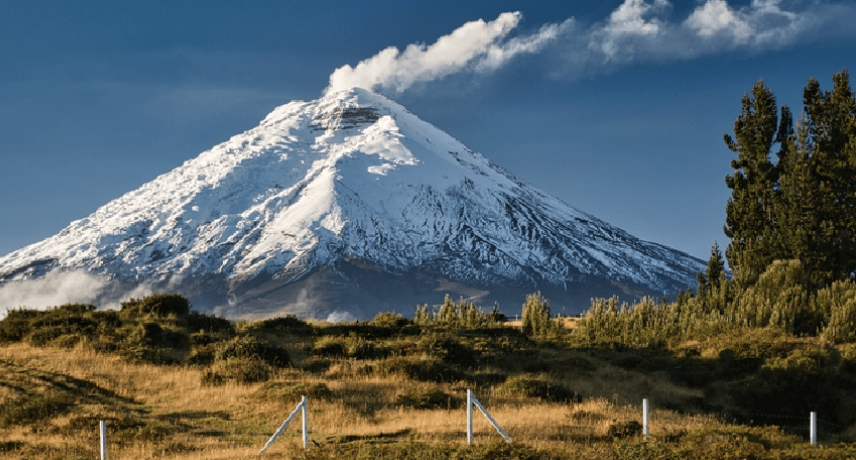
The Avenue of the Volcanoes — the name given by Alexander von Humboldt in 1802 to the central Andean corridor between Quito and Cuenca — contains more active and potentially active volcanoes per kilometre than anywhere else on earth. Cotopaxi (5,897m, one of the world’s highest active volcanoes) and Chimborazo (6,268m, the point on the earth’s surface furthest from the planet’s core due to the equatorial bulge) are both accessible as day trips or overnight excursions from Quito. The drives between these volcanoes, through Andean valleys and indigenous market towns, are among the finest road journeys in South America.
The Galapagos Requires Advance Planning
The Galapagos is not a destination you can organise last minute — not well, anyway. Flights from the mainland sell out weeks ahead during peak season (June–September and December–January). Hotel accommodation on Santa Cruz and San Cristobal fills completely. Liveaboard cruise berths are frequently sold 3–6 months in advance. The $200 national park fee must be paid in cash. The Transit Control Card must be completed before departure. Plan your Galapagos component at least 2–3 months ahead and accept that it will be the most expensive part of your Ecuador trip by a considerable distance — and almost certainly the most extraordinary.
Ecuador Uses USD — But Small Bills Matter
Ecuador uses US dollars, which simplifies currency management enormously. However, there is a practical wrinkle: large denomination bills ($50 and $100) are frequently refused by small businesses, market vendors and taxi drivers who cannot make change. Bring a supply of $1, $5, $10 and $20 bills — they are far more practically useful throughout the country, particularly in markets and smaller towns.
Altitude and the Equatorial Sun
Quito sits at nearly 3,000 metres at the equator — a combination that produces extremely intense UV radiation. The equatorial position means the sun is directly overhead at noon, and the altitude means there is less atmosphere filtering UV radiation. Sunburn in Quito is rapid and severe. Use high-factor sunscreen (SPF 50+), wear a hat and sunglasses even on overcast days. The UV index in Quito frequently reaches 12–14 — among the highest regularly recorded anywhere in the world.
Ecuador Is Smaller Than You Think. And Bigger Than You Imagine.
In the time it takes to drive across some US states, you can move from an Andean colonial city of extraordinary beauty through a landscape of active volcanoes into the Amazon rainforest and end the day eating ceviche on a Pacific beach. That is Ecuador. A country that should not geographically be able to contain this much world within its borders — and yet does. The Galapagos will change the way you think about evolution, ecosystems and what it means to share a planet with other species. The Avenue of the Volcanoes will make you feel genuinely small in the way that only standing next to something truly ancient and powerful can. The people — warm, proud, quietly wonderful — will make you want to stay longer than you planned. Book the flight. Ecuador is not a destination you circle back to someday. It is one you go to now, while it is still this Ecuador.
Find My Flight to EcuadorPlan Your Ecuador Trip
Trusted Partners We Recommend
Viator Ecuador Tours
Galapagos day tours, Amazon lodge packages, Cotopaxi treks, Otavalo market day trips and Quito colonial walking tours — all with vetted local operators.
Book toursAirHelp — Flight Claims
Galapagos flights get delayed and cancelled more than you would think. AirHelp claims up to 600 EUR compensation automatically if your flight is disrupted — no effort required.
Claim nowIATI Travel Insurance
Amazon jungle, Galapagos remote locations, Andean volcano trekking — Ecuador demands proper coverage. IATI includes medical evacuation and adventure activity protection.
Get insuredAffiliate Disclosure: This article contains affiliate links. When you book through our links, Uncover the Andes may earn a small commission at no additional cost to you. We only recommend services we genuinely believe serve our readers well. All opinions are our own.