

Colombia is not merely a destination; it is a profound, multisensory disruption to everything you think you know about geography, culture, and resilience. For decades, this corner of South America was a blind spot on the international travel map. Today, it has emerged as the continent’s ultimate frontier—a land of staggering geographical magnitude where the northern spine of the Andes fractures into three distinct mountain ranges, dropping dramatically into two separate oceans, dense Amazonian jungles, and high-altitude, tech-forward valleys.
If you are reading this, you aren’t looking for a sterile, copy-pasted travel brochure. You are looking for a precise, unfiltered, and deeply human blueprint to navigate a country that operates on a logic of its own. Colombia is vibrant, complex, and overwhelmingly beautiful. It is a place where you can wake up in a chilly, high-altitude mountain metropolis, board a short domestic flight, and be sipping coconut rice on a humid Caribbean beach by lunchtime.
But navigating this paradise requires strategy. To truly conquer Colombia—whether you are planning a multi-day alpine trek, scouting historic colonial towns, or setting up a remote workstation for a month in a bustling valley—you need hard data, structural logistics, and an analytical understanding of the terrain. This comprehensive guide provides exactly that. Let’s dive deep into the ultimate blueprint of Colombia.
1. Entering the Gateway: Immigration, Check-Mig, and Legal Logistics
Entering Colombia as an international tourist is a straightforward process, but it requires strict adherence to bureaucratic digital systems to avoid unnecessary friction at airport check-in counters.
Visa Regulations and the 90 to 180-Day Rule
For citizens of the United States, Canada, the European Union, the United Kingdom, and many other Western nations, entering Colombia for tourism does not require a pre-arranged visa. Upon passing through migratory control at your point of entry, an immigration officer will stamp your passport with a Tourism Permit (PT).
- Initial Allowance: The standard initial stamp grants you 90 days of legal stay in the country.
- The 180-Day Maximum Limit: If you wish to stay longer, you can legally extend this permit online via the Migración Colombia website or by visiting a physical immigration office before your initial 90 days expire. You are allowed a maximum of 180 days per calendar year as a tourist. Overstaying this limit results in structural fines and potential complications for future entry, so tracking your dates precisely is critical.
The Mandatory Check-Mig Form
The most common logistical pitfall for travelers heading to Colombia is forgetting to fill out the Check-Mig form. This is a mandatory electronic registration system implemented by Migración Colombia.
- The Rule: Every single traveler—both foreign and domestic—must complete the Check-Mig form online before entering or leaving the country.
- The Timeline: The online portal opens 72 hours prior to your flight and closes exactly 1 hour before departure.
- The Execution: You will be asked to input your personal details, passport information, flight number, health declarations, and the address or details of your initial accommodation (for example, providing the name and contact number of the hotel or apartment where you are staying for your first few nights).
- Pro-Tip: Do not wait until you are at the airport gate. Many airlines will strictly refuse to print your boarding pass or let you board the aircraft if you cannot show the confirmation PDF or email receipt of your completed Check-Mig on your smartphone.
Financial Logistics: Mastering the Colombian Peso (COP)
The economic architecture of Colombia relies heavily on the Colombian Peso (COP). While major cities, high-end hotels, and established restaurants extensively accept credit cards (Visa and Mastercard are standard; American Express is frequently rejected), cash remains absolute king in local markets, street food stalls, taxis, and smaller towns (pueblos).
- Understanding the Exchange Volatility: The exchange rate fluctuates dynamically, often hovering between $3,800 COP to $4,500 COP per 1 USD. For quick mental math on the ground, a solid baseline framework is to treat $4,000 COP as roughly equivalent to $1 USD.
- ATM Strategy (Cajeros Automáticos): Never exchange cash at airport booths, as they offer structurally terrible rates. Instead, pull local currency directly from institutional bank ATMs upon arrival. Use trusted banks such as Bancolombia, Davivienda, or BBVA. Always choose ATMs located inside secure bank branches or airport terminals rather than isolated street kiosks.
- The Dynamic Conversion Trap: When an ATM asks whether you want to be billed in your home currency (USD) or the local currency (COP), always choose COP. If you choose USD, the local bank applies its own inflated conversion rate, adding an invisible 5% to 10% fee to your transaction. Let your home bank handle the conversion.
Exchange Rate Approximately
2. Flight Logistics: Flying from the US to Colombia
Getting to Colombia from the United States is faster and more affordable than many travelers realize, given its geographical positioning directly south of the East Coast time zone. Below is a structural breakdown of the flight infrastructure, typical pricing, and airline options from major US hubs.
Flight Hub Breakdown: NY, Newark, and Miami
| Departure Hub | Average Flight Duration | Typical Economy Price Range | Major Airlines Operating the Route | Primary Destination Hubs |
| New York (JFK) | 5.5 to 6 Hours | $350 – $650 USD | Avianca, American Airlines, Delta, LATAM | Bogotá (BOG), Medellín (MDE) |
| New Newark (EWR) | 5.5 to 6 Hours | $380 – $700 USD | United Airlines, Avianca | Bogotá (BOG) |
| Miami (MIA) | 3 to 3.5 Hours | $200 – $450 USD | American Airlines, Avianca, LATAM, Spirit | Bogotá (BOG), Medellín (MDE), Cartagena (CTG), Cali (CLO) |
Analyzing the Airlines: The Good, the Bad, and the Budget
- Avianca: As the flagship carrier of Colombia, Avianca has the most extensive network of flights. However, travelers must understand that Avianca has transitioned its economy class into a low-cost carrier model. Seats do not recline by default on short-haul/medium-haul configurations, and everything from checked bags to carry-ons and seat selection carries an additional structural fee. Their premium seats (Plus and Premium) offer a traditional legacy experience.
- American Airlines & United Airlines: These US legacy carriers offer excellent premium cabins and reliable service. American Airlines dominates flights out of Miami, offering multiple daily direct entries into every major Colombian city. United offers solid direct connectivity out of Newark to Bogotá.
- LATAM: A highly reliable alternative to Avianca for flights from Miami and New York. Their service standard is consistently rated higher by frequent travelers for comfort and baggage handling transparency.
- Spirit Airlines: Operating heavily out of Fort Lauderdale (FLL) and Miami (MIA), Spirit offers the cheapest baseline ticket prices to the Colombian coast and major valleys. If you travel light with only a personal item, it is an unbeatable budget option, but bag fees can quickly equalize the price with legacy carriers.
3. Domestic Infrastructure: Traveling Inside Colombia
Once you are on the ground, navigating Colombia’s fractured, mountainous geography requires choosing between two primary modes of transit: rapid domestic flights or long-haul regional buses.
Domestic Aviation: Short Hops Across the Andes
Because the Andes split into three massive mountain ranges running north-south, driving between major interior cities can take an agonizingly long time. Domestic flights are highly efficient and surprisingly affordable.
- The Key Airlines: Avianca, LATAM, and Clic (formerly EasyFly, specializing in regional turboprop routes to smaller towns).
- Typical Pricing: One-way domestic flights between major hubs (like Bogotá to Medellín or Medellín to Cartagena) generally cost between $30 to $90 USD if booked a few weeks in advance.
- Transit Times: What takes 10 to 12 hours by winding mountain roads takes exactly 45 to 60 minutes in the air.
- The Baggage Warning: Domestic low-cost tiers are incredibly strict about carry-on dimensions and weight limits (often capping personal items at 3-5kg and carry-ons at 10kg). Always pre-pay for your baggage online; paying at the airport counter can double the cost of your flight.
Long-Haul Buses: Winding Roads and Mountain Passes
If you have an abundance of time, are on a strict budget, or want to visit smaller pueblos along the way, Colombia’s intercity bus network is vast and highly developed.
- The Route Example (Bogotá to Medellín): This iconic overland route covers a physical distance of only about 260 miles, but because the bus must climb out of the Bogotá savannah, descend into the Magdalena River valley, and climb back up the Central Cordillera, the journey takes anywhere from 9 to 12 hours.
- Pricing: A one-way ticket from Bogotá to Medellín via bus costs roughly $20 to $30 USD ($80,000 to $120,000 COP).
- Comfort & Infrastructure: Major bus companies like Bolivariano, Expreso Palmira, and Sutra operate double-decker, modern buses featuring reclining "semi-cama" seats, individual entertainment screens, Wi-Fi (spotty in mountain passes), air conditioning, and onboard restrooms.
- The Realities of the Road: Mountain roads are filled with hairpin turns, continuous heavy truck traffic, and occasional delays due to minor landslides during the rainy season. If you are prone to motion sickness, mountain bus travel in Colombia will test you; packing motion sickness medication is a non-negotiable requirement.
4. The Climate Matrix: Understanding Weather and "The Myth of Seasons"
One of the most profound geographical concepts a traveler must understand about Colombia is that traditional climatic seasons do not exist. Because Colombia sits directly on the Earth's equator, there is no winter, spring, summer, or autumn.
Instead, Colombia’s weather is determined strictly by Altitude—a concept known as Pisos Térmicos (Thermal Floors). The temperature in any given town or city remains completely constant all year round. The only thing that changes throughout the year is the volume of rainfall, generally divided into alternating wet periods (dry seasons vs. rainy seasons, typically peaking in April-May and October-November).
To navigate this, you must pack for the specific altitude of your destinations rather than the month of the year:
- The Hot Zone (0 to 1,000 meters / 0 to 3,280 feet): Includes Cartagena, Santa Marta, Cali, and the Amazon. Expect permanent tropical heat, ranging from 80°F to 95°F (27°C to 35°C) with high humidity.
- The Temperate Zone (1,000 to 2,000 meters / 3,280 to 6,560 feet): Includes Medellín and the Coffee Axis (Eje Cafetero). This is the land of eternal spring, with permanent daytime averages around 72°F to 78°F (22°C to 26°C).
- The Cold Zone (2,000 to 3,000 meters / 6,560 to 9,840 feet): Includes Bogotá and Pasto. Expect a crisp, permanent autumn climate, with daytime highs hovering around 55°F to 65°F (12°C to 18°C) and dropping into the 40s°F (5°C) at night.
5. The Ultimate City Comparison: Finding Your Target Hub
Every major urban center in Colombia possesses a completely distinct cultural DNA, architectural structure, and baseline safety profile. To choose where to spend your time, analyze the comprehensive comparative matrix below.
Colombia's Major Cities Master Evaluation Matrix
| City Hub | Primary Air Hub | Altitude / Climate Profile | Digital Nomad Score (Internet/Cafés) | Safety Profile & Vigilance Level | Cost of Living Index | Distinct Cultural Vibe |
| Medellín | José María Córdova (MDE) | 1,500m / Eternal Spring 75°F (24°C) | 9.5/10 (Global Hub, fiber internet) | Moderate (Requires high street smarts; heavy pickpocketing in tourist zones) | High (Driven by heavy expat demand) | Innovational, festive, high-energy, entrepreneurial. |
| Bogotá | El Dorado (BOG) | 2,640m / Crisp & Cold 60°F (15°C) | 9.0/10 (Corporate fiber networks everywhere) | Medium-Low (High vigilance required in southern/center zones; north is safe) | Medium-High (Affordable luxury available) | Cosmopolitan, artistic, gritty, intellectual, fast-paced. |
| Cartagena | Rafael Núñez (CTG) | 0m / Tropical Heat 90°F (32°C) | 7.0/10 (Spotty in historic center; good in Bocagrande) | Moderate (High aggressive street vending scamming; safe inside walled city) | Very High (Premium tourist pricing) | Colonial, romantic, historic, chaotic, Caribbean. |
| Cali | Alfonso Bonilla (CLO) | 1,000m / Warm & Humid 85°F (29°C) | 7.5/10 (Growing tech scene, solid coverage) | Low (Requires strict neighborhood boundary adherence) | Low (Incredibly cost-effective) | Musical, passionate, athletic, Afro-Colombian soul. |
6. Deep Dive: Characterizing Colombia's Cities and Towns
To plan your itinerary, you must understand how these hubs break down across safety, noise levels, and financial cost.
The Safest Hubs
While no major city in Colombia can be classified as completely free of crime, certain urban sectors and intermediate regions offer heavily protected environments.
- The Coffee Axis Pueblos (Salento, Filandia): These smaller, high-altitude towns are heavily reliant on agriculture and tourism. Community policing and a slower pace of life make them some of the safest places in the entire country for solo travelers.
- Envigado & El Poblado (Medellín Sub-districts): Envigado maintains a traditional, safe, upper-middle-class community feel with low violent crime rates, while El Poblado is a heavily policed financial and tourist fortress.
The Wildest and Most Vibrant Cities
- Cali: The undisputed "Capital Mundial de la Salsa" (World Capital of Salsa). Cali does not sleep. The energy here is physical; it is found in the dance academies of San Antonio, the street parties of Juanchito, and the thunderous percussion that echoes through the city every single weekend.
- Medellín (Zona Rosa/Parque Lleras): A sprawling nightlife epicenter where reggaeton, electronic music, and live bands blast until 4:00 AM across multi-level rooftop bars and packed clubs.
The Quiet Retreats
- Villa de Leyva (Boyacá): Located a few hours north of Bogotá, this high-desert colonial town features one of the largest cobblestone plazas in South America. It is silent, peaceful, and visually preserved in time.
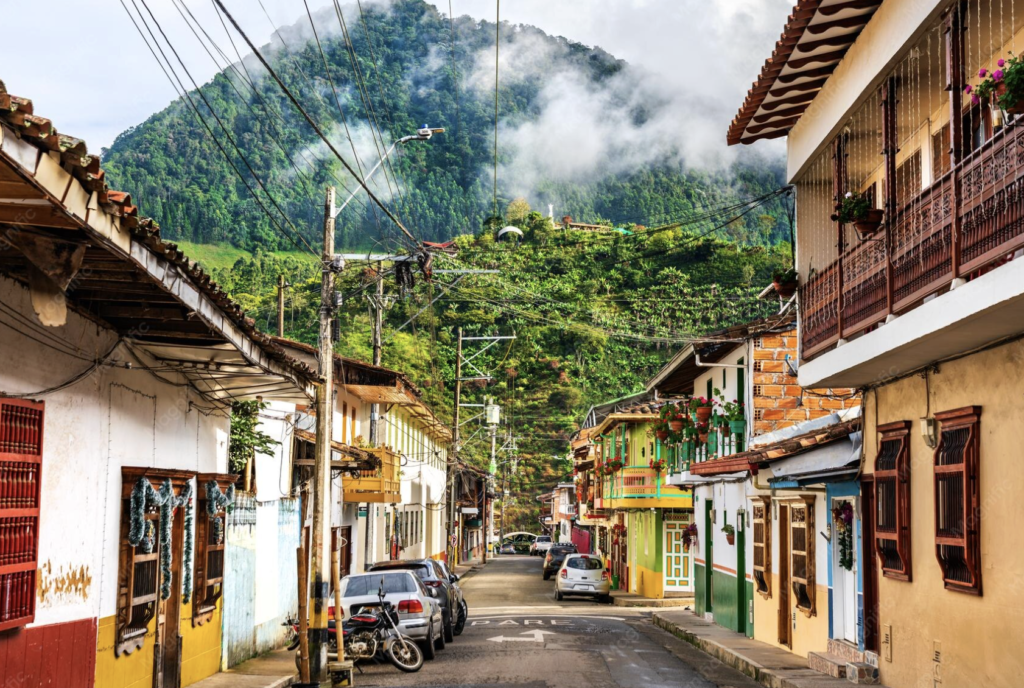
- Jardín (Antioquia): A deep-mountain coffee town surrounded by mist, banana plantations, and roaring waterfalls. Life here revolves around sitting in brightly painted wooden chairs in the central plaza sipping fresh espresso.
The Most Expensive Towns and Cities
- Cartagena (The Walled City & Getsemaní): Due to massive cruise ship tourism and international weddings, real estate and dining prices here match European capitals.
- Barichara (Santander): Known as the most beautiful village in Colombia, this colonial architectural masterpiece has drawn high-end boutique hotels and wealthy Bogotá retirees, driving up accommodation costs significantly.
7. Deep Dive: Essential Cities, Hotel Locations, and Real Price Breakdowns
Let's dissect the core urban hubs you will likely visit, identifying the precise safe neighborhoods to book your stay and concrete pricing for low, medium, and high-end hotels.
🏙️ Medellín: The City of Eternal Spring
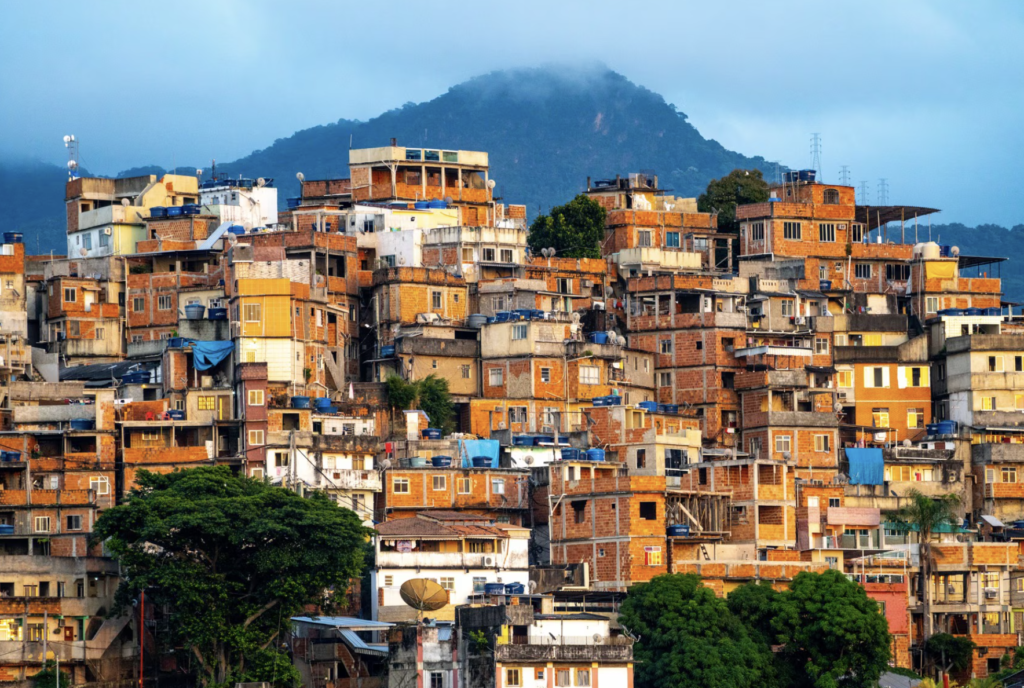
Medellín sprawls across the narrow Aburrá Valley, climbing up the green mountain slopes of Antioquia. Once an isolated mountain valley, it has engineered an urban renaissance, utilizing a world-class Metro system, cable cars, and outdoor escalators to integrate its communities. It is currently the premier digital nomad destination in South America.
Best Neighborhood Locations for Hotels
- El Poblado: The undisputed financial and tourist core. It is safe, heavily policed, and filled with thousands of restaurants, cafes, and co-working spaces. Focus on the Provenza area for nightlife, or Manila for a quieter, hipster coffee shop vibe.
- Laureles: A flatter, highly walkable neighborhood characterized by circular streets and lined with massive leafy trees. It offers an authentically Colombian upper-middle-class experience with slightly lower prices than Poblado and an incredible cafe culture.
Hotel Price Breakdown (3 Real Baseline Examples)
- Budget Tier: Los Patios Hostel (El Poblado) — A world-famous, designer hostel featuring rooftop bars, co-working pods, and highly secure shared dorms or private capsule rooms. Average Price: $20 – $35 USD/night (Dorm) | $70 – $90 USD/night (Private).
- Mid-Range Tier: Hotel Inntu (Laureles) — An eco-concept, modern hotel located in the heart of Laureles, offering fast Wi-Fi, air conditioning, and a business center. Average Price: $55 – $85 USD/night.
- Luxury Tier: The Click Clack Hotel (El Poblado) — A stunning, avant-garde luxury boutique hotel located steps from Parque El Poblado. Famous for its brutalist architecture, open-air green spaces, and high-end dining. Average Price: $160 – $240 USD/night.
🏛️ Bogotá: The High-Altitude Sovereign Capital
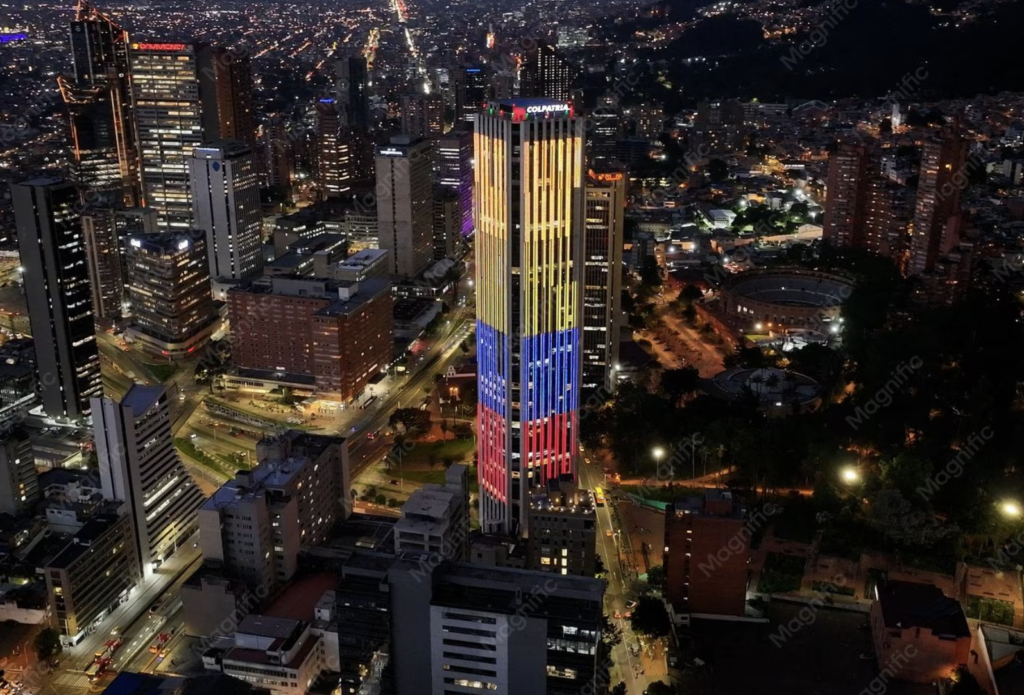
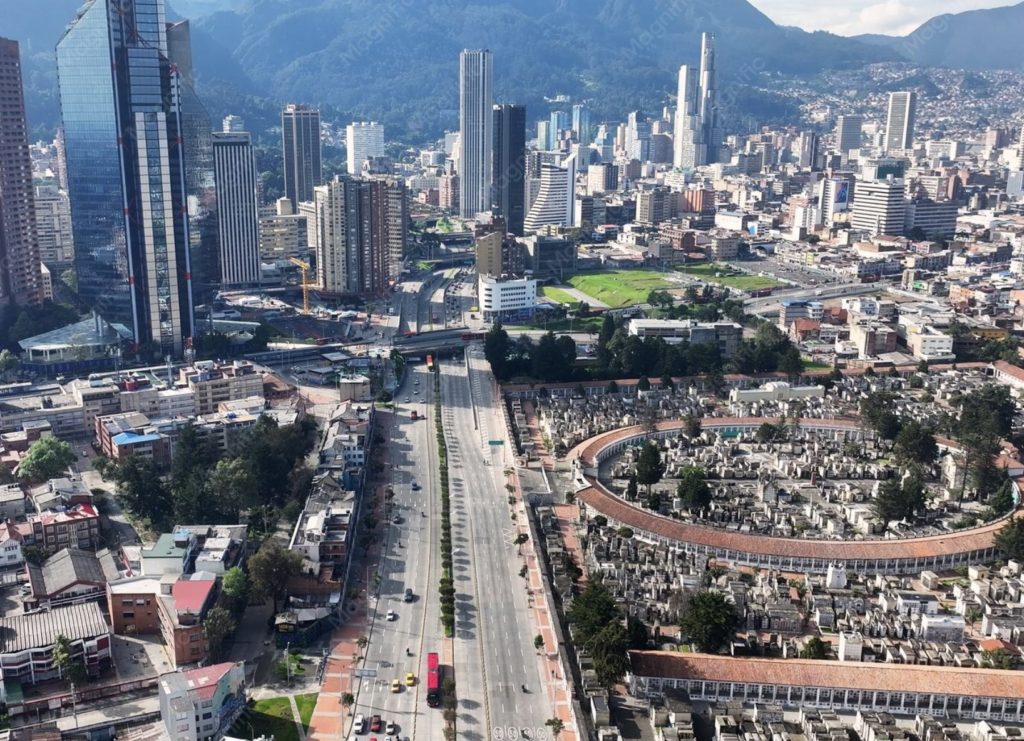
Sitting on a massive high-altitude plateau in the Eastern Cordillera at 2,640 meters (8,660 feet), Bogotá is the massive, beating heart of Colombia. It is a metropolis of over 8 million people where historical colonial charm collisions with gritty, industrial urban art and sophisticated culinary scenes. The climate is crisp, cool, and permanently autumnal.
Best Neighborhood Locations for Hotels
- Usaquén: Located in the far northeast of the city. It is an upscale, incredibly safe neighborhood that used to be a separate colonial village. It features narrow cobblestone streets, high-end French and Colombian bistros, and a famous Sunday flea market.
- Chico / Zona T: The absolute financial powerhouse sector. Home to luxury shopping malls, safe pedestrian streets filled with upscale bars, and heavily guarded corporate hotel towers.
Hotel Price Breakdown (3 Real Baseline Examples)
- Budget Tier: Masaya Bogota (La Candelaria) — Located in the historic colonial center. A beautifully restored colonial mansion with interior patios, offering budget travelers an immersive cultural stay close to museums. Average Price: $15 – $25 USD/night (Dorm) | $45 – $60 USD/night (Private).
- Mid-Range Tier: Novotel Bogota Parque de la 93 (Chico) — A sleek, modern corporate hotel situated directly on Parque de la 93, one of the safest upscale dining and park areas in northern Bogotá. Excellent business infrastructure. Average Price: $70 – $110 USD/night.
- Luxury Tier: Four Seasons Hotel Casa Medina (Zona G) — Housed in a historic, architecturally protected 1946 building featuring stone columns and hand-carved wooden beams. Located in the heart of the "Zona G" (The Gourmet District). Average Price: $350 – $500 USD/night.
🏝️ Cartagena de Indias: The Caribbean Jewel
Cartagena is a sensory explosion of color, humidity, and history. Resting on the Caribbean coast, its crown jewel is the perfectly preserved 11-kilometer Walled City, built by the Spanish empire to protect its gold reserves from pirates. Bougainvillea-draped balconies line the streets, while the heavy beat of Champeta music echoes through the coastal air.
Best Neighborhood Locations for Hotels
- The Walled City (Centro Histórico / San Diego): The absolute prime location. Total immersion within the historic colonial fortress. It is safe to walk at all hours of the night, though hotel prices carry a massive premium.
- Getsemaní: Located just outside the historic walls, this old working-class neighborhood has become the cultural arts hub of the city. Filled with street murals, local families sitting outside their homes playing dominoes, and incredible nightlife around Plaza de la Trinidad.
Hotel Price Breakdown (3 Real Baseline Examples)
- Budget Tier: Viajero Hostel Cartagena (San Diego) — A highly rated, high-speed internet hostel located inside a beautiful colonial house within the safe walled city walls. Average Price: $18 – $28 USD/night (Dorm) | $65 – $80 USD/night (Private).
- Mid-Range Tier: Hotel Bantu By Faranda Boutique (San Diego) — A gorgeous boutique property that beautifully blends 18th-century colonial architecture with vibrant Afro-Caribbean design elements, complete with an interior pool. Average Price: $110 – $160 USD/night.
- Luxury Tier: Sofitel Legend Santa Clara Cartagena (Diego) — A world-class luxury hotel integrated into a former 17th-century Clarissian convent. It offers a spectacular blend of French luxury and colonial history, overlooking the Caribbean Sea. Average Price: $400 – $650 USD/night.
Secure Your Ideal Andean Basecamp
Compare real-time inventory, track exclusive deals, and book your stay in the safest tech-friendly neighborhoods instantly.
8. Culinary Architecture: A Structural Overview of Colombian Food
Colombian cuisine is not spicy; it is a hearty, comforting, and deeply regional architecture of flavors built on complex carbs, fresh meats, and ancestral corn. Because the topography varies wildly, what people eat changes completely from the mountains to the coast.
Iconic National Plates You Must Track Down
- Bandeja Paisa (The Andean Fuel): Hailing from the Antioquia region (Medellín), this is a massive engineering feat of a plate designed to fuel agricultural laborers in the mountains. It features a base of red beans cooked with pork, white rice, ground meat, crispy chicharrón (fried pork belly), a fried egg, sweet plantains, a slice of avocado, and a small corn arepa. It is a glorious carb-heavy mountain blueprint.
- Ajiaco Santafereño (The Bogotá Warmer): The ultimate cure for a cold, rainy day in high-altitude Bogotá. This is a thick soup made with three distinct varieties of regional potatoes, shredded chicken, and an indigenous herb called guasas which gives it its distinct, earthy flavor. It is served with heavy cream, capers, and a side of fresh avocado to mix directly into the broth.
- Pescado Frito con Arroz de Coco (The Coastal Identity): Found everywhere along the Caribbean coast. A whole fresh fish (usually red snapper or tilapia) seasoned simply with salt and lime, deep-fried to a perfect exterior crisp, served alongside sweet, dark coconut rice, and patacones (double-fried green plantain rounds flattened into discs).
9. Cultural Calendars: The Epic Regional Festivals
To witness the true soul of Colombia, you should strategically align your itinerary with its legendary regional festivals. When a festival occurs, entire cities structurally shut down to celebrate their heritage.
🌸 La Feria de las Flores (Medellín)
- The Timeline: Takes place every year during the first two weeks of August.
- The Significance: This festival celebrates the end of slavery and honors the deep agricultural heritage of the region's flower farmers (silleteros). The core event is the Desfile de Silleteros, where hundreds of local farmers march for miles down the city highways carrying massive, intricate, 150-pound floral art pieces completely on their backs using wooden straps around their foreheads. The city erupts with open-air concerts (tablados), classic car parades, and non-stop street celebrations.
🎭 El Carnaval de Barranquilla (Barranquilla)
- The Timeline: Occurs annually four days before Ash Wednesday (usually late February or early March).
- The Significance: This is structurally the second-largest cultural carnival in the entire world, eclipsed only by Rio de Janeiro. It is a spectacular fusion of African rhythms, indigenous mythologies, and Spanish colonial traditions. The city completely pauses as massive parades like the Batalla de Flores take over the streets, featuring iconic characters like Marimondas (hooded figures with long noses) and El Monocuco.
💃 La Feria de Cali (Cali)
- The Timeline: Celebrated every single year from December 25th through December 30th.
- The Significance: The ultimate celebration of Afro-Colombian musical identity. The festival kicks off with the Salsódromo, a massive 1.5-kilometer parade where thousands of the world's elite professional salsa dancers perform highly complex choreographies at breakneck speeds. The entire week is defined by massive super-concerts, historic collectors' vinyl exhibitions, and non-stop social dancing across the city's riverbanks.
10. Navigating Booking Engine Solutions (Affiliate Resource Blueprint)
To structurally execute this travel blueprint efficiently, you need to rely on secure digital infrastructure to locks in your flights, accommodations, experiences, and safety nets. Use the verified booking gateways below to construct your itinerary:
🇨🇴 Official Colombia Trip Booking Infrastructure
To safely execute the logistical data outlined in this master guide, utilize these verified regional portals to cross-reference prices, secure bookings, and protect your transit infrastructure.
Compare routing and lock in tickets from NY, Newark, or Miami directly into Bogotá, Medellín, or Cartagena with full transparent pricing arrays.
Secure verified hotel rooms and boutique stays in ultra-safe sectors like El Poblado, Laureles, Usaquén, or Cartagena's San Diego walled district.
Crucial protection covering high-altitude Andean trekking, high-value tech gear safety for remote workers, and emergency local medical logistics.
🗺️ Excursion Planning & Regulatory Protection Gateways
Do not navigate complex regional tours or air travel delays without institutional support frameworks. Use these platforms to guarantee entry access and safety protocols.
Book vetted, Spanish and English day excursions inside Cartagena's fortresses, Guatapé rock transfers, and local high-altitude coffee finca tours.
Your primary channel for deep multi-day trekking guides, technical gear rentals, and extreme adventure routing across the Colombian Andes cordilleras.
Instantly secure tickets for skipping lines at major city museums, private city graffiti tours in Comuna 13, and secure island transfers.
If your international flight from the US or domestic connection inside Colombia faces structural cancellations or delays, execute legal compensation claims instantly.
11. The Ultimate Mandate: Stand Up and Go
Colombia cannot be fully understood from the safety of a screen. It is a country that must be felt—in the crisp, high-altitude air of Bogotá, the kinetic salsa halls of Cali, the historical ramparts of Cartagena, and the innovative, rolling green hills of Medellín. It is a land that has masterfully re-engineered its historical challenges into an explosive, forward-looking cultural and technological canvas.
The data has been laid out. The structural blueprints are complete. The logistical parameters are set. Colombia is standing right in front of you, ready to disrupt your assumptions and expand your horizon. It demands your attention, your respect, and your presence. Stop overanalyzing the variables, pack your technical gear, fill out your Check-Mig, secure your flights, and dive headfirst into the magic of this spectacular Andean jewel. Colombia is waiting for you!