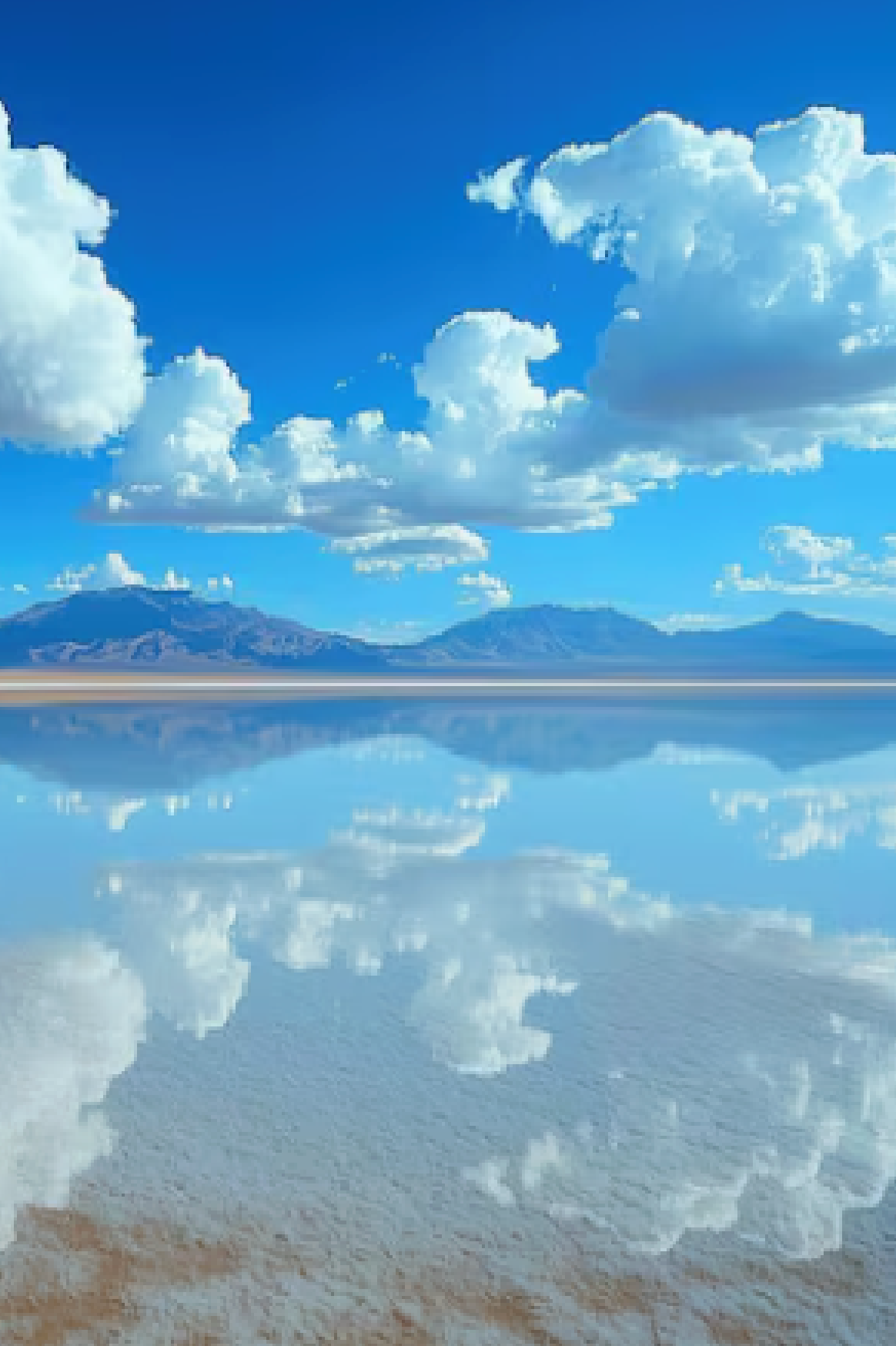

There are three places in the Andes that change people. Not in the clichéd, travel-brochure sense — but genuinely, measurably, in a way that you will still be trying to explain to people years after you return home. Machu Picchu, which rises out of the cloud forest like a dream someone refused to stop dreaming. The Salar de Uyuni in Bolivia, where the horizon disappears and the sky falls to your feet and you understand, for the first time, what it means to stand at the centre of the world. And Copacabana — the sacred town on the shore of Lake Titicaca, where the Andes meet their own reflection in the highest navigable lake on Earth, and where something ancient and quiet waits for the people who arrive slowly enough to feel it.
I was born in La Paz, forty minutes from Copacabana. and have stood at the Sun Gate above Machu Picchu more times than I can count. I have watched the Salar de Uyuni turn pink at 5:45 in the morning from the back of a Land Cruiser with a thermos of coca tea and a silence so complete it felt like a privilege. In this guide I am giving you everything I know — the ticketing rules that changed in 2026 and will catch unprepared travellers out, the exact month and hour to see the mirror effect, the access issue on Isla del Sol that is still not fixed, and how to string all three places together into the two-week itinerary of a lifetime.
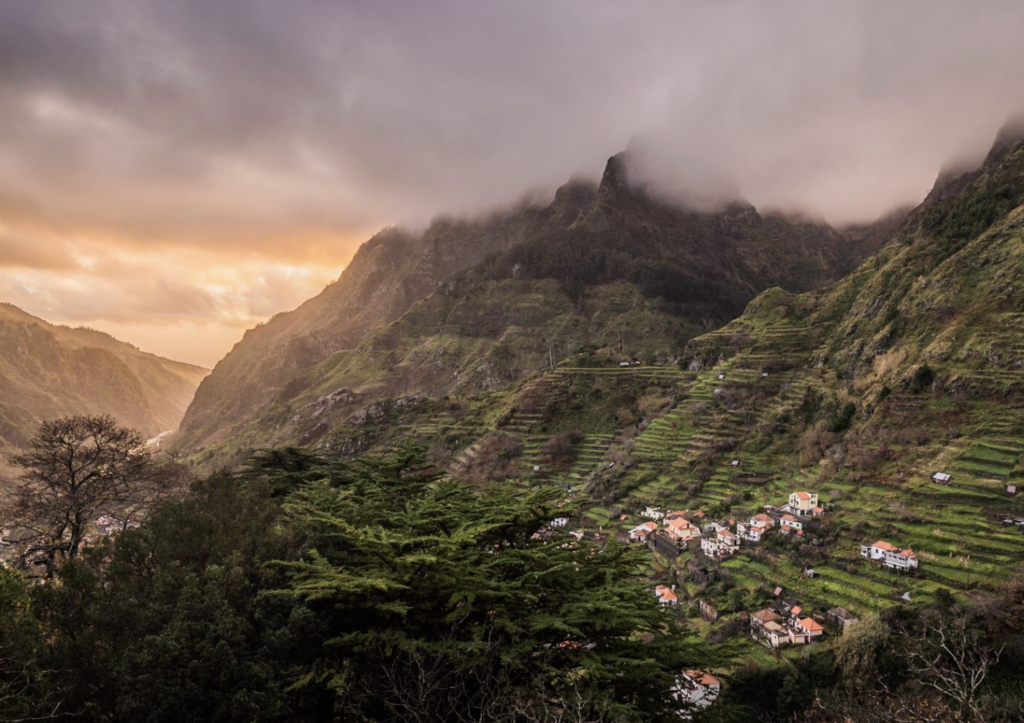
Three Wonders, One Route: Why These Places Belong Together
Most travel itineraries treat Machu Picchu, Uyuni and Copacabana as separate trips. That is a mistake. Geographically, culturally and spiritually, they are chapters in the same story — the story of the Andes. Machu Picchu is the pinnacle of the Inca civilisation that once stretched from Colombia to northern Argentina. The Salar de Uyuni sits in the heart of the same altiplano the Incas walked across. Copacabana and Lake Titicaca were sacred to the Incas as the origin point of creation — where Manco Cápac and Mama Ocllo emerged from the waters to found the empire that built Machu Picchu.
These three places are also perfectly positioned for a single, logical itinerary. You fly into Lima, acclimatise through Cusco and the Sacred Valley, visit Machu Picchu, cross into Bolivia by bus through Puno and Copacabana, spend time on Lake Titicaca and Isla del Sol, then travel south to La Paz and on to Uyuni. The circuit closes with a flight from Uyuni or La Paz back to Lima, or continuing south into Argentina or Chile. It is the classic Andes loop — and this is your complete guide to doing it right.
| Destination | Country | Altitude | Best Season | Min. Stay | Advance Booking |
|---|---|---|---|---|---|
| Machu Picchu citadel | Peru | 2,430 m | Apr–Oct (dry) | 1–2 full days | 3–4 months ahead |
| Aguas Calientes (base) | Peru | 2,040 m | Year-round | 1 night min. | 2–4 weeks ahead |
| Cusco (acclimatisation) | Peru | 3,400 m | Apr–Oct | 2–3 nights | 2–4 weeks ahead |
| Copacabana | Bolivia | 3,841 m | Apr–Oct | 1–2 nights | 1–2 weeks ahead |
| Isla del Sol | Bolivia | 3,800 m | Apr–Oct | 1 night recommended | On arrival (boat) |
| Uyuni town (base) | Bolivia | 3,669 m | Nov–Apr (mirror) / May–Oct (dry) | 1–2 nights | 1–2 weeks ahead |
| Salar de Uyuni | Bolivia | 3,656 m | Jan–Mar (mirror) / Jun–Aug (white) | Day trip or overnight | Book tour in advance |
YOUR ANDES JOURNEY STARTS HERE
Find the Flight That Opens the Door to Everything
Lima (LIM) is your main gateway into Peru. La Paz (LPB) for Bolivia. Both airports connect to the destinations in this guide. Compare every airline, set a price alert and lock in your dates — the mountains are not going anywhere, but the cheap seats are.
No booking fees · Price alerts · 1,000+ airlines compared instantly
Machu Picchu 2026: The Complete Insider Guide
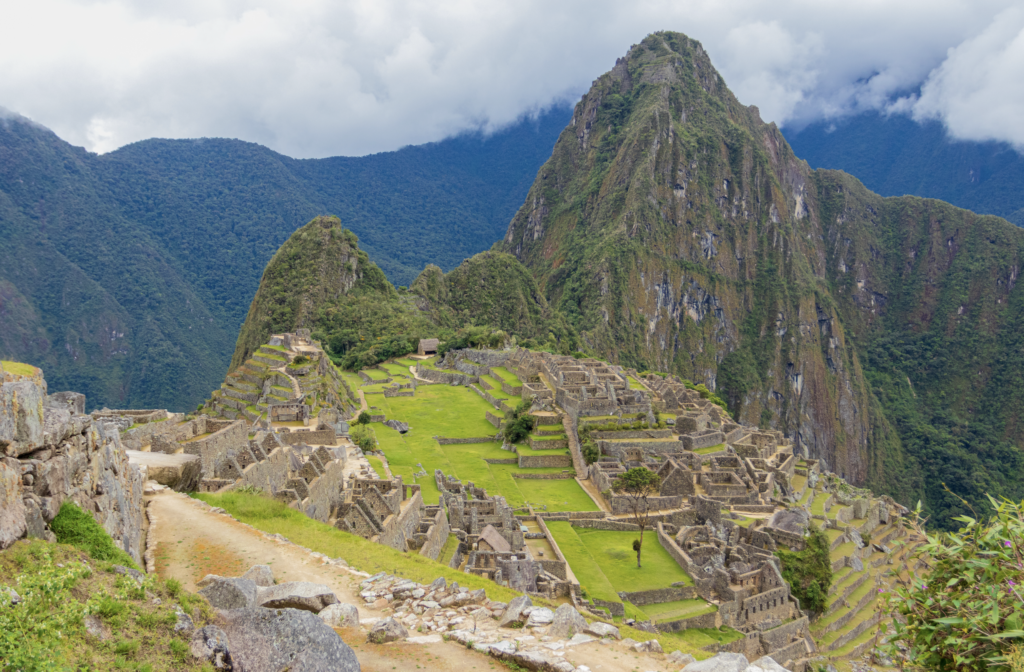
Machu Picchu is the most visited archaeological site in the Americas — and the most regulated. The 2026 ticketing and entry system has been updated again, and getting it wrong means watching the sunrise from Aguas Calientes instead of from the Sun Gate. Here is everything you need to know, from someone who has navigated this system dozens of times.
The New 2026 Circuit System: Which Ticket Do You Actually Need?
The Ministry of Culture reorganised Machu Picchu’s access into a circuit system with 10 routes grouped into three main circuits. This is the single most confusing thing about visiting Machu Picchu — and the source of the most costly booking mistakes.
| Circuit | Name | What You See | Duration | Best For | Price (Foreign Adult) |
|---|---|---|---|---|---|
| Circuit 1 | Panoramico | Upper agricultural terraces, Watchman’s Hut, panoramic viewpoints | 1.5–2h | Sunrise views, photographers, first-timers | ~USD $40 (152 soles) |
| Circuit 2 | Clasico | Classic postcard viewpoint, temples, water fountains, Intihuatana stone | 2–3h | First-timers wanting the full classic experience | ~USD $40 (152 soles) |
| Circuit 3 | Realeza | Lower agricultural terraces, Inca drawbridge trail | 2–3h | Those wanting less crowds and unique perspectives | ~USD $40 (152 soles) |
| + Huayna Picchu | Mountain add-on | Steep hike to the peak above the citadel — the mountain in postcards | +2–3h | Fit hikers, unforgettable views, very limited | ~USD $53 (200 soles) |
| + Machu Picchu Mt. | Mountain add-on | Longer, higher hike with panoramic views of the full site | +3–4h | Altitude-adapted hikers wanting fewer crowds than Huayna | ~USD $53 (200 soles) |
Critical 2026 update: From January 1, 2026, the Inca Trail permit no longer includes Machu Picchu citadel entry. These are now two completely separate purchases. If you are trekking the Inca Trail, you must buy both your trail permit AND your citadel circuit ticket separately. Many travellers in early 2026 arrived at the Sun Gate to discover they could not enter. Do not be that person.
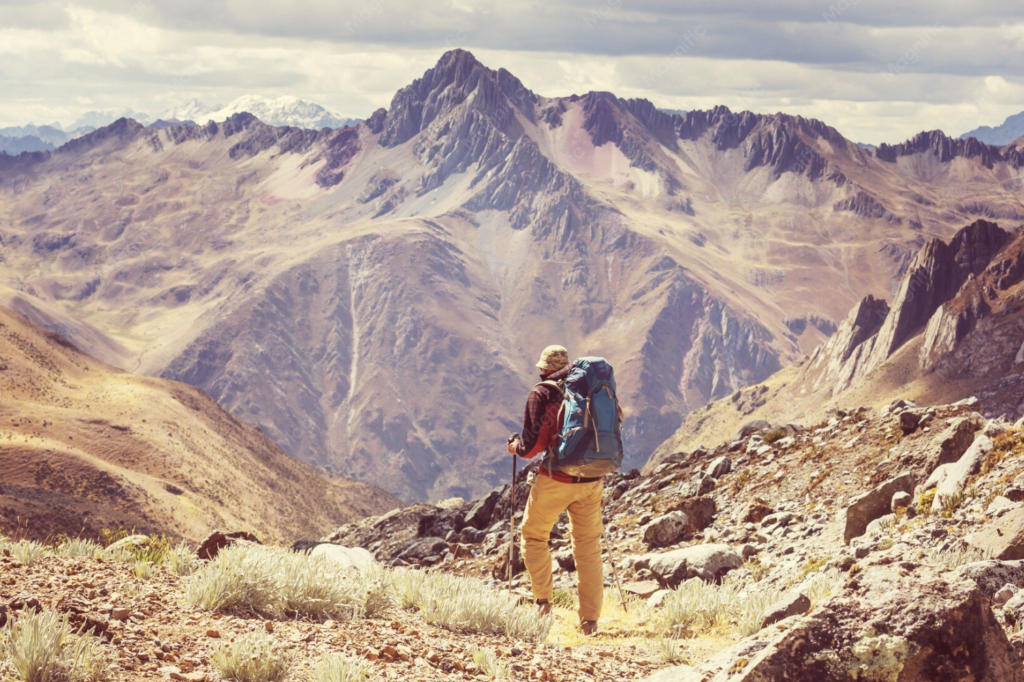
How to Buy Tickets: The Official System Step by Step
All Machu Picchu tickets must be purchased through the Peruvian Ministry of Culture’s official platform: tuboleto.cultura.pe. No tickets are sold at the entrance gate. None. If someone tells you otherwise, they are selling you something unofficial.
- Go to tuboleto.cultura.pe — this is the only official purchase platform.
- Create an account with your passport number (tickets are passport-specific — non-transferable).
- Select your date, preferred time slot (06:00–15:00 in hourly windows) and circuit.
- Pay by international credit card. The site accepts Visa and Mastercard.
- Download and save your ticket PDF — rangers scan the QR code at the turnstile.
- Book 3–4 months ahead for May–September high season. Minimum 4–6 weeks for all other months.
If tickets are sold out: The Ministry of Culture releases approximately 1,000 tickets daily for same/next-day visits, sold in person at the Cultural Centre in Aguas Calientes from 3:00pm to 10:00pm. This is a real option for flexible travellers — but get there by 2:30pm as the queue forms early.
GUIDED TOURS & EXPERIENCES
See These Places the Way the Locals Do
A certified local guide at Machu Picchu reveals layers of history that a solo visit simply misses. A private Uyuni dawn tour gets you on the salt flat before the bus groups arrive. The difference between a good trip and an extraordinary one is the person standing next to you explaining what you are actually looking at. Book through our trusted partners below.
Insider Tips That Will Transform Your Machu Picchu Visit
- Book the 06:00 entry slot. The first bus from Aguas Calientes departs at 05:30am and arrives at the citadel before the 06:00 rush. The morning mist is still in the valleys. The sun is low and golden. The tour groups from Cusco have not arrived yet. This is the single highest-value decision you can make.
- Walk up instead of taking the bus. The hiking path from Aguas Calientes to the citadel takes 45–55 minutes. You arrive before the bus queue has cleared, you earn the altitude properly, and the path through the cloud forest is genuinely beautiful. Your legs will know about it, but your photographs will thank you.
- Huayna Picchu has a strict 400-person daily limit. It sells out 3–4 months in advance for peak season. Book it the moment you commit to a date — not as an afterthought.
- Huayna Picchu closes October 16 to December 29 every year. Plan accordingly.
- Your 3-hour window starts at entry — not at your time slot. Standard tickets allow one entry only. Do not exit the citadel midway through your visit expecting to re-enter on the same ticket.
Did you enjoy so far …
- The iconic postcard viewpoint is inside Circuit 2. If you only book Circuit 1 or 3, you will not see it. Most first-timers want Circuit 2.
- Bring cash to Aguas Calientes. ATMs exist but frequently run out of money during high season. Carry Peruvian Soles for buses, meals and last-minute purchases.
- The weather changes in 20 minutes. A clear morning can become white cloud by 09:30. Equally, a misty arrival can burn off into a perfect clear sky by 10:00. Stay inside the citadel longer than you think you need to.
ALSO READ ON UNCOVERTHEANDES.COM
Altitude Sickness in Cusco & Machu Picchu: The Complete 2026 Guide
Cusco sits at 3,400m. Up to 50% of visitors experience altitude sickness. Read our complete prevention and treatment guide before you fly.
How to Get to Machu Picchu: All Your Options Compared
Aguas Calientes (also called Machu Picchu Pueblo) is the base town for visiting the citadel. It sits at 2,040 metres in a narrow valley at the foot of the mountain and can only be reached by train or by foot on one of the trekking routes. There is no road.
| Route | How Long | Cost (approx.) | Book In Advance? | Best For |
|---|---|---|---|---|
| PeruRail or Inca Rail train (Cusco/Ollantaytambo → Aguas Calientes) | 1.5–3.5h | USD $50–$150 one way | Yes — 4+ weeks ahead peak season | Most visitors — comfortable, reliable, scenic |
| Classic Inca Trail (4 days, 3 nights) | 4 days | USD $700–$1,200 all-in | Yes — permits sell out 5+ months ahead | Trekkers wanting the full historical approach |
| Salkantay Trek (5 days) | 5 days | USD $500–$900 all-in | 2–3 months ahead | Alternative trekkers, less crowded than Inca Trail |
| Inca Jungle Trail (4 days, cycling & hiking) | 4 days | USD $300–$500 | 3–4 weeks ahead | Adventure travellers on a tighter budget |
| Hidroeléctrica walk (budget option) | 3–4h walk from Hidroeléctrica station | USD $10–$20 train to Hidroeléctrica | Low season only — check conditions | Budget travellers — beautiful river valley walk |
The train is the right answer for most people. PeruRail’s Vistadome service (panoramic windows, food service) is the standard tourist option. Book the early morning departure from Ollantaytambo rather than Cusco — it is cheaper, faster and means you spend less time on buses. Return on the late afternoon train to keep your full day at the citadel.
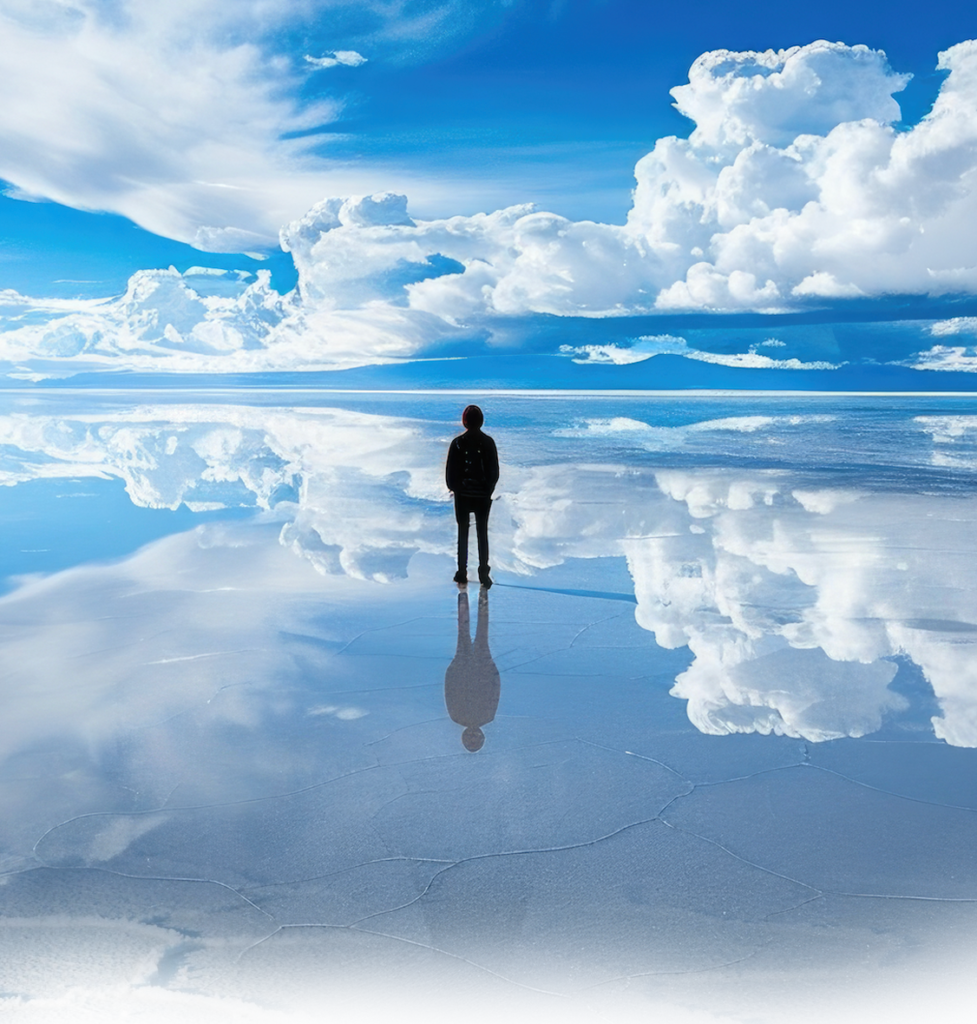
Salar de Uyuni 2026: Bolivia’s Infinite Mirror and White Desert
The Salar de Uyuni is 10,582 square kilometres of near-perfect flat salt. It is the largest salt flat on Earth by a factor of five. At 3,656 metres above sea level in the remote southwest of Bolivia, it is also one of the most otherworldly landscapes on the planet — a place where the sky and the earth exchange positions, where perspective collapses, where photographs consistently fail to capture what the eyes and body actually experience.
Understanding when to go and which tour operator to use makes the difference between a mediocre day trip and a life-defining experience. Here is what that means in practice.
Wet Season vs Dry Season: The Most Important Decision in Uyuni
| Season | Months | What You Get | Temperature (Night) | Photography | Road Access |
|---|---|---|---|---|---|
| Wet season (peak mirror) | Jan–Mar | Thin water layer creates perfect sky reflection — the mirror effect | 5–10°C | Extraordinary — sunrise turns the flat pink and gold | Some routes may flood — tours adapt |
| Wet season (shoulder) | Dec / Apr | Partial mirror effect possible — less predictable | 7–12°C | Very good on good days | Generally fine |
| Dry season | May–Nov | Brilliant white salt, geometric hexagons, perfect stargazing | -10 to -20°C (nights) | Classic white Uyuni — forced perspective | All routes open, best conditions |
The honest comparison: The mirror effect (wet season, January–March) produces the most spectacular photographs but requires luck — the right depth of water, the right morning calm before the wind rises. The dry season (May–October) is more reliably beautiful, more comfortable to walk on, and offers extraordinary stargazing. Nights in June and July can drop to -20°C — pack accordingly or suffer significantly.
The most important Uyuni tip nobody tells you: sunrise timing is everything for the mirror effect. Wind on the Salar is almost always stronger after 9am — a mirror-perfect surface at 6am becomes visibly rippled by 10am. The best tour operators depart Uyuni at 4:00–4:30am to reach the flats at first light. If your tour departs at 9am, the mirror window has already closed. Ask your operator explicitly what time they leave.
Uyuni Tours: What to Book and What to Avoid
All access to the Salar de Uyuni requires a tour — there is no public transport to the flat itself. Tours range from basic 1-day circuits to extraordinary 3-day expeditions that continue south to the coloured lagoons (Laguna Colorada, Laguna Verde) and the Siloli Desert, reaching altitudes above 5,000 metres.
- 1-day sunrise tour (USD $30–$50 pp): Basic but effective for the mirror effect. Covers the main flat, Isla Incahuasi (giant cacti island) and salt hotel ruins. Insist on a 4:00am departure.
- 3-day / 2-night Southwest Circuit (USD $150–$280 pp): The definitive Uyuni experience. Extends south to Laguna Colorada (blood-red from algae, home to 10,000 flamingos), Laguna Verde (emerald green from minerals at the foot of Licancabur volcano), the Dalí Desert and the highest geysers in the world (Sol de Mañana at 4,850m). Nights in basic hostels or salt hotels on the circuit. Bring every warm layer you own.
- What to avoid: The cheapest operators on the main square in Uyuni town often use poor vehicles with inadequate heating. The Southwest Circuit reaches 5,000m+ — vehicle failure at that altitude in winter is genuinely dangerous. Check your operator’s vehicle age, heating system and driver’s emergency experience before booking.
- Private tours vs group tours: Group tours (6 people per Land Cruiser) cost USD $30–$50/day. Private tours cost USD $150–$350/day per vehicle. If you are a photographer or travelling as a couple, a private sunrise tour for the mirror effect is worth every extra dollar — you get to position the vehicle exactly where you want it without negotiating with five strangers.
Uyuni Photography: Real Insider Advice
- Remove your polarising filter for mirror shots. The polariser cuts glare — exactly the opposite of what you want when photographing reflections.
- Get your lens 10cm from the water surface. The mirror effect is dramatically more powerful at water level than standing height. Get on your knees. Get wet. It is worth it.
- Forced perspective works best in the dry season with props. Classic Uyuni photos (dinosaurs chasing people, giants holding tiny figures) require hard salt and clear blue skies — dry season only.
- Shoot within 20 minutes of first light. The low-angle sunrise light turns the reflected sky orange and pink for roughly 15–20 minutes before it goes white and flat.
- Protect your camera from salt. Salt crystals and salt water are hard on optical equipment. Bring a microfibre cloth, a sealed bag for the camera when not shooting, and clean your lenses more often than you think necessary.
STAY WHERE IT MATTERS
Aguas Calientes. Uyuni Town. Copacabana. Book Before They Fill Up.
The hotels closest to Machu Picchu sell out 3–4 months in advance in high season. The best Uyuni salt hotel lodges — yes, some walls are made of salt — go even faster. Do not leave this to the last week. Lock in now and travel with your mind at ease.
Free cancellation on most rooms · Instant confirmation · Best price guaranteed
Copacabana and Lake Titicaca: Bolivia’s Sacred Shore
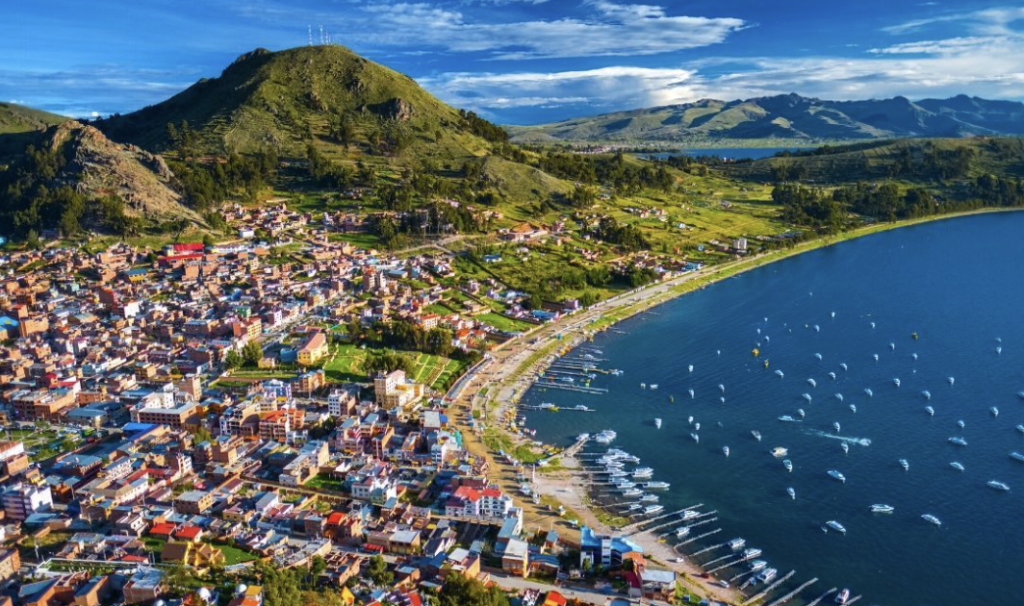
Copacabana sits at 3,841 metres on the southern shore of Lake Titicaca — at the tip of a narrow peninsula that juts into the largest high-altitude lake on Earth. The town has a permanent population of about 6,000 people, one of the most ornate colonial cathedrals in Bolivia, an extraordinary tradition of blessing vehicles with flowers and alcohol, and a small harbour from which wooden boats cross to Isla del Sol every morning.
Most travellers pass through Copacabana in transit between Peru (Puno) and Bolivia (La Paz) — spending one night, catching a boat to Isla del Sol, then moving on. That is enough to get the surface. To understand why Copacabana matters, you need at least two nights and the patience to sit by the lake at dusk, when the light turns the water the colour of mercury and the Inca creation myth stops being mythology and starts feeling like a description of something real.
PLANNING THE FULL ANDES CIRCUIT?
Argentina Travel Guide 2026: Buenos Aires, Patagonia & Mendoza
Many travellers continue south from Bolivia to Argentina. Our complete Argentina guide covers everything from Buenos Aires to Patagonia — the natural next chapter after Uyuni.
Getting to Copacabana
| Origin | Transport | Duration | Cost | Notes |
|---|---|---|---|---|
| La Paz, Bolivia | Tourist bus (direct) | 3.5–4.5h | USD $5–$10 | Includes Tiquina Strait ferry — bus and passengers cross separately on flat-bottomed boats |
| Puno, Peru | International tourist bus | 3–4h | USD $10–$20 | Border stop at Kasani (Peru) / Desaguadero or Copacabana crossing |
| Lima, Peru (direct) | Overnight bus Lima–Puno–Copacabana | ~18–20h | USD $30–$50 | Possible but tiring — recommend breaking the journey in Cusco |
Isla del Sol: What You Must Know Before You Go in 2026
Isla del Sol is a 14.3 km long island of terraced hills, pre-Inca and Inca ruins, quinoa fields and fishing communities. It is one of the most sacred sites in Andean cosmology — the place where, according to Aymara tradition, the Sun was born, and where the Inca creation story began. It is also staggeringly beautiful: clear mornings reveal a view of the snowcapped Cordillera Real across the lake that makes the altitude worth every laboured breath.
Critical 2026 access warning: There has been an ongoing conflict between the north and south communities of Isla del Sol over tourist access and revenue sharing. The northern part of the island — which contains the most important Inca ruins, including the Chincana Labyrinth and the Sacred Rock — has periodically closed to tourists since 2021. Before you board the boat in Copacabana, ask at the harbour about current northern access. This situation changes without notice and is still not fully resolved as of 2026.
- Boats from Copacabana: Standard departures at 08:30am and 13:30pm to the south end of the island. Return ferries depart mid-morning and mid-afternoon. Ticket: approximately 20–30 Bolivianos (USD $3–4) one way.
- Stay overnight if north access is open: The classic experience is to boat to the north end, hike the island north-to-south (3–4 hours, stunning views), arrive at the south end village (Yumani) and take the late boat back — or stay the night at one of the basic guesthouses for sunrise over the Bolivian Andes.
- Altitude reality check: The island sits at 3,800m. The hike involves significant elevation gain on paths with no shade. Go slowly, carry water and do not underestimate the effort required on day two or three in Bolivia.
- Carry small Bolivianos in cash: Community fees are collected at several checkpoints on the island. No card machines exist.
What Else to Do in Copacabana
- Cerro Calvario sunset hike: A 45-minute hike above the town leads to a hilltop marked with crosses and offerings. The sunset view over Lake Titicaca from the top is one of the finest photographs you will take in Bolivia. Depart 90 minutes before sunset.
- The Cathedral and vehicle blessings: Copacabana’s Baroque-Moorish cathedral, built between 1610 and 1820, houses the Black Madonna of Copacabana — Bolivia’s most venerated religious image. On weekends, watch vehicles adorned in flowers, streamers and coca leaves line up to be blessed with water, beer and confetti by priests. It is one of the most singular cultural experiences in South America.
- Lake Titicaca kayaking: Several operators now offer full and half-day kayaking on the lake, including routes to Isla de la Luna (Moon Island). A full day on the water at 3,800m with the Cordillera Real behind you is about as memorable as travel gets.
FLIGHT DELAYED OR CANCELLED?
The Airline Owes You Money — Let AirHelp Collect It
Long-haul routes to Lima and La Paz often connect through European hubs, making them eligible for EU261 compensation on delays over 3 hours. Up to 600 EUR per passenger. AirHelp checks your eligibility in 2 minutes, files every document, and only takes a fee if they win. You take zero risk.
No win, no fee · 2M+ passengers helped · Free instant check
NEXT ON YOUR ANDES JOURNEY
Ecuador & Galapagos Travel Guide 2026: Everything You Need to Know
Heading north after Bolivia? Our complete Ecuador guide covers Quito, the Galapagos Islands, the Amazon and the Avenue of Volcanoes.
The 14-Day Andes Itinerary: Machu Picchu, Uyuni and Copacabana
We recommend to travellers who have two weeks and want to experience all three destinations properly — without rushing so fast that the altitude becomes a problem or the logistics become a source of stress.
This is the itinerary
| Day | Location | Key Activity | Night | Altitude Notes |
|---|---|---|---|---|
| Day 1 | Lima, Peru | Arrive, rest, Miraflores seafront walk | Lima | Sea level — enjoy breathing normally |
| Day 2 | Lima → Sacred Valley | Morning flight to Cusco → transfer to Sacred Valley | Sacred Valley (2,800m) | First acclimatisation night — go slow |
| Day 3 | Sacred Valley | Pisac ruins, market, Ollantaytambo fortress | Sacred Valley or Ollantaytambo | Gentle exploration — no rushing |
| Day 4 | Sacred Valley → Aguas Calientes | Train to Aguas Calientes, afternoon town walk | Aguas Calientes (2,040m) | Lower than Cusco — body recovers |
| Day 5 | MACHU PICCHU | 06:00 entry, full day at citadel, Circuit 2 + mountain | Aguas Calientes | The day. Sleep well the night before. |
| Day 6 | Aguas Calientes → Cusco | Morning at leisure, afternoon train back to Cusco | Cusco (3,400m) | Acclimatisation complete now |
| Day 7 | Cusco | Sacsayhuamán, Qorikancha, San Blas market | Cusco | Full day exploration |
| Day 8 | Cusco → Puno | Bus or tourist train to Puno (Lake Titicaca Peru side) | Puno (3,830m) | Similar altitude to Copacabana |
| Day 9 | Puno → Copacabana | Border crossing to Bolivia, arrive Copacabana | Copacabana (3,841m) | Cerro Calvario sunset |
| Day 10 | Isla del Sol | Morning boat to Isla del Sol, full island experience | Copacabana or Isla del Sol | Allow altitude for the hike |
| Day 11 | Copacabana → La Paz | Bus to La Paz (4h), afternoon city exploration | La Paz (3,600m) | Altitude highest point of trip |
| Day 12 | La Paz → Uyuni | Morning flight or overnight bus to Uyuni | Uyuni (3,669m) | Rest — big day tomorrow |
| Day 13 | SALAR DE UYUNI | 4:00am sunrise tour — mirror or white salt | Uyuni | The other day. The unforgettable one. |
| Day 14 | Uyuni → Lima | Flight Uyuni/La Paz to Lima, depart or connect | Lima or flight | Journey home — or continue south |
Extending to 3 weeks?
Add the Uyuni Southwest Circuit (3 days) after day 13 for the coloured lagoons and flamingos. Or extend day 2–3 in the Sacred Valley with a Maras/Moray half-day. Or add Baños and Quito on the front end if flying via Ecuador. The backbone above holds — build around it.
Practical Guide: Altitude, Money, Visas and Safety Across Peru and Bolivia
Altitude — The One Thing That Can Break This Trip
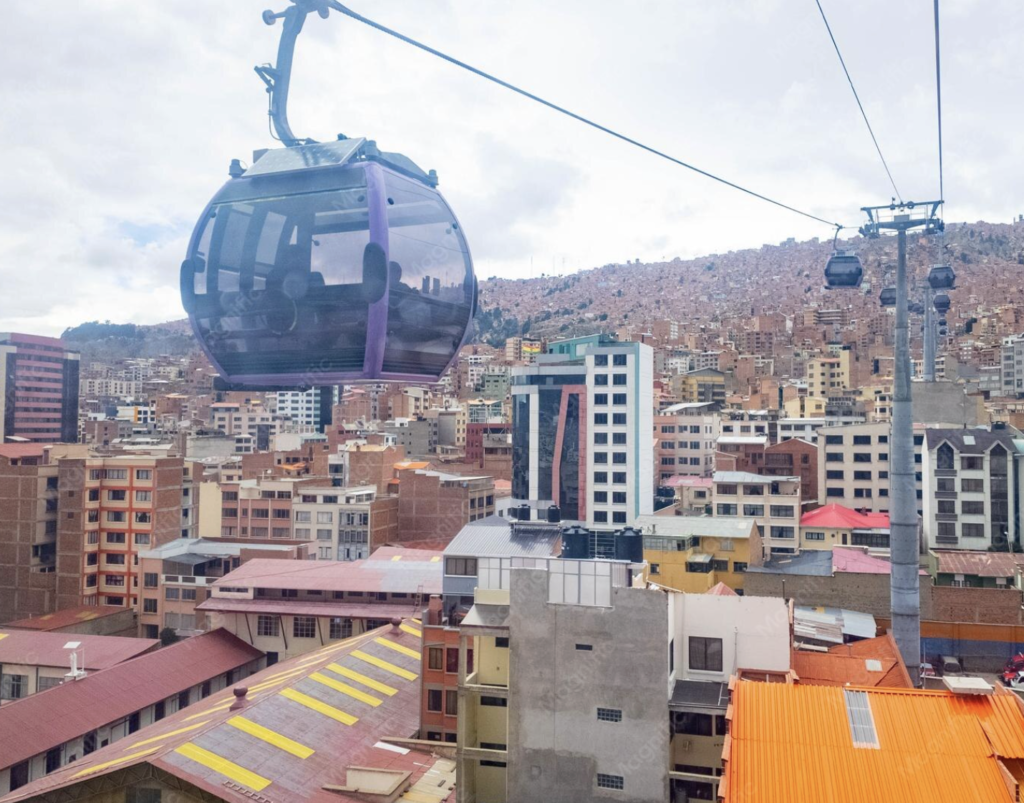
This itinerary crosses multiple altitude bands. Lima (sea level) to Machu Picchu (2,430m) to Cusco (3,400m) to Copacabana (3,841m) to La Paz (3,600m) to Uyuni (3,669m). The Sacred Valley strategy on Days 2–3 of the itinerary is specifically designed to give your body a graduated entry. Do not skip it. Arriving in Cusco on Day 1 and going directly to a full sightseeing day is the most reliable way to ruin your entire first week.
ESSENTIAL READING BEFORE YOU FLY
Altitude Sickness in Cusco & Machu Picchu: The Complete 2026 Guide
Prevention. Symptoms. Diamox dosage. Coca tea. The Sacred Valley strategy explained. Written by someone born at 3,600m in La Paz.
Money Across Peru and Bolivia
| Country | Currency | ATM Availability | USD Acceptance | Best Approach |
|---|---|---|---|---|
| Peru | Peruvian Sol (PEN) | Widely available in cities | Limited — sols preferred | Withdraw sols from ATMs in Lima or Cusco on arrival |
| Bolivia | Boliviano (BOB) | Available in major cities — limited in Uyuni | Not widely accepted | Carry USD cash to exchange in La Paz; bring enough Bolivianos to Uyuni |
| Both countries | — | Visa/Mastercard in hotels/restaurants | — | Wise or Revolut card for best exchange rates at ATMs |
Bolivia-specific warning: Uyuni town has very few ATMs and they frequently run dry. The nearest reliable ATM is in Potosí (3 hours away). Come to Uyuni with enough Bolivianos for your full stay — tours, meals, accommodation and any extras. As a benchmark: a 3-day Southwest Circuit costs approximately USD $150–$280 per person, meals run USD $4–8 per day, and accommodation in Uyuni runs USD $15–$40 per night. Bring USD $300 minimum in cash before leaving La Paz.
Visas and Border Crossings
- Peru: Citizens of the US, EU, UK, Canada, Australia and most Latin American countries enter visa-free for up to 90 days.
- Bolivia: Citizens of the US, EU, UK, Canada, Australia and most Latin American countries also enter visa-free since Bolivia reinstated reciprocal access. Always verify current requirements at the Bolivian consulate before travel — policies have changed multiple times in recent years.
- The Peru–Bolivia border at Copacabana (Kasani crossing): Open daily. Tourist buses from Puno to Copacabana handle the crossing procedure as part of the journey. Typically 30–60 minutes including immigration stamps. Carry your passport and any required entry forms.
Travel Insurance for This Route: Why Standard Policies Are Not Enough
This itinerary crosses two countries, reaches 3,841 metres, involves remote locations hours from hospital facilities, and includes physically demanding activities. Standard travel insurance policies — particularly those bundled with credit cards or booked as a quick add-on — frequently exclude or severely limit coverage for exactly these conditions.
Before you purchase any policy for this trip, verify in writing that it covers: altitude-related illness above 3,000m, emergency medical evacuation from remote areas (Uyuni is 3 hours from the nearest major hospital), trekking and hiking at high altitude, trip cancellation for medical reasons, and multi-country coverage across Peru and Bolivia simultaneously.
TRAVEL INSURANCE
The Andes Can Be Unforgiving —
Travel Covered or Don’t Travel
This route crosses two countries, reaches altitudes above 3,800m and passes through remote locations hours from the nearest hospital. Medical evacuation alone can cost USD $50,000+. A policy that explicitly covers high altitude, adventure activities and emergency airlift is not optional on this itinerary — it is the price of responsibility.
IATI Seguros
The benchmark for Andes travel insurance. Medical cover up to 5,000,000 EUR with explicit coverage for altitude illness, adventure sports and remote emergency evacuation.
✓ Altitude sickness covered
✓ Emergency evacuation included
✓ Trekking & adventure activities
✓ 24/7 Spanish-language support
Trusted by 500,000+ travellers worldwide
Get My IATI Quote →Asegura Tu Viaje
Compare 20+ insurers side by side in under 3 minutes. Built for Latin American routes — finds the policy that covers your exact itinerary at the best price available.
✓ 20+ providers compared instantly
✓ Peru & Bolivia specialist policies
✓ Worldwide coverage guaranteed
✓ 24/7 bilingual emergency line
The most trusted comparator across LATAM
Compare Insurers →Affiliate links — no extra cost to you · Immediate coverage · Free cancellation within cooling-off period
Frequently Asked Questions
Q: When is the best time to visit Machu Picchu?
April to October is the dry season in the Cusco region and the best time overall — clear skies, reliable weather and the best visibility from the citadel. May through August is peak season: book tickets 3–4 months in advance. November to March is the wet season — the citadel is often shrouded in mist (beautiful in its own right) and crowds are thinner, but afternoon rain is almost guaranteed.
Q: How early should I book Machu Picchu tickets?
For May through September visits, book 3–4 months ahead. Or For Huayna Picchu mountain add-ons, book the moment you commit to a date — the 400-person daily limit sells out 4–5 months ahead in peak season. For October through April, 4–6 weeks ahead is usually sufficient, though earlier is always safer. Buy only through the official platform tuboleto.cultura.pe.
Q: What is the difference between the wet and dry season at Uyuni?
Wet season (December–April, peak January–March) gives you the famous mirror effect — a thin layer of water on the salt flat creates a perfect reflection of the sky. Dry season (May–November) gives you the brilliant white salt desert, geometric hexagonal patterns, forced perspective photography and exceptional stargazing. Both seasons are spectacular in different ways. The mirror effect requires luck with weather and calm winds; the dry season is more reliably photogenic.
Q: Is the Isla del Sol accessible in 2026?
Access to the northern part of Isla del Sol — which contains the most important Inca ruins — has been restricted intermittently since 2021 due to a territorial dispute between northern and southern communities. The south end of the island remains fully accessible. Always confirm current northern access status with your Copacabana hotel or at the harbour before boarding the boat.
Q: How long does the Peru–Bolivia border crossing take at Copacabana?
The Kasani border crossing is used by tourist buses between Puno and Copacabana. Allow 30–60 minutes for the full immigration process. Your bus will stop on the Peruvian side for an exit stamp, cross into Bolivia, and stop again for entry stamps. Have your passport ready and ensure it has at least 6 months validity remaining.
Q: Can I do the Machu Picchu, Uyuni and Copacabana circuit in 10 days?
It is possible but uncomfortable. Ten days requires rapid movement and limits your time at each destination. More critically, the altitude progression becomes aggressive — you are asking your body to jump from Lima to Cusco to Copacabana to Uyuni without adequate acclimatisation time. The minimum we recommend is 12 days. Fourteen days is the sweet spot. The places you are visiting are extraordinary — give them the time they deserve.
Q: Do I need a guide at Machu Picchu?
A guide is not mandatory at the citadel, but for a first visit it is worth it. The history of Machu Picchu — why it was built, who lived there, how the stones were transported and fitted without mortar — is layered and genuinely astonishing. A good guide at the citadel transforms a walk through impressive ruins into an encounter with one of history’s most fascinating mysteries. Book through a licensed operator in Cusco or Aguas Calientes.
Q: What should I pack for the Uyuni Southwest Circuit?
The Southwest Circuit reaches altitudes above 5,000m and overnight temperatures below -15°C in winter months. Essentials: quality sleeping bag rated to -10°C or colder, full thermal base layers, mid-layer fleece, windproof outer shell, insulated gloves and hat, waterproof boots (for the mirror season), sunscreen SPF 50+ (UV intensity at 3,600m+ is severe), sunglasses with full UV protection, and cash in Bolivianos for the full duration. Do not rely on buying warm clothing in Uyuni town.
Q: How do I get from Machu Picchu to Uyuni?
The standard route: train from Aguas Calientes back to Cusco or Ollantaytambo, then bus from Cusco to Puno (7–8 hours or overnight), then international tourist bus from Puno through Copacabana to La Paz (6–7 hours including border), then overnight bus or morning flight from La Paz to Uyuni. Total transit time: 2–3 days. The Copacabana stop en route is ideal — it adds Lake Titicaca and Isla del Sol to your journey at no extra cost in time.
Q: Is Bolivia safe for tourists in 2026?
Bolivia is generally safe for travellers exercising normal precautions. The regions on this itinerary — Copacabana, Isla del Sol, La Paz tourist areas and Uyuni — are well-visited and have low crime rates. Political demonstrations occur periodically in La Paz but rarely affect tourists directly. The main safety consideration on this route is altitude and cold weather, particularly in Uyuni during winter months. Travel insurance, warm clothing and good tour operators are your primary safety investments.
These Places Are Waiting — Go Before You Have Too Many Reasons Not To
I have been asked hundreds of times which is the most special place in the Andes. The question is impossible to answer — not because the places are equivalent, but because they are incomparable. Machu Picchu and Uyuni and Copacabana do not compete. They accumulate. Each one changes the register of what you thought possible, and by the time you are sitting on the shore of Lake Titicaca watching the light change for the third time that evening, you realise that the Andes have been doing something to you since the moment you arrived, and you are not entirely sure you want it to stop.
Plan this trip properly. Buy your Machu Picchu tickets the moment your travel dates are confirmed — the ticketing system will punish procrastination in 2026. Check the Isla del Sol access situation before you book your Copacabana nights. Find out whether you want the mirror effect or the white salt and plan Uyuni accordingly. Get travel insurance that actually covers the altitude and remoteness of this route.
And then go. The mountains have been there for sixty million years. They will wait a few more months for you to arrive ready. But they will not disappoint.
Continue building your Andes knowledge: visit our Start Here page for the complete guide to planning a Peru and Bolivia circuit, or explore our Argentina Travel Guide and Ecuador & Galapagos Guide if you are extending your journey through South America.