

The moment your boot twists on a wet cobblestone in Cusco or sinks into a boggy section of the Salkantay Trail at 4,300 metres, you understand immediately that footwear is not a secondary consideration on an Andes trek. It is the primary one. Your back can recover from a heavy pack. Your knees can be helped by trekking poles. But a blister on day two of the Inca Trail, caused by a boot that was never broken in or never designed for sustained high-altitude use, is a problem that compounds every single day until you finish.
High-altitude trekking in the Andes places demands on footwear that most hiking boots were not built for. The temperature range alone — from 25°C on a sunny Cusco afternoon to -5°C on the Salkantay Pass at 4,600 metres, sometimes within the same day — requires a boot that insulates without overheating, breathes without losing waterproofing, and maintains ankle support on terrain that shifts between loose scree, wet rock, packed trail, and muddy cloud forest floor within the space of a few kilometres.
This guide covers the best high-altitude trekking boots for the Andes in 2026. Every pick has been evaluated specifically for Andean conditions: Inca Trail terrain, Salkantay altitude, Bolivian altiplano cold, and the specific combination of technical footwork and sustained distance that defines trekking in this part of the world. Direct Amazon links with my affiliate code are included for each boot — same price for you, a small commission for this site.
Best travel backpacks for backpacking South America 2026
If you are travelling city-to-city and adding day treks, this guide covers the 40L travel bags that pair best with a lightweight trekking boot.
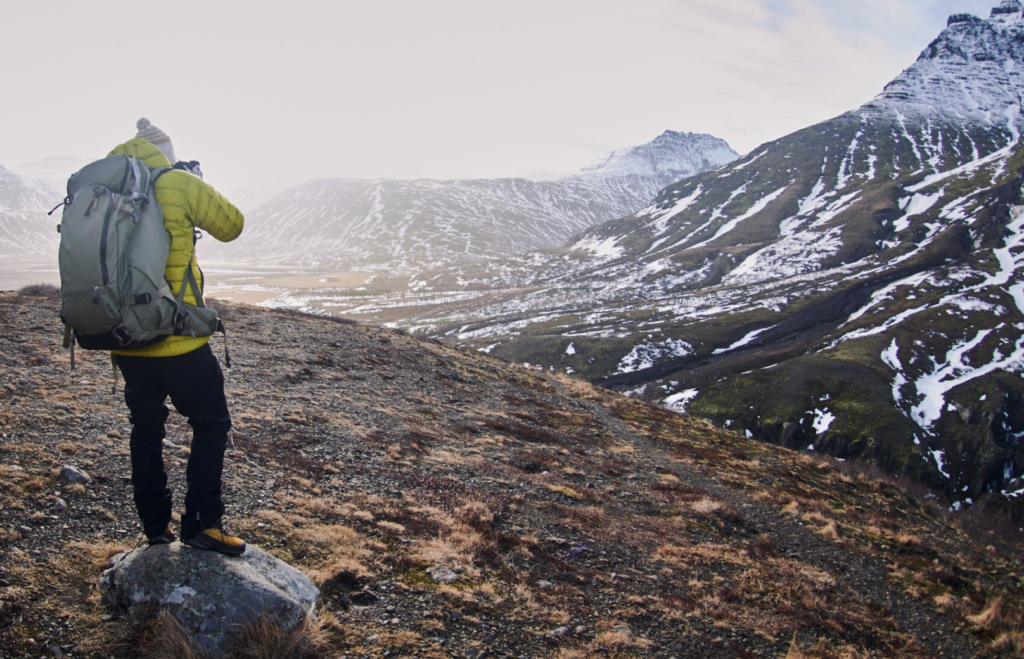
What Makes a Boot Right for High-Altitude Andes Trekking
Not every hiking boot is a high-altitude trekking boot. The distinction matters because altitude introduces variables that standard trail hiking does not: significantly reduced oxygen (your cardiovascular system is already working harder, so foot fatigue and circulation are more critical), extreme temperature swings, and terrain that ranges from glacial moraine to cloud forest to high-altitude grassland within a single trek. The boots that perform best in these conditions share a specific set of characteristics.
Ankle support and stiffness
High ankle cuffs — at least 12–15 cm above the footbed — provide the lateral support needed for loose scree, steep switchbacks, and wet rock surfaces. A mid-cut boot provides less protection and is better suited to well-maintained trails at lower altitudes. For the Salkantay, Choquequirao, and any Bolivian altiplano crossing, a full high-cut boot is the right choice. For the standard 4-day Inca Trail, a well-fitting mid-cut boot with excellent traction and a broken-in upper can work — but high-cut is still preferred.
GORE-TEX or equivalent waterproof membrane
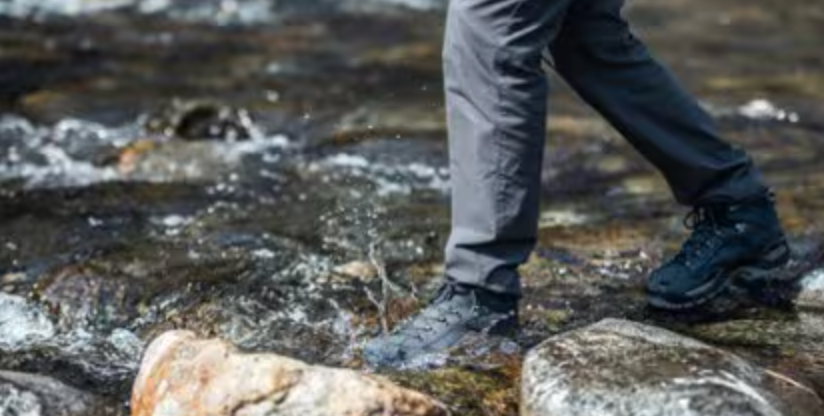
Waterproofing is not optional for Andean trekking. The Inca Trail cloud forest section receives substantial rainfall year-round. The Salkantay Pass section crosses snowfields and glacial streams regardless of season. The Bolivian altiplano wet season puts you walking through shallow brine at Uyuni. A boot with a genuine GORE-TEX or eVent waterproof membrane keeps feet dry in all of these conditions; a boot with only a DWR (Durable Water Repellent) coating is waterproof for 20–30 minutes of light rain, after which it saturates.
Vibram or equivalent outsole with aggressive lugs
The rocky, wet, and often steep terrain of Andean trekking demands an outsole designed for grip under load on multiple surface types. Vibram outsoles — the benchmark in trekking boot rubber — have a specific compound hardness and lug pattern designed for mountain trekking. A boot with a generic rubber outsole may grip well on dry packed trail but skid on wet volcanic rock or lose contact on the steep off-camber sections that are common on Inca-era trail systems.
| Feature | Why It Matters at High Altitude | Minimum Standard |
|---|---|---|
| Ankle height | Lateral support on loose terrain; prevents ankle rolls at altitude fatigue | High-cut (12–15 cm cuff) for technical routes |
| Waterproof membrane | Cloud forest, snowmelt, and wet season altiplano all require genuine WP | GORE-TEX or eVent — not DWR coating only |
| Outsole | Traction on wet rock, scree, mud, and packed trail | Vibram or Contagrip — avoid generic rubber |
| Insulation | Pre-dawn starts and high passes can reach -5°C to -10°C | Uninsulated is fine in dry season; 200g insulation for shoulder months |
| Break-in time | Blisters on day 2 of Inca Trail are trail-enders | Minimum 40–60 km of walking before the trek begins |
| Toe box width | Downhills compress toes into the front — toe room prevents black toenails | Half-size up from normal street shoe |
| Weight | Every 100g on foot = approx. 600g on back in energy terms at altitude | Target under 550g per boot for most treks |
Altitude sickness in Cusco and Machu Picchu — complete guide
How to acclimatise before the Inca Trail, what medication to carry, and what to do if symptoms appear on the trail.
The 6 Best High-Altitude Trekking Boots for the Andes 2026
How to Break In Your Trekking Boots Before the Inca Trail
The single most avoidable source of trek-ruining pain is starting the Inca Trail in boots that have not been broken in. Even the most comfortable boot on the shelf will cause hot spots, rubbing, and eventually blisters during the first 30–40 km of continuous wear if it has not been worn in progressively first.
The minimum break-in protocol: Start wearing your new boots on short walks of 3–5 km, 3 days after you receive them. Each week, increase the distance by 5 km. By the time you reach 40–50 km total accumulated distance on the boots, your feet will have adapted to the specific pressure points, the upper will have softened to your foot shape, and the outsole will have flexed sufficiently to move naturally with your gait. Do this over 4–6 weeks before your trek departure date.
What to wear with your boots: Break them in with the same sock weight and type you plan to trek in. Merino wool trekking socks (lightweight for the Inca Trail, midweight for higher altitudes) are the standard recommendation. Cotton socks retain moisture and cause blisters — avoid them entirely on any multi-day Andes trek.
| Boot | Capacity/Type | Weight | Best Terrain | Best For | Price Range |
|---|---|---|---|---|---|
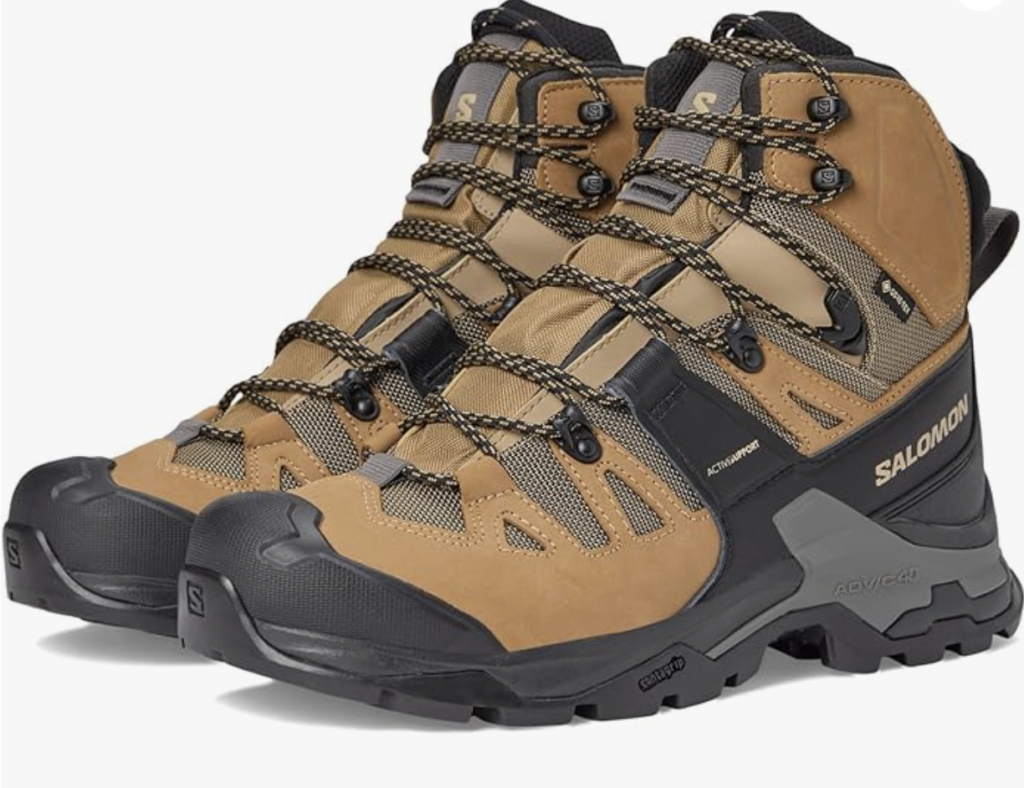
| Salomon Quest 4 GTX | High-cut trekking | 520g | All Andes terrain | Best overall performance | $$$ |
| La Sportiva Trango Tech GTX | High-cut / mountaineering | 480g | Technical + glacial | Demanding routes, crampons | $$$$ |
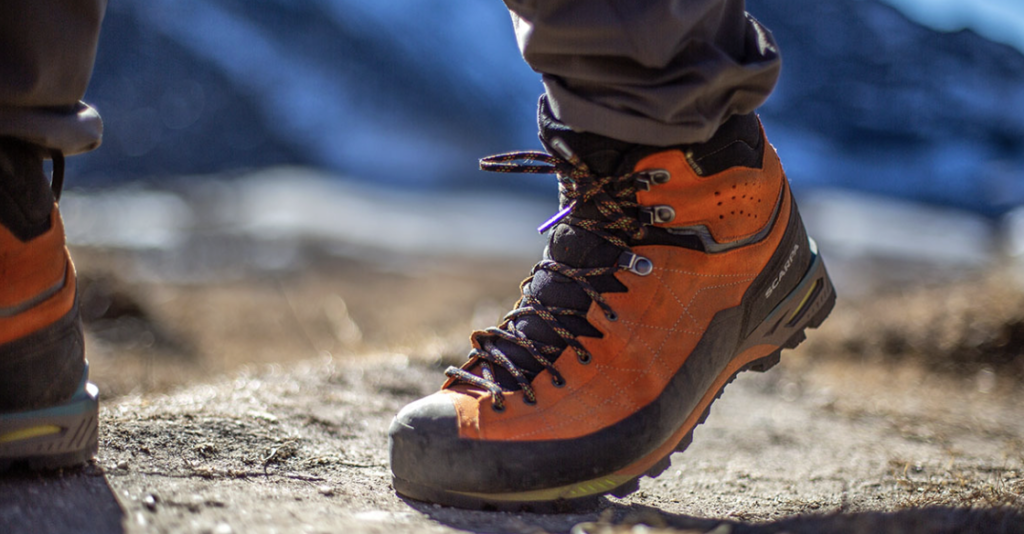
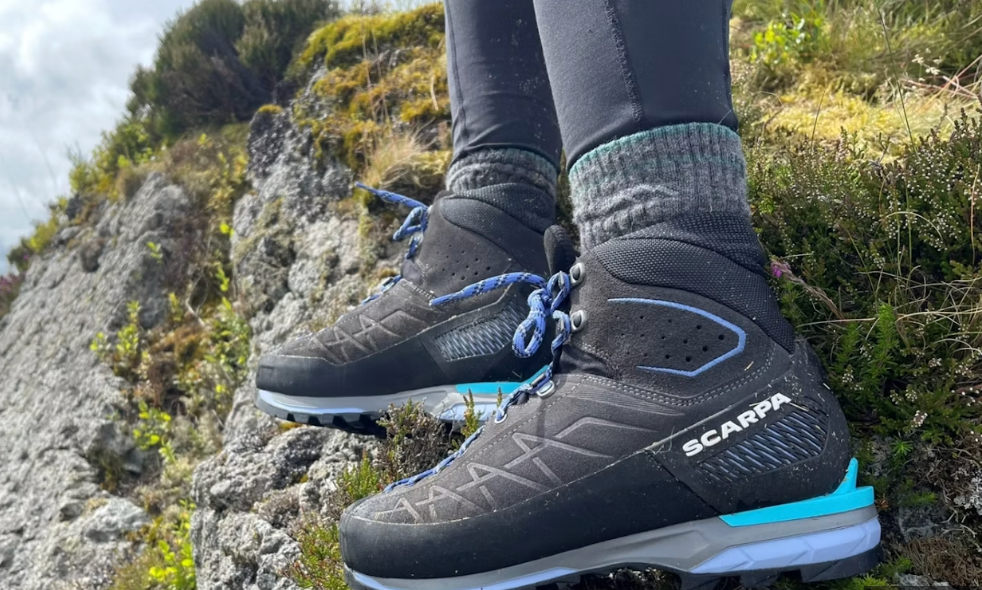
| Scarpa Zodiac Plus GTX | High-cut trekking | 500g | Mixed — mud specialist | Wide feet, Italian quality | $$$ |
| Merrell Moab 3 Mid GTX | Mid-cut trekking | 460g | Established trails | Budget, first-time trekkers | $$ |
| Lowa Renegade GTX Mid | Mid-cut trekking | 450g | Mixed trail | Photographers, long days | $$$ |
| Vasque Breeze AT GTX | Low-cut trekking | 390g | Established trails only | Light weight, hot feet | $$ |
Boot Care at High Altitude: What Andes Conditions Do to Your Footwear
High-altitude Andean conditions degrade trekking boot materials faster than most environments. The UV radiation at 4,000+ metres breaks down synthetic uppers and outsole rubber more rapidly than at sea level. Salt exposure on the Bolivian altiplano corrodes metal hardware and eyelets. The freeze-thaw cycles of overnight cold followed by midday warmth stress the adhesive bonds between upper and outsole.
After every major Andes trek: remove the insoles and allow both insoles and boot interior to dry completely in warm air (not direct heat — avoid placing boots near a fire or heater, as this shrinks synthetic uppers). Clean the outsole lugs with a stiff brush to remove impacted mud and debris that reduces traction. Apply a GORE-TEX reviver treatment (Nikwax TX.Direct) to the upper to restore the DWR layer that progressive washing degrades. Store boots at room temperature — not in a hot car boot or unventilated bag.
Best expedition backpacks for Andes trekking 2026
The companion guide to these boots — the best 65L packs for multi-day Andes expeditions, with a full packing strategy for altitude.
Socks, Insoles, and Accessories That Maximise Boot Performance at Altitude
The best trekking boot in the world underperforms with the wrong socks and a worn-out factory insole. Upgrading these two components — both of which are inexpensive relative to the boots themselves — has a larger measurable impact on comfort and blister prevention than most trekkers expect.
Socks for Andes trekking
Merino wool trekking socks are the unanimous recommendation from high-altitude guides across the Andes. The specific reason is not warmth — it is moisture management. At altitude, your feet sweat significantly during ascent even in cold temperatures. Cotton retains that moisture against the skin, causing friction and blisters within hours. Merino wicks moisture away from the skin surface, dries faster than synthetic equivalents, and naturally resists odour over multiple wear days without washing — an important property on a 4–7 day trek where laundry is not an option.
Recommended sock weight: lightweight merino (Darn Tough, Smartwool, Icebreaker) for the Inca Trail classic route where temperatures rarely drop below 5°C at night; midweight merino for the Salkantay Pass section (crossing at 4,600 m can feel -5°C to -10°C with wind chill); and heavyweight merino or a wool-synthetic blend for Bolivia altiplano trekking in dry season where pre-dawn temperatures at 3,700 m can reach -15°C. Bring 5–6 pairs minimum for a 7-day trek, one pair per day with rotation drying.
Aftermarket insoles
Factory insoles in even premium trekking boots are a cost compromise. They are designed to be neutral — adequate for a range of foot types — which means they are optimal for very few. Replacing them with a specialist insole matched to your arch type and foot volume dramatically improves energy return, reduces forefoot fatigue on long descents, and provides better heel support than the factory foam equivalent. Superfeet Green (high arch, firm support) and Powerstep Pinnacle (medium arch, cushioned) are the two most widely recommended aftermarket insoles for trekking boots. Replace factory insoles before breaking in your boots so you adapt to both simultaneously.
Altitude Acclimatisation and Your Feet: What Changes at 4,000+ Metres
Trekkers who have only hiked at sea level are sometimes surprised by how different their feet feel at 4,000 metres and above. The physiological changes at high altitude affect circulation in the extremities in ways that directly impact boot fit, blister risk, and foot fatigue — and understanding them helps you prepare correctly.
Foot swelling at altitude: Reduced atmospheric pressure at high altitude causes mild fluid retention in the extremities — a normal physiological response. Your feet at 4,200 metres on the Salkantay Pass are typically 5–8% larger in volume than your feet at sea level. This is the primary reason why going half a size up in trekking boots is not optional for Andes trekking. A boot that fits correctly in a Lima shoe shop will feel tight and compress the toes on the descent from the Salkantay Pass. A boot sized correctly at home at sea level will be right at altitude.
Reduced circulation and cold feet: At altitude, your cardiovascular system prioritises delivering oxygenated blood to your core organs over your extremities. Even in temperatures that would not cause cold feet at sea level, many trekkers experience cold feet on early morning trail starts at 4,000+ metres. This is why sock weight matters — and why carrying a pair of insulating camp booties (lightweight synthetic-fill booties that go over your hiking socks) is worth the 80g for any Andes trek where overnight temperatures drop below 0°C.
Blister risk at altitude: The same circulation reduction that causes cold feet also slightly reduces the sensitivity of the skin surface on your feet. This means that early-stage hot spots — the pre-blister rubbing sensations that normally alert you to a forming blister — are noticed later at altitude than at sea level. The practical implication: check your feet at every rest stop on the first day of an Andes trek, apply moleskin or blister plasters proactively at the first sign of any rubbing, and do not wait until the sensation becomes impossible to ignore.
Packing and Transporting Your Trekking Boots to South America
Getting your boots to the Andes without damage requires some specific packing strategy — particularly for the Salomon Quest 4 and La Sportiva Trango Tech, which have semi-rigid structures that can be deformed by heavy luggage compression in a standard travel bag.
In your checked bag: Pack boots heel-to-toe to save space, with one boot inside the other in a stuff sack or reusable bag. Place them in the centre of the bag surrounded by soft clothing items — never at the edges where compression from adjacent bags in the hold can deform the collar or outsole. Remove the insoles and pack them flat separately — this allows the interior to breathe during transit and prevents odour build-up in checked bags.
In carry-on: If your boots are your most expensive item of footwear gear (likely if you have invested in Salomon or Scarpa), carrying them in your carry-on bag eliminates the risk of checked bag loss. High-altitude trekking boots that weigh under 1 kg per pair (both boots combined) are common — the Vasque Breeze AT at 780g total is the lightest in this guide. Wrap in a dust bag or clean shopping bag and place at the bottom of your carry-on.
Airline footwear rules: All boots in this guide comply with carry-on luggage regulations on all major international carriers. There are no restrictions on trekking boots as carry-on items. Crampon-compatible boots (the La Sportiva Trango Tech) are boots without crampons attached — they carry without restriction. Crampons themselves must be checked.
Conclusion: The Right Boot Makes the Andes Accessible
A well-chosen, properly broken-in trekking boot removes the biggest single physical obstacle between you and an extraordinary Andes trek. The Inca Trail, the Salkantay, the Bolivian altiplano — these routes are not technically beyond the reach of a fit, prepared traveller. But they are unforgiving to under-prepared feet.
If you take one thing from this guide: buy your boots early, break them in properly, and go half a size up. Every other piece of gear is more forgiving of a mistake than your footwear. The rest of your preparation — altitude acclimatisation, the right backpack, the right clothing layers, travel insurance — is covered in the guides linked throughout this page. Get the boots right first, then build everything else around them.
This article is part of the Gear Lab Hub series at Uncover the Andes. The companion articles — best expedition backpacks, best travel backpacks for South America, and the destination guides for every major Andes route — are all linked and ready. See you on the trail.