

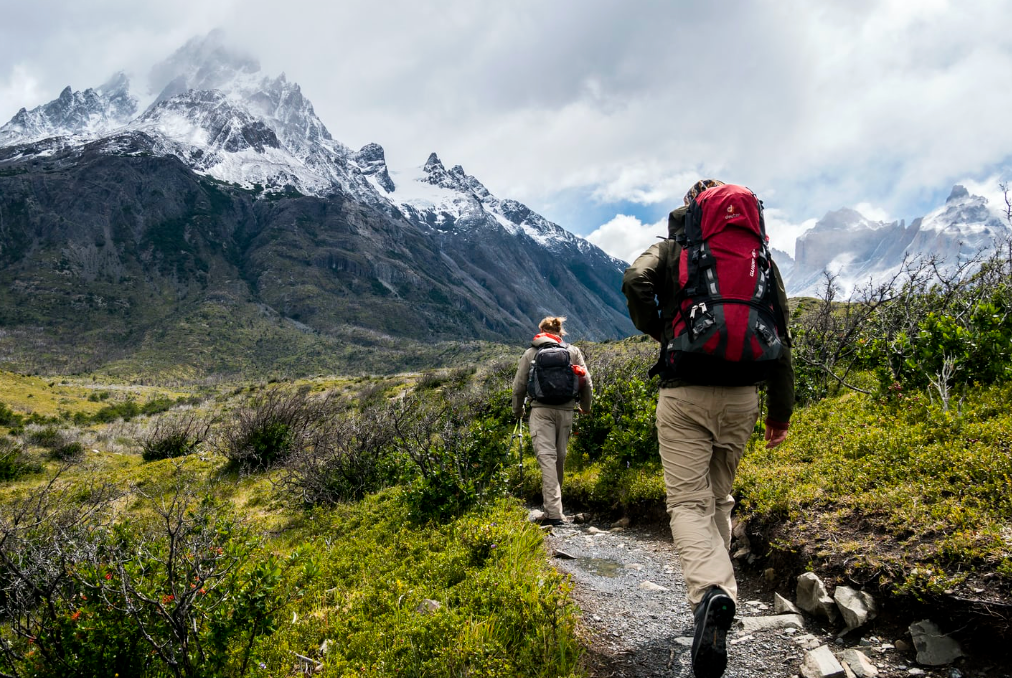
Patagonia does not test your gear — it interrogates it. The W Circuit in Torres del Paine is routinely described as one of the most spectacular trekking routes on Earth, which is true, but rarely accompanied by an adequate description of the weather. On a single day in the sector between Mirador Las Torres and Valle del Francés, you can experience sunshine, horizontal rain, 80 km/h gusts, hail, and a full rainbow — in that order, before lunch. Your waterproof hiking boots will face every one of those conditions.
The southern Andes — Patagonia, Tierra del Fuego, and the Chilean fjord region — present a different set of footwear demands than the high-altitude trekking of Peru and Bolivia. Altitude cold is replaced by sustained low temperatures year-round. Dry season scree is replaced by boggy meadows, river crossings, and the specific challenge of Torres del Paine’s wind-swept ridges where every step on exposed ground needs a planted, stable boot. And the rain — the rain in Patagonia is not an event, it is a condition.
This guide covers the best waterproof hiking boots for Patagonia and the southern Andes in 2026. Every pick is evaluated for the specific conditions of the W Circuit and the O Circuit: sustained water exposure, boggy terrain, strong lateral wind loads, and multi-day comfort over 8–10 hour days. Amazon links with my affiliate code are included for every boot.
Chile Patagonia travel guide 2026
Complete guide to Torres del Paine, the W Circuit, the Carretera Austral, and everything you need to plan a Patagonia trekking trip.
Patagonian Trekking Conditions: Why Boots Matter More Here Than Almost Anywhere
The Torres del Paine National Park receives an average of 700 mm of precipitation annually, but the distribution is highly concentrated — storm fronts arrive from the Pacific with minimal warning and can deliver an entire month’s rainfall equivalent in 48 hours. Even in the peak summer months (December–February), rain on at least 50% of trekking days is the statistical norm. Winter (June–August) sees fewer trekkers but dramatically more severe conditions — wind speeds exceeding 100 km/h are recorded regularly.
The terrain of the W Circuit alternates between compact gravel trail, wooden boardwalks over bogs, exposed rocky ridges, and the deep mud of heavily-trafficked sections near the refugios. No single boot compound handles all of these equally — the Vibram Megagrip compound excels on wet rock but wears faster on abrasive gravel; the Vibram Drumlin handles mud better but sacrifices some wet rock grip. Understanding these trade-offs helps you choose the right boot for the specific route and season.
The Table
| Condition | Frequency on W Circuit | Boot Requirement |
|---|---|---|
| Sustained rain (6+ hours) | 50%+ of trekking days | GORE-TEX or eVent membrane — not DWR only |
| Boggy meadow sections | Every day on the circuit | Sealed seams + high collar to prevent water ingress |
| Exposed rocky ridges (wind) | Multiple times per day | Ankle support + firm heel lock |
| River crossings (with rocks) | 2–4 per circuit | Aggressive outsole lug for submerged rock traction |
| Boardwalk over wet vegetation | Frequent near refugios | Grip on wet smooth wood — Megagrip excels here |
| Deep mud (near refugio areas) | Heavy traffic sections | Self-clearing lug design — Drumlin or Terra Flex |
| Wind-driven cold (0°C–8°C) | Year-round, peak in spring/fall | Insulation or thick socks + low breathability acceptable |
The 6 Best Waterproof Hiking Boots for Patagonia 2026
When to Go: Patagonia Seasons and Boot Selection
The W Circuit operates year-round but peak season (December to February) and shoulder season (October–November, March–April) have meaningfully different weather profiles that affect boot selection.
| Season | Months | Weather Profile | Boot Priority | Notes |
|---|---|---|---|---|
| Peak summer | Dec–Feb | Most stable but still 50%+ rain days | Lightweight GTX boot | W Circuit refugios fully booked — reserve 6+ months ahead |
| Shoulder spring | Oct–Nov | Variable, less wind than winter | Waterproof + ankle support | Best wildlife photography period; fewer crowds than Dec–Feb |
| Shoulder fall | Mar–Apr | Stable light, autumn colours | Any GTX boot in guide | Best photography light of the year; moderate conditions |
| Winter | Jun–Aug | Wind exceeds 100 km/h; cold | Insulated GTX boot + gaiters | W Circuit possible but challenging; fewer services open |
Milky Way photography at Salar de Uyuni 2026
Before Patagonia, Bolivia’s salt flat is one of the most photogenic landscapes in South America — and the gear that works there works in Patagonia too.
Gaiters, Waterproof Socks, and Accessories for Patagonian Conditions
Boots alone do not keep feet dry in deep Patagonian bog — when water depth exceeds your boot collar height, gaiters are the solution. A low-profile trail gaiter (Outdoor Research, Black Diamond, Salomon) that covers the boot laces and the lower 10 cm of the leg prevents water ingress from above the boot collar on the boggy sections near the refugios. Light trail gaiters weigh 80–120g per pair and pack flat — they are worth carrying on any W Circuit departure regardless of season.
Waterproof socks (SealSkinz, Dexshell) provide a secondary waterproof layer for river crossings and conditions where boot saturation is likely. They are not a replacement for GORE-TEX boots but extend the dry-time significantly. For winter Patagonia or any crossing that involves wading above boot height, waterproof socks plus gaiters are the most effective combination.
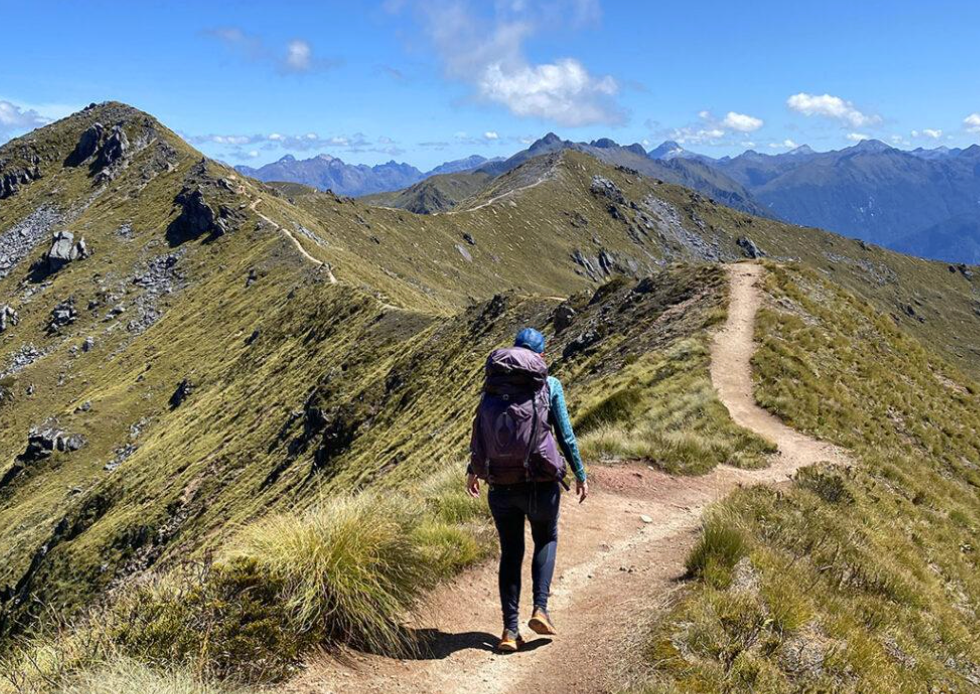
Boot Break-In Strategy for the W Circuit: The Patagonia-Specific Protocol
Patagonia presents a different break-in challenge than the Andes. The W Circuit terrain requires your boots to perform in wet conditions from the first hour of day one — and a boot that has not been broken in properly becomes a blister machine specifically on wet descents, where the saturated upper softens and shifts against the foot differently than it does dry.
The wet break-in addition:
Beyond the standard 40–60 km of walking, add 2–3 sessions of deliberately walking in wet conditions with your trekking boots — through puddles, rain, or with water applied to the upper. This accelerates the softening of the waterproof membrane and upper materials in the specific wet state they will be in for most of your W Circuit days. It also reveals any pressure points that only appear when the boot is wet and heavy, before you discover them at kilometre 15 of the Mirador Las Torres approach.
Descents on wet trail:
The majority of W Circuit blisters occur on the downhill sections — specifically the knee of the quadriceps muscles engage to resist gravity, which shifts the foot forward in the boot and compresses the toes. Going half a size up (standard recommendation for any trekking boot) is more critical in Patagonia than in the Andes because wet leather and synthetic uppers stretch and shift more than dry ones, increasing the dynamic movement of the foot inside the boot during descent.
The sock test:
Before departure, do one full-day wet walk in your boots with the exact socks you plan to use on the W Circuit. If you develop any hot spots during that day, address the cause — insole adjustment, different lacing pattern, or sock weight change — before you reach Torres del Paine. A hot spot in Patagonia, 40 km from Puerto Natales with no resupply option, is a problem that compounds every day.
Drying Your Boots at Patagonian Refugios: What Works and What Destroys Waterproofing
Every refugio on the W Circuit has a drying room — a heated space where trekkers leave wet gear overnight. The drying room is essential after a full day of Patagonian rain, but using it incorrectly can permanently damage your boots.
What to do: Remove the insoles and place them separately in the drying room — insoles dry faster when separate and can harbour odour if trapped inside a warm boot overnight. Loosen the laces completely to allow maximum air circulation through the collar and tongue. Stand boots upright with the tongue open. The refugio drying rooms are typically heated to 20–25°C, which is safe for all waterproof membranes and outsole adhesives.
What destroys boots:
Direct heat from open fire, radiator contact, or placing boots directly on a hot surface. The GORE-TEX membrane and eVent membrane are heat-sensitive — temperatures above 40°C can delaminate the waterproof layer from the upper, permanently destroying the waterproofing. The outsole adhesive is similarly heat-sensitive; direct contact with a hot surface can soften the bond between Vibram outsole and boot upper. Never place your boots directly on a radiator, near a wood-burning stove, or in direct strong sunlight for extended periods after the circuit.
Reactivating DWR during the trek: After 2–3 days of rain, the DWR coating on the outer surface of your boot (the layer that causes water to bead off before reaching the GORE-TEX membrane) degrades. You can partially restore it at the refugio using a heat source — loosely hold the boot 30 cm from a warm (not hot) radiator for 2–3 minutes, which reactivates the DWR treatment in the fabric. Alternatively, Nikwax Footwear Proof spray (applicable to wet boots) can be used at the refugio as a DWR refresh mid-trek. A 100ml spray bottle weighs 120g and is worth carrying on a 5-day circuit with sustained rain.
The W Circuit Gear Checklist: Exactly What Your Boots Need to Handle
Understanding the specific demands of the W Circuit helps explain why the boots in this guide were selected and what characteristics to prioritise. The 79 km of the W Circuit can be broken into four distinct terrain types, each with different boot requirements.
| Section | Distance | Key Terrain Challenge | Critical Boot Property |
|---|---|---|---|
| Mirador Las Torres (return) | 9 km up, 9 km return | Steep rocky ascent + moraine field at summit | Ankle support + aggressive outsole on wet rock |
| Valle del Francés | 12 km return | Exposed ridge in wind + watercourse crossings | Heel lock + waterproof collar height |
| Refugio Grey to Glaciar Grey | 11 km | Lakeside wind exposure + glacial gravel | Lateral stability + windload resistance |
| Camp connections (boardwalk/mud) | 38 km total | Heavily trafficked boggy boardwalk sections | Self-cleaning lug + comfort over distance |
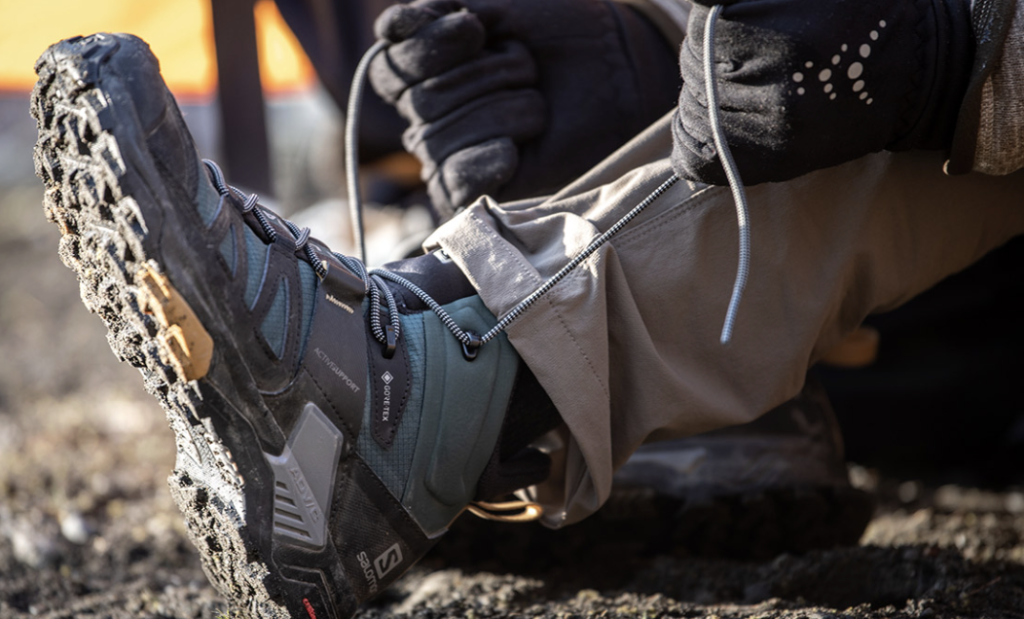
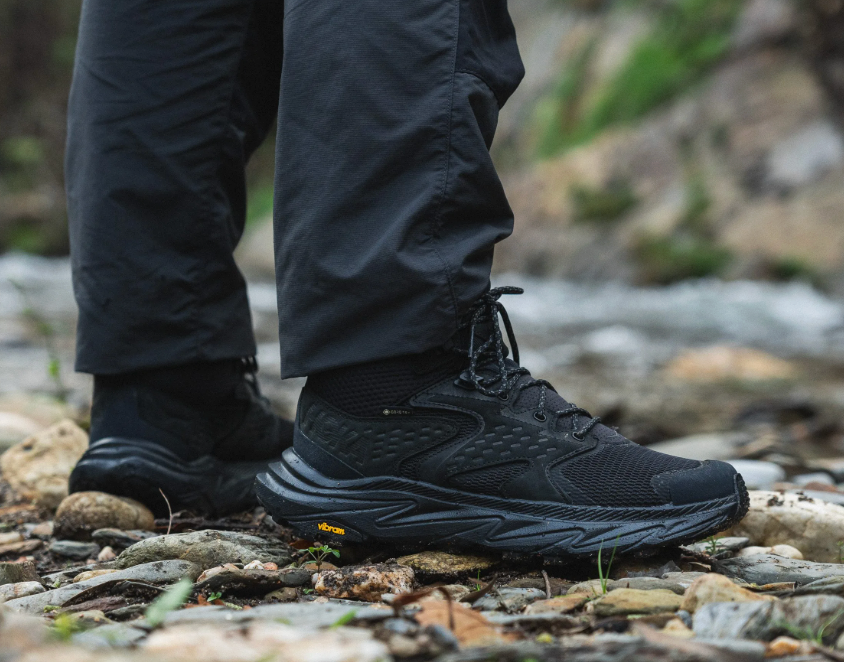
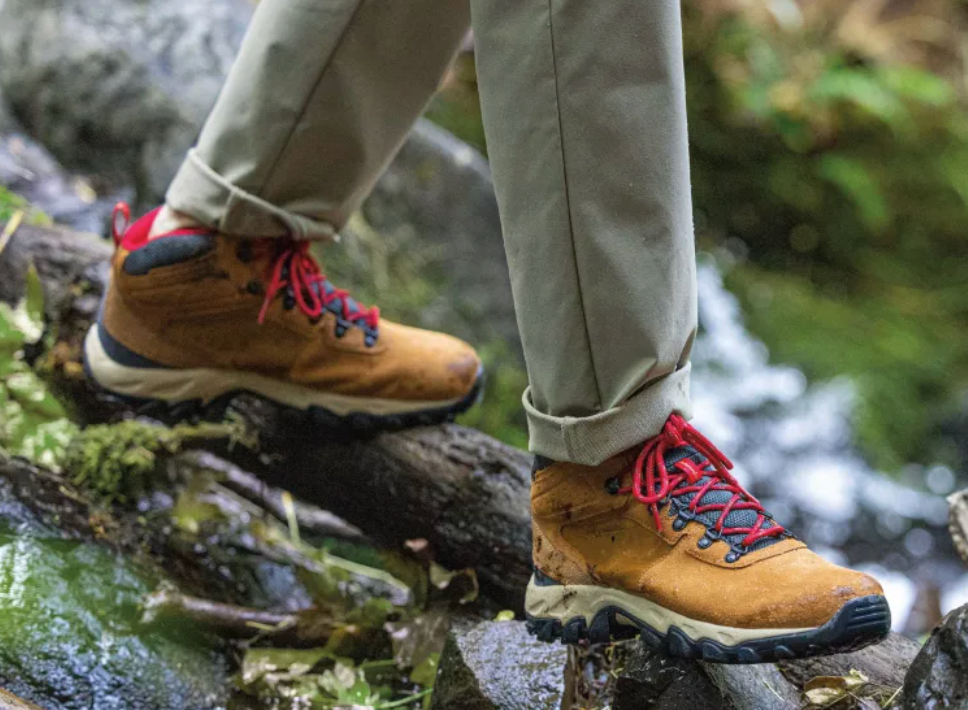
The critical insight from this breakdown: the Mirador Las Torres section has the highest technical demand (steep, rocky, often wet moraine at the top), while the connecting camp sections have the highest comfort demand (longest cumulative distance on easier terrain). A boot that excels at technical grip but sacrifices cushioning (Danner Trail 2650) is optimised for the former; a boot that prioritises cushioning (Hoka Speedgoat Mid 2 GTX) is optimised for the latter. The Salomon X Ultra 4 Mid GTX is the balanced choice that handles both adequately, which is why it leads this guide.
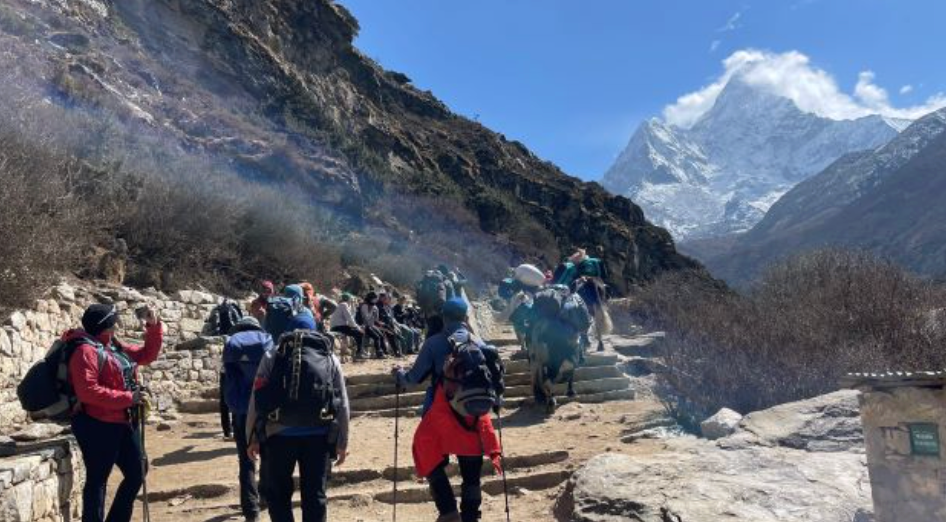
Conclusion: Patagonia Rewards the Prepared Trekker
Every person I know who has trekked the Torres del Paine W Circuit says the same two things: it was the most beautiful place they have ever walked, and they were more prepared than they expected to need to be. The preparation that makes the biggest practical difference — more than the rain jacket, more than the sleeping bag, more than the trekking poles — is the boots.
Patagonia is relentless in a way that is also spectacular. The same wind that makes you crouch behind a boulder to stay upright is clearing the cloud off the towers above you. The same rain that soaks the trial for three hours is feeding the waterfall that drops 200 metres into the valley below. Dry feet do not make the beauty more beautiful — but they let you focus on it rather than on the discomfort that should have been avoided.
The rest of your Patagonia preparation — flights, accommodation, packing list, photography guide, insurance — is covered in the Gear Lab Hub and destination guides linked throughout this article. The Chile Patagonia travel guide covers the full logistics. The expedition backpack guide covers what to carry. This guide covers what to wear on your feet. Put it all together and Torres del Paine is waiting.
Best expedition backpacks for Andes trekking and photography 2026
The companion guide to this boots article — which packs carry the W Circuit kit most effectively, and how to pack for 5 days on the trail.