
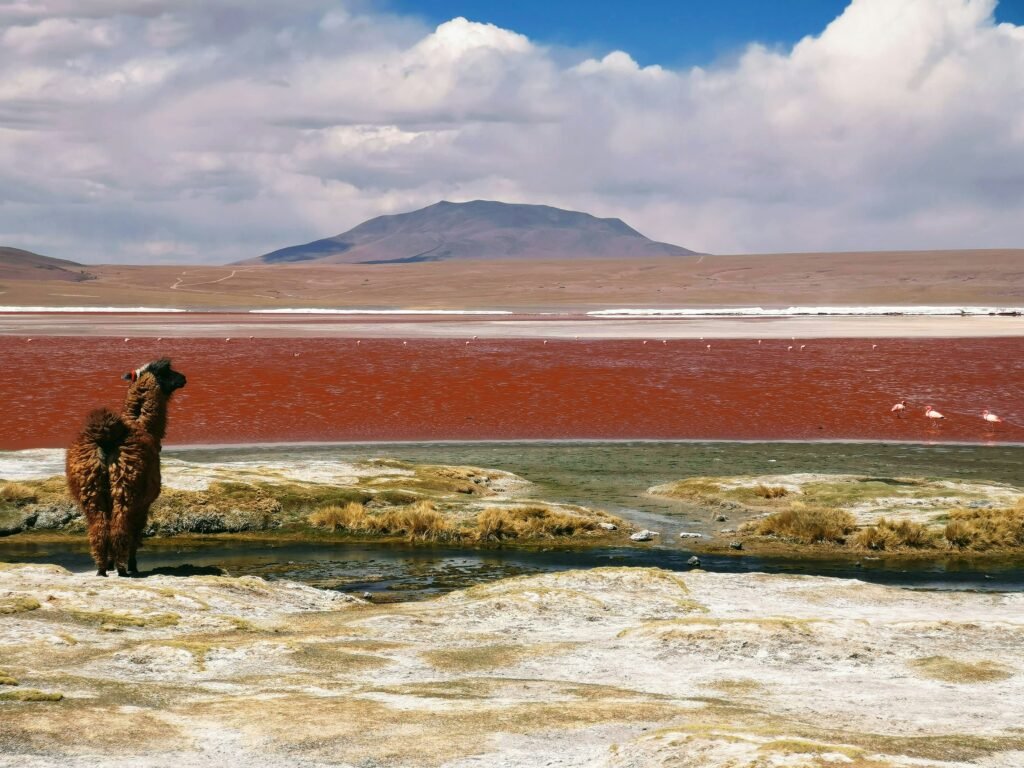
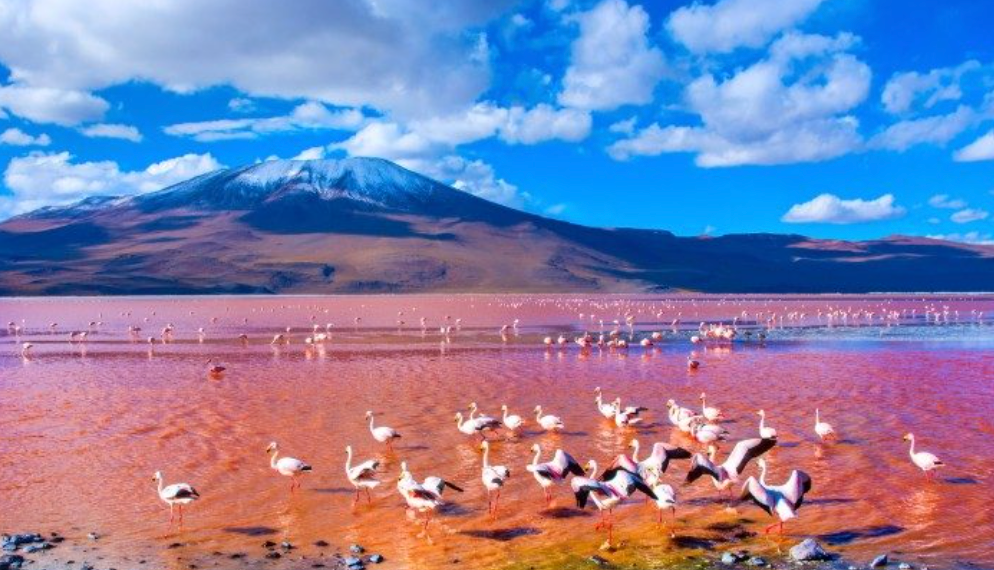
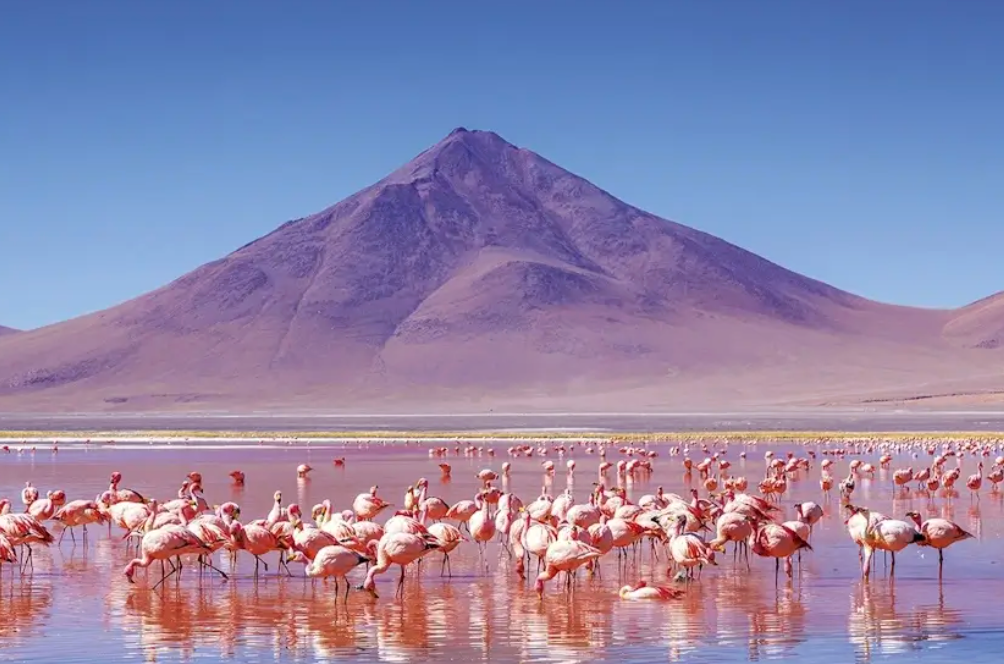
There is a lake in the Bolivian altiplano that looks like it is on fire. The water runs crimson and rose — not from algae blooms or sediment, but from a unique combination of red algae, mineral-rich brine, and a calcium carbonate sediment that turns the shoreline pure white. Standing at the edge of Laguna Colorada, 4,278 metres above sea level in the Eduardo Avaroa Andean Fauna National Reserve, with thousands of James’s, Andean, and Chilean flamingos feeding in the shallows in front of you, is one of the most visually overwhelming experiences in South America.
For photographers, it is an almost impossibly photogenic location. The red water, white mineral deposits, and pink flamingos form a natural colour palette that looks designed — every frame is a study in contrast. But photographing it well requires specific knowledge: the right season, the right light, the right settings for birds in motion, and the patience to wait out the wind that can disturb the reflections at the worst possible moments.
This guide covers all of it. Whether you are shooting with a long telephoto or a wide-angle lens, planning a dedicated photography trip or tagging along on a standard 3-day Uyuni tour, this is everything you need to come back with images that do Laguna Colorada justice.
What Makes Laguna Colorada Extraordinary for Photography
Laguna Colorada sits at 4,278 metres above sea level — over 600 metres higher than the Salar de Uyuni. At roughly 60 km², it is a shallow lake, rarely more than 35 cm deep, which is exactly why the red algae that give it its colour thrive here. The species Dunaliella salina and several cyanobacteria strains produce carotenoid pigments that saturate the water in shades ranging from brick red to deep rose depending on the season, the weather, and the angle of the light.
The white mineral islands
Calcium carbonate and borax formations — break the surface of the lake and provide perches for the flamingos. These white outcrops against the red water create a graphic, almost abstract composition that rewards both tight telephoto shots and wide environmental frames. At sunrise, when the low Andean light catches the steam rising off the lake and the flamingos are feeding in silhouette, the scene is genuinely unlike anywhere else on Earth.
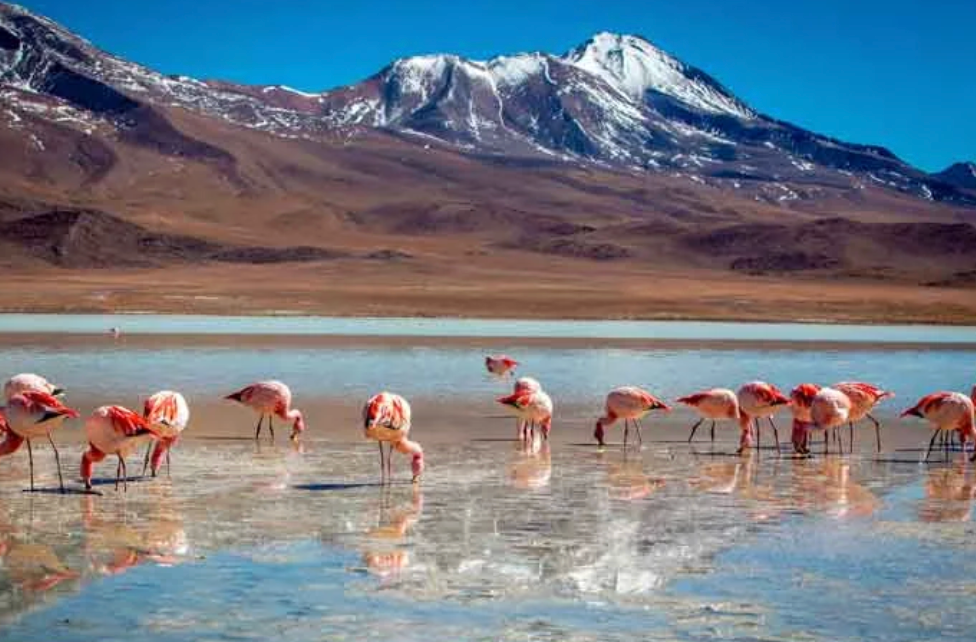
Three flamingo species coexist at Laguna Colorada — a distinction the lake shares with very few places in the world. The James’s flamingo (Phoenicoparrus jamesi), the rarest of the three, nests here. The Andean flamingo (Phoenicoparrus andinus) and the Chilean flamingo (Phoenicopterus chilensis) are also present in large numbers. At peak season you can observe colonies of 10,000 to 30,000 birds feeding, flying, and performing their synchronised courtship displays.
| Feature | Detail | Photography Implication |
|---|---|---|
| Altitude | 4,278 m above sea level | UV intensity extreme — lens coating matters; battery life reduced |
| Lake size | ~60 km² | Wide-angle viable for environmental shots; telephoto needed for bird detail |
| Water depth | 10–35 cm | Reflection shots possible when wind is calm |
| Flamingo species | James’s, Andean, Chilean | Three distinct plumage patterns — differentiate in post-processing |
| Best flamingo numbers | July–September | Nesting season — largest concentrations, best courtship behaviour |
| Red intensity (water) | Strongest Nov–Feb (wet season) | Peak colour but windier; drier months give clearer reflections |
| White mineral islands | Year-round | High-contrast foreground element — use as leading line or frame |
Best Time to Visit Laguna Colorada for Flamingo Photography
Unlike the Salar de Uyuni, where the key variable is whether you want the mirror effect (wet season) or the hexagonal crust (dry season), Laguna Colorada has a more nuanced timing question because you are balancing flamingo numbers, water colour intensity, and wind conditions — and these three variables do not all peak at the same time.
July to September — peak flamingo season
This is the best window for flamingo photography. The James’s flamingo, the rarest of the three species, nests at Laguna Colorada during this period, and the total bird count can reach 30,000 individuals. Courtship displays happen in large synchronised groups — hundreds of birds moving in coordinated circles, stretching their necks, and calling — and these are among the most extraordinary wildlife spectacles in South America. The dry-season light is clear and hard; mornings are cold (down to -20°C in July) but completely still, which allows for long-exposure reflection shots in the red water.
November to February — peak water colour
The wet season intensifies the red algae blooms, deepening the lake colour to its most saturated. Flamingo numbers are lower because the birds disperse to other breeding sites, but the visual impact of the crimson water alone is extraordinary. The challenge in this period is wind — afternoon gusts can reach 40–60 km/h across the altiplano, destroying reflections and making long exposures impossible outside the pre-dawn window.
March to June / October — transition windows
These shoulder months combine reasonable flamingo numbers with improving or acceptable water colour. October in particular is a good compromise — flamingos are beginning to return after winter dispersal, the water colour is building toward its summer intensity, and the altiplano light has the clarity of the dry season. Fewer tourists than July–August also means better access to the shoreline without groups walking through your frame.
| Month | Flamingo Numbers | Water Colour | Wind Risk | Light Quality | Overall Rating |
|---|---|---|---|---|---|
| Jan–Feb | Low–Medium | Peak red | High (afternoon) | Dramatic clouds | Good — wet season colour |
| Mar–Apr | Medium | Strong | Moderate | Clearing | Good — transition |
| May–Jun | Building | Moderate | Low | Clear, cold | Very good |
| Jul–Aug | Peak (30,000+) | Moderate–good | Very low (mornings) | Crystal clear | Best — flamingo peak |
| Sep–Oct | High | Moderate | Low–moderate | Clear | Excellent |
| Nov–Dec | Low–Medium | Intense red | High | Variable | Good for colour |
Camera Settings for Flamingo Photography at Laguna Colorada
Flamingos present two very different photographic challenges depending on what they are doing. A feeding flamingo standing still in calm water is a subject that rewards slow, considered exposure settings and careful composition. A flamingo in flight — wings spread, neck extended, crossing in front of the red water — requires fast reaction time and high shutter speeds. You will encounter both on any visit, often within minutes of each other.
Settings for birds in flight
| Setting | Recommended Value | Notes |
|---|---|---|
| Shutter speed | 1/1600s – 1/3200s | Freeze wingbeats; flamingos are fast — do not go below 1/1000s |
| Aperture | f/5.6 – f/8 | f/5.6 for subject isolation; f/8 if shooting groups to keep all birds sharp |
| ISO | 400–1600 | Daylight at altitude is intense — start at 400 and raise only if needed |
| AF mode | Continuous AF (AF-C) with tracking | Subject tracking essential for birds in flight; eye-detect AF works well |
| Drive mode | High-speed burst (10–20 fps) | Capture peak wing positions; edit down later |
| Metering | Evaluative/Matrix with +0.7 EV | Red water background fools metering toward underexposure of birds |
| Focal length | 200–500mm | 300–400mm is the sweet spot for single birds; 200mm for colony context shots |
Settings for standing birds and reflection shots
| Setting | Recommended Value | Notes |
|---|---|---|
| Shutter speed | 1/250s – 1/500s (daylight); 1–4s (pre-dawn) | Long exposures at dawn blur the water to a perfect mirror even with slight ripple |
| Aperture | f/8 – f/11 | Maximum depth of field for environmental shots with birds in foreground |
| ISO | 100–400 | Keep as low as possible to preserve the subtle colour gradations in the red water |
| White balance | Cloudy (6500K) or manual | Prevents auto WB from neutralising the red cast — the red IS the subject |
| Focus | Single-point AF on nearest bird | Avoid wide-area AF at f/8 — it may focus on the water surface |
| Tripod | Essential for pre-dawn | Even slight camera shake destroys the reflection quality in long exposures |
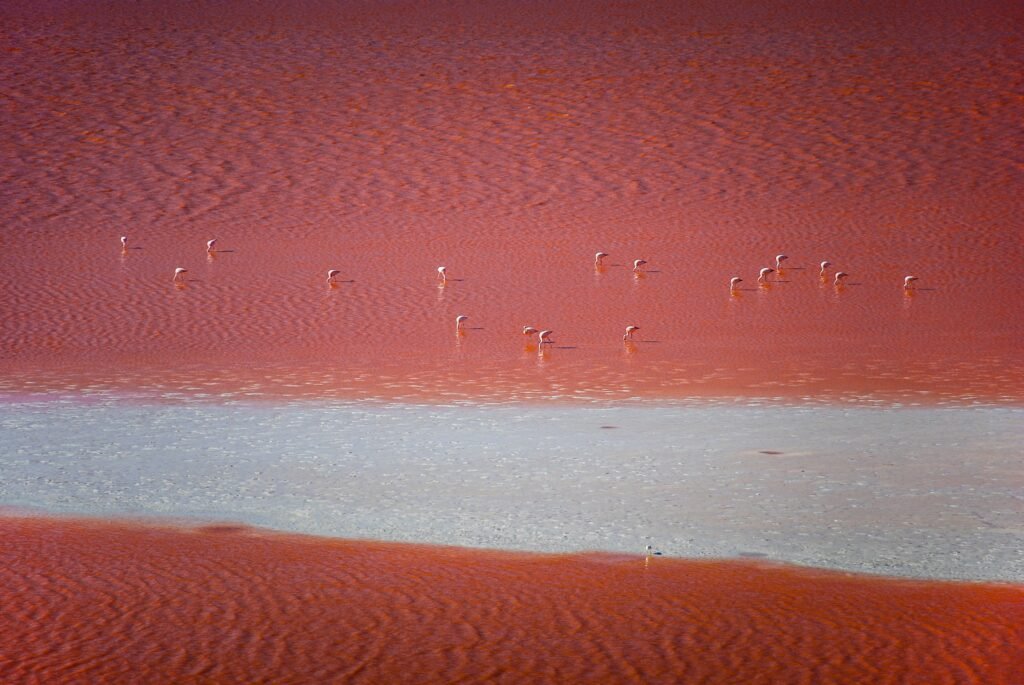
One technique that consistently produces the most impactful Laguna Colorada shots: get as low as possible. A camera at 5–10 cm above the water surface, pointed at a flamingo 15–20 metres away, produces an image where the bird’s reflection fills the foreground and the abstract red water stretches to the horizon behind it. The effect is far more powerful than a shot taken from standing height.
Composition Techniques for Laguna Colorada
The visual elements at Laguna Colorada — red water, white mineral formations, pink birds, blue sky — are so strong that almost any composition works on a basic level. The photographers who bring back truly exceptional shots are the ones who move beyond the obvious and work with the geometry of the scene deliberately.
The reflection frame
When the wind is calm (typically the first 90 minutes after dawn), the red water produces a near-perfect reflection. Position a flamingo or a group of birds in the middle distance so that both bird and reflection are visible in a vertical frame. The symmetry of the pink bird and its upside-down double in red water is one of the strongest natural compositions in wildlife photography.
The white island leading line
The calcium carbonate and borax formations that emerge from the lake create diagonal or curved white lines against the red water. Place your camera low and use one of these formations as a foreground element and leading line pointing toward a flamingo colony in the mid-ground. The white-to-red gradient as the composition recedes into the distance creates natural depth.
The backlit silhouette
Position yourself so that the rising or setting sun is behind the flamingo colony. At this angle, the birds become dark pink-to-black silhouettes against a bright sky, with the red water glowing below them. This works especially well in the last 10 minutes before the sun clears the horizon — the light is directional but soft, and the contrast between silhouette and background is at its most dramatic.
The tight flock portrait
During courtship display sequences (July–September), groups of 50–200 flamingos perform synchronised walking, head-flagging, and wing-salute behaviours. A telephoto lens at 300–400mm pulled in to a tight frame of a dozen birds mid-display captures the graphic pattern of repeating pink and white shapes that reads almost like a textile design. Shoot in burst mode at 1/1600s — the peak display moment lasts less than two seconds.
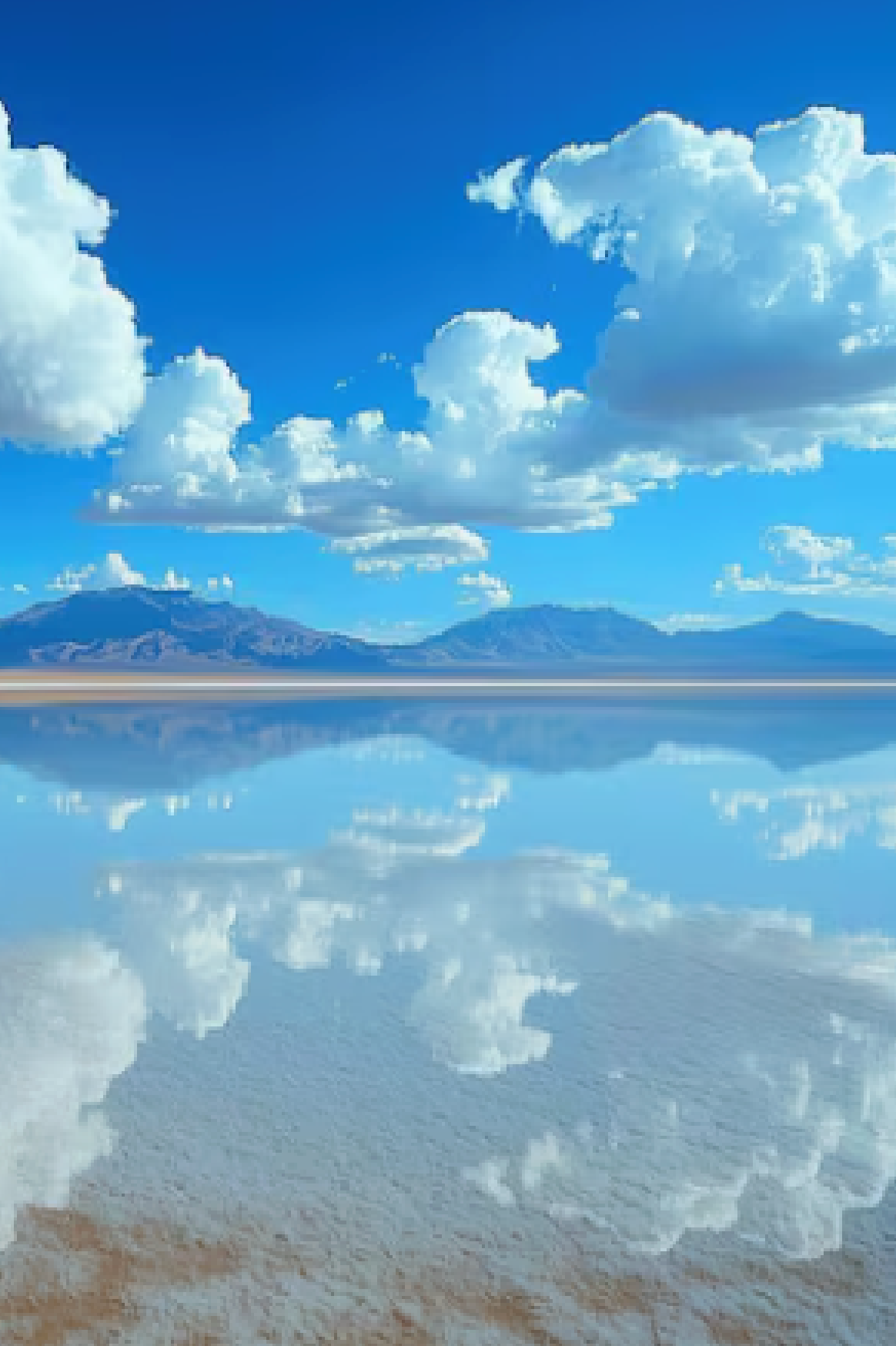
How to photograph the Salar de Uyuni mirror effect
Camera settings, composition techniques, and best timing for the world’s largest mirror — just a few hours from Laguna Colorada.
Getting to Laguna Colorada from Uyuni
Laguna Colorada is 346 km south of Uyuni town, entirely within the Eduardo Avaroa Andean Fauna National Reserve. There is no public transport. The only practical way to reach it is by 4WD vehicle, either on a guided tour or in a rented vehicle with an experienced driver.
The standard format is the 3-day Uyuni salt flat and Avaroa Reserve tour, which almost every agency in Uyuni offers. Day 1 covers the salt flat and Isla Incahuasi. Day 2 crosses the southern altiplano, passing Laguna Hedionda (another flamingo lake) and arriving at the reserve camp at dusk. On the Day 3 begins at the Sol de Manana geysers at dawn (4:30 a.m.), then visits Laguna Colorada, Laguna Verde, and the Salvador Dali Desert before returning to Uyuni. Photography-focused travellers often feel that the standard schedule moves too quickly through Laguna Colorada — ask your agency specifically for extra time at the lake, especially at sunrise.
| Route Option | Duration | Approx Cost | Best For |
|---|---|---|---|
| Standard 3-day group tour | 3 days / 2 nights | $80–$130 USD | Budget travellers and first-time visitors |
| Private 3-day photography tour | 3 days / 2 nights | $250–$450 USD | Photographers needing control of timing and pace |
| Self-drive rental (experienced only) | Flexible | $150–$250/day vehicle | Experienced off-road drivers only — roads are unmarked and dangerous |
| Uyuni + Atacama crossing (Chile) | 3–5 days | $300–$550 USD | Combining Bolivia and Chile; exit via San Pedro de Atacama |
Practical Planning: Altitude, Cold, and Gear Protection
At 4,278 metres, Laguna Colorada is significantly higher than the Salar de Uyuni. The altitude difference is enough to trigger or worsen altitude sickness even in visitors who felt fine in Uyuni. Plan for an acclimatisation night in Uyuni before heading south, drink at least 3 litres of water per day, and eat light.
The cold at Laguna Colorada in the dry season (May–September) is severe. Temperatures regularly drop to -15°C overnight and rarely rise above 5°C before 10 a.m. For photographers shooting the pre-dawn session, this means: thermal base layers, a down jacket rated to -20°C, glove liners that allow touchscreen operation, and hand warmers in your jacket pockets alongside your spare batteries.
The borax and mineral dust at Laguna Colorada is as corrosive as salt water. After any session at the shoreline, wipe down your tripod legs, camera body, and lens mount with a damp cloth and then dry thoroughly. The white mineral powder is almost invisible until it works its way into a thread or lock mechanism — prevention is far easier than the repair.
Post-Processing the Laguna Colorada Colour Palette
The Laguna Colorada palette — crimson water, white mineral deposits, pink birds, blue sky — is one of the most striking in nature photography, and it is also one of the most easy to over-process. The temptation to push the red and pink saturation to extreme levels produces images that look artificial. The goal in post-processing is to reproduce what your eye actually saw, which was already extraordinary.
Key adjustments in Lightroom
White balance: Set manually to Daylight (5500K) or slightly cooler (5200K). Do not use Auto WB — the red cast is the subject and the camera will try to neutralise it. Reds and oranges: In the HSL panel, pull the Luminance of Reds down by 10–15 to give depth to the water surface. Shift the Hue of Reds slightly warmer (+5 to +8) if the water looks too orange. Pinks: If shooting flamingos, the pink channel is critical. Lift the Saturation of Pinks to 15–20 and adjust Hue until the bird plumage reads as a warm, clean pink rather than salmon or magenta. Blues: The high-altitude sky at Laguna Colorada is an intense cobalt. Pull Luminance of Blues down by 15–20 to preserve this without clipping. Whites and highlights: The white mineral deposits clip easily. Pull Highlights to -30 to -50 and check the histogram before exporting.
Lens Choices and Equipment Strategy for Laguna Colorada
The wildlife photography challenge at Laguna Colorada is different from most nature photography locations because you are dealing with large birds at moderate distance (30–100 metres) in a wide, open landscape with no cover for approach. You cannot hide behind trees or use a hide. The birds are visible to you from a distance and you are visible to them. Your lens choice determines what kind of shots are available.
The telephoto choice (200–500mm)
A 100–400mm zoom or a 200–500mm zoom is the most versatile choice for Laguna Colorada wildlife work. At 300–400mm you can fill the frame with an individual bird from 20–30 metres — close enough to show facial detail, feather texture, and the distinctive pink leg joints of the James’s flamingo. Also at 200mm you pull back to show a group of 5–15 birds with context, which is useful for behaviour shots. At 500mm you begin to compress distance and stack birds in the frame, creating dense, repetitive patterns that work particularly well for colony shots during courtship display.
The wide angle choice (16–35mm)
Do not underestimate the wide-angle lens at Laguna Colorada. Getting low and including the vivid red water in the foreground while a flamingo colony occupies the mid-ground creates an environmental portrait that tells the whole story of the location in a single frame. At 16–20mm you can show the white mineral island, the red water, the pink birds, and the blue sky in one composition — essentially the entire visual identity of Laguna Colorada. These wide environmental shots are often more striking than the close telephoto portraits because they convey the sheer scale and visual impact of the place.
UV filters at high altitude
At 4,278 metres, ultraviolet radiation is approximately 40% more intense than at sea level. UV radiation does not degrade digital sensors directly, but it does contribute to the atmospheric haze that reduces contrast in telephoto shots — particularly in the clear, dry altiplano air of the dry season. A quality UV filter (multicoated glass, not the cheap UV-coated film type) reduces this haze slightly and also protects your front element from the mineral dust. Replace it if it gets scratched — a damaged filter costs you sharpness on every shot.
Polarising filters are useful at Laguna Colorada for one specific application: cutting the glare from the surface of the red water when shooting at low angles in midday light. The polariser deepens the red saturation of the water and reduces the washed-out highlight on the water surface. Rotate it to the maximum effect position and check through the viewfinder — the difference can be dramatic.
Conclusion: One of the Most Photogenic Places on Earth
I have been asked more than once whether Laguna Colorada is worth the effort — the 3-day tour, the 4,000-metre altitude, the cold, the distance. My answer is always the same: it is not just worth it, it is one of the most photogenic places I have ever stood with a camera.
The combination of the red water, the white mineral islands, and the flamingo colonies creates a scene that looks like it was designed by a photographer who had unlimited budget and zero constraints. The fact that it is entirely natural, and that most of the world has no idea it exists, is what makes it special. You will not be competing with crowds of Instagram photographers for the best angle — you will be standing in one of the most remote and extraordinary landscapes in South America, free to take your time.
Prepare thoroughly, protect your gear, respect the wildlife, and give yourself at least one sunrise at the lake. That is all it takes. We will see you on the next guide — next up in the Bolivia & Salt Flats Photography series: Milky Way photography at the Salar de Uyuni, and the complete dry season vs wet season comparison. Both are already live in the photography section.