Ushuaia has built an entire identity around one claim: this is where the world ends. The capital of Argentine Tierra del Fuego sits on the Beagle Channel, between icy water and the snow-dusted Martial Mountains, far closer to Antarctica than to Buenos Aires. Most travelers know it only as the departure port for Antarctic cruises, but treating Ushuaia as a waiting room is a mistake. Stay a few days and the end of the world turns out to be full of life: penguin colonies, subantarctic forest, sea lions on rocky islets, king crab from cold southern waters, and a national park where the Pan-American Highway runs out of road.
This guide covers how to get there, the Beagle Channel and the national park, penguin season, where to stay and eat, and how to combine Ushuaia with El Calafate and Torres del Paine. For the bigger route, start with our complete Argentina travel guide to see how all the pieces fit together.
Key Takeaways
- Best months: November to March for penguins, hiking and long days; June to September for skiing at Cerro Castor.
- How long: 3 days minimum; 4–5 with penguins and a slower park day.
- Don’t miss: a Beagle Channel navigation, the national park and Lapataia Bay, and a king crab dinner.
- Getting there: fly from Buenos Aires in about 3.5 hours; overland buses via Río Gallegos take a full day or more.
- Book ahead: penguin walking tours on Martillo Island have limited daily places.
Why Ushuaia Feels Like the Edge of the Map
Part of the magic is pure geography: south of Ushuaia there is one small Chilean naval town, Puerto Williams, then nothing but the Drake Passage and Antarctica. The city leans into its mythology — lighthouse postcards, “Fin del Mundo” signs, passport stamps — but it is also a working port. Founded in 1884 and developed around a penal colony whose prison closed in 1947, it grew from a place Argentina sent people to forget into one the whole world wants to visit. That contrast — harsh history, wild beauty — makes it worth more than a single night.
How to Get to Ushuaia
By air. Almost everyone arrives by plane. Direct flights from Buenos Aires — from both Aeroparque Jorge Newbery and Ezeiza — take about 3.5 hours, with several departures most days. Malvinas Argentinas International Airport (USH) is a 10-minute drive from the center. Direct connections from El Calafate or Córdoba appear in some seasons — check current schedules before building an itinerary around them.
Overland. The romantic option is the bus, and it is a serious undertaking. Buses from Río Gallegos — the usual gateway, also reachable from El Calafate — cross into Chile, ferry across the Strait of Magellan, then re-enter Argentina and roll south. Expect roughly 12 hours from Río Gallegos, more from El Calafate, plus a border crossing (bring your passport). A memorable ride — but most travelers fly at least one direction.
By sea. Antarctic expedition ships depart from the port all summer — arrive a day or two early as a buffer against delays.
Sailing the Beagle Channel
The channel, named after HMS Beagle — the ship that carried a young Charles Darwin through these waters — is Ushuaia’s front yard and first great excursion. The classic half-day catamaran threads between islands to the Les Eclaireurs lighthouse, a red-and-white striped tower standing on a rocky islet since 1920, often nicknamed the Lighthouse at the End of the World — though Verne’s novel was inspired by a different light, on Isla de los Estados.
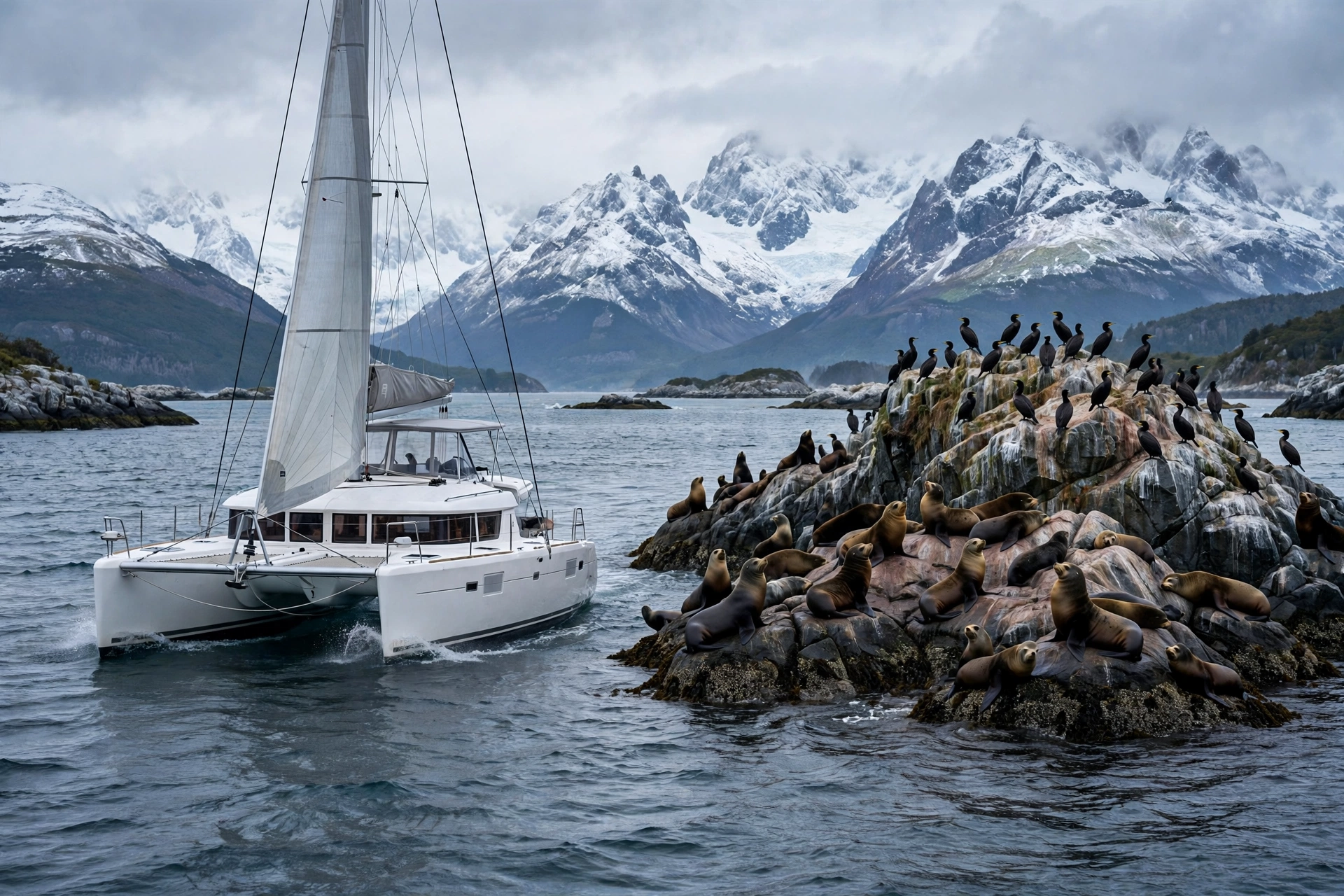
Boats pause at Sea Lions Island (Isla de los Lobos), where sea lions sprawl over the rocks, and at Birds Island (Isla de los Pájaros), crowded with cormorants. Longer navigations continue east to Martillo Island for penguins or to Estancia Harberton. Prices vary by season and operator — half-day cruises typically run around US$40–80 per person, longer penguin tours more — so check current prices when you book. And dress warmer than you think you need: the channel wind is cold even in January.
Tierra del Fuego National Park and the End of the World Train
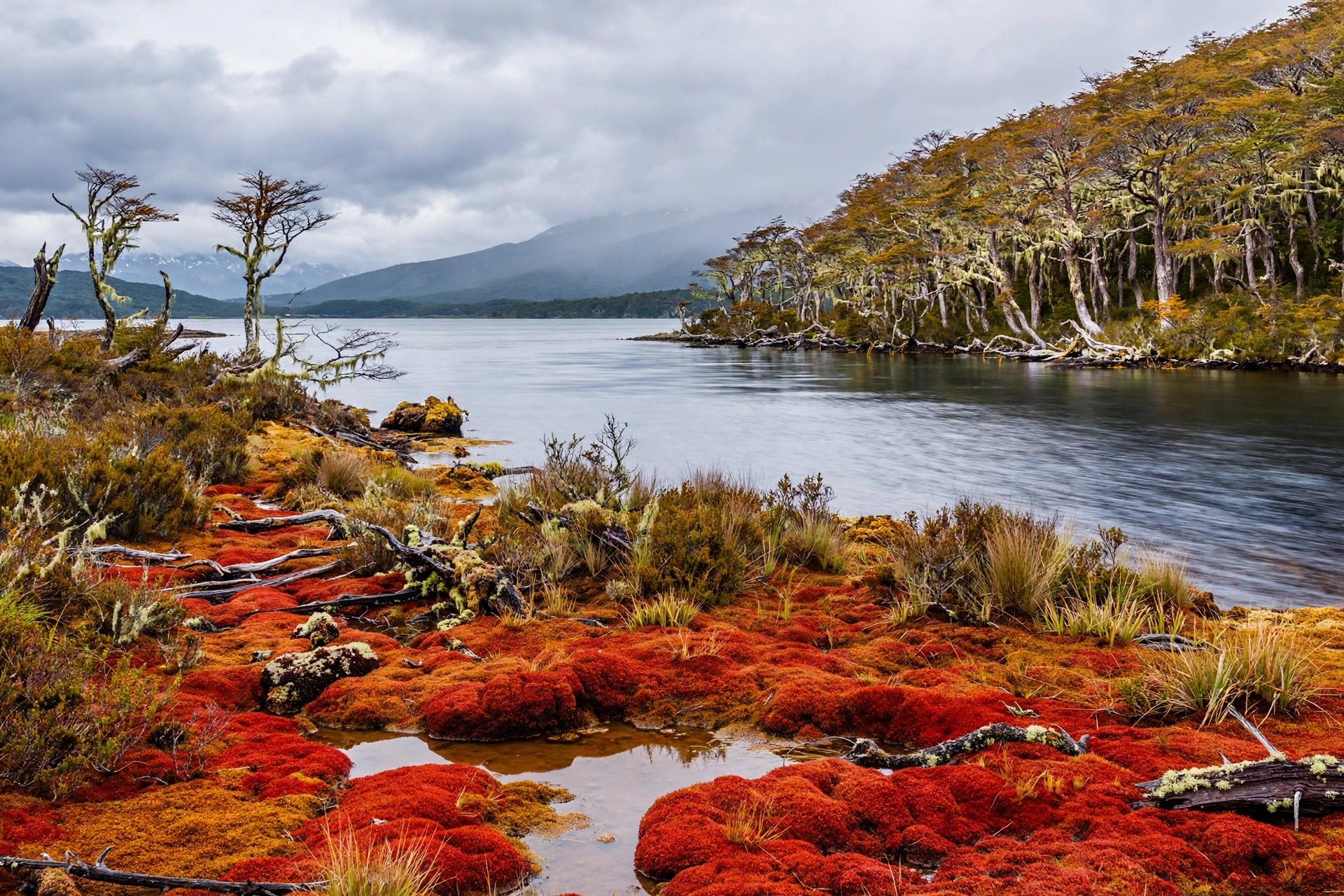
Twelve kilometers west of town, Tierra del Fuego National Park protects a coastline where subantarctic forest meets the sea: lenga, ñire and coihue trees, red peat bogs, quiet bays. Trails range from boardwalks to half-day walks: the coastal path from Ensenada Zaratiegui, Roca Lake (Lago Acigami), and the stroll to Lapataia Bay, where National Route 3 — the Argentine end of the Pan-American Highway — finishes at a famous sign marking the distance back to Buenos Aires and north to Alaska. Foreign visitors pay an entrance fee — check the current rate before you go.
The most theatrical way in is the End of the World Train (Tren del Fin del Mundo). From a station just outside town, it follows the old prison train’s route for about 7 km — the line that once carried inmates out to cut timber — via the Macarena waterfall. Touristy and genuinely fun — ride it one way, return by bus or taxi. You can also reach the park independently by shuttle, taxi or rental car.
Penguin Colonies: Martillo Island and Estancia Harberton
For many visitors, this excursion justifies the whole trip. Martillo Island, east of Ushuaia in the Beagle Channel, hosts Magellanic penguins nesting in burrows among the grass, alongside a smaller group of gentoo penguins — the ones with the bright orange beaks. The season runs roughly from October to March — birds nest in spring, chicks hatch in early summer, and by autumn the colony empties out to sea. Outside those months, do not expect penguins here.
Two ways to see them: most channel cruises slow down offshore and you watch from the boat — good views, no landing. A limited number of tours, run with Estancia Harberton, land and walk a guided circuit among the burrows for about an hour. Places are capped daily and sell out in summer, so book several days ahead. Harberton is worth the stop: founded in the 1880s, it is one of the oldest estancias in Tierra del Fuego, and its Acatushún museum holds a remarkable collection of marine bird and mammal skeletons.
Museums, San Martín Avenue and a King Crab Dinner
Save a few hours for the town itself. The Museo Marítimo y del Presidio fills the old prison with maritime exhibits, Antarctic displays and the preserved cell wings — sobering and fascinating in equal measure. The Museo del Fin del Mundo covers indigenous peoples, shipwrecks and natural history. Between museums, Avenida San Martín is lined with outdoor shops and cafés, and Tierra del Fuego’s special tax regime makes some goods cheaper than on the mainland.
Then there is dinner. Ushuaia’s signature dish is centolla — southern king crab — served whole from the tank at classic restaurants near the port, cracked at the table with lemon and mayonnaise. Also look for merluza negra (Patagonian toothfish) and Fuegian lamb. A king crab dinner is a splurge — roughly US$30–60 per person is a fair expectation, but check current prices when you go.
Where to Stay in Ushuaia
Most travelers stay near the center, along the waterfront and the streets climbing behind it — walkable to the port, San Martín and the museums. The hillside streets just above trade a steep walk for wide views over the channel. Further out, toward the park and below the Martial Glacier, lodges and resorts sit in the forest with shuttles into town — better for quiet than nightlife. Book well ahead for December to February and the July ski weeks.
Ushuaia by Season: When to Go
There is no wrong season in Ushuaia — only different trips. Summer brings penguins, hiking and almost endless daylight; winter turns it into one of the world’s southernmost ski bases, with Cerro Castor a short drive away. Whenever you come, pack for all of them — the layering system in our guide to what to pack for Patagonia works here too.
| Season | Months | Weather & daylight | Best for | Good to know |
|---|---|---|---|---|
| Summer | Dec–Feb | Mildest of the year; highs roughly 10–15 °C, up to 17 hours of daylight | Penguins, hiking, channel cruises, Antarctic departures | Peak season — book tours, hotels and penguin landings ahead |
| Autumn | Mar–May | Cooling quickly; lenga forests turn red and gold | Photography, quieter trails, lower prices | Penguins leave around late March–April |
| Winter | Jun–Sep | Snow likely, around freezing, short days | Skiing at Cerro Castor, husky sleds, snowy end-of-the-world atmosphere | Reduced excursion schedules; July busy with skiers |
| Spring | Oct–Nov | Changeable and windy, waterfalls running full | Returning penguins with fewer crowds, shoulder-season value | Weather can swing between seasons in one day |
How Many Days Do You Need in Ushuaia?
Three full days is the sensible minimum. Day one in town: museums, San Martín Avenue and a king crab dinner. And the Day two, sail the Beagle Channel on the long navigation that lands at Martillo Island for the penguins. Day three: the national park, combining the End of the World Train with the trails to Lapataia Bay. With a fourth or fifth day, add the hike to Laguna Esmeralda, the Martial Glacier chairlift, or a full day at Estancia Harberton — and keep one slot flexible for the weather.
Combining Ushuaia with El Calafate and Torres del Paine
Ushuaia is the final chapter of the classic southern Patagonia triangle. From here, the usual next stop is El Calafate and the Perito Moreno Glacier: direct flights operate in some seasons, otherwise you connect through Buenos Aires — our El Calafate and Perito Moreno glacier guide covers that leg. Torres del Paine pairs with El Calafate rather than Ushuaia directly: cross from El Calafate to Puerto Natales for the park, which is why most itineraries run Buenos Aires → El Calafate/Torres del Paine → Ushuaia, or the reverse. If you are walking the W Trek, plan it with our Torres del Paine W Trek guide before booking anything else — refugios and campsites sell out months ahead. And if your route continues north, the Bariloche and Seven Lakes route is the perfect counterpoint — forests and lakes instead of wind and ice. Allow full days for transfers — Patagonian distances are never as short as they look.
Beyond Patagonia: More Bucket-List South America
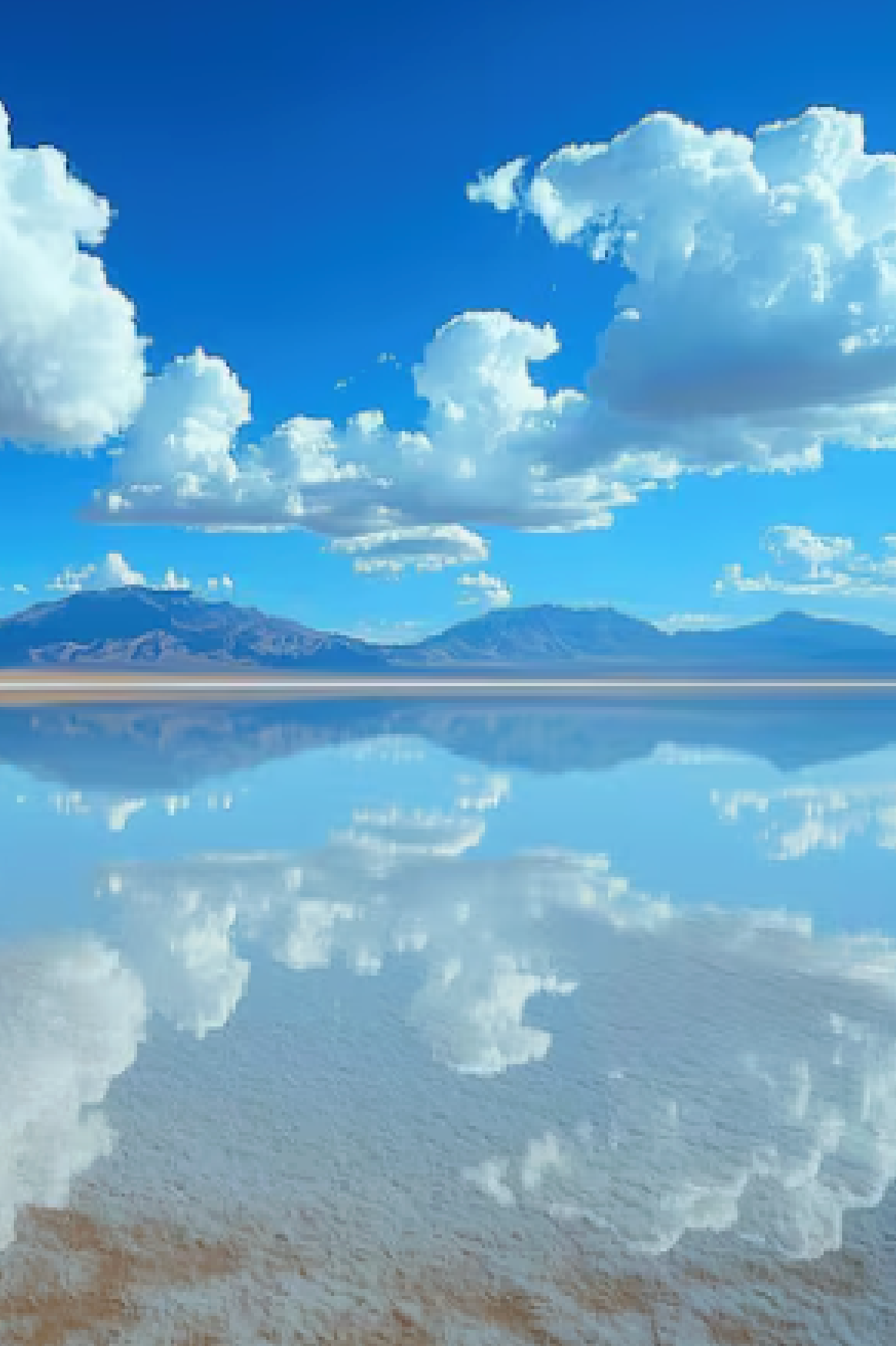
If the end of the world leaves you hungry for the continent’s other surreal landscapes, put the Salar de Uyuni on your list. On Bolivia’s high plateau, the world’s largest salt flat floods in the rainy season and becomes a mirror that erases the horizon. Our sister site, The Mirror of the World, is devoted to planning that trip, and its Uyuni stargazing tour guide — sunset, stars and sunrise over the salt — is the perfect companion to a dark Ushuaia winter evening.
Plan Your Trip
Ready to go to the end of the world? Start here:
- Flights: compare fares into Ushuaia (USH) on Skyscanner — booking southern legs early usually pays off.
- Tours: browse Beagle Channel navigations, park excursions and penguin tours on Civitatis, and check cancellation terms before you reserve.
- Insurance: Patagonia is remote and weather cancels plans, so travel with coverage arranged through Asegura tu Viaje.
Frequently Asked Questions
How many days do you need in Ushuaia?
Three full days covers the channel, the penguins and the park. Four or five add hikes like Laguna Esmeralda plus a weather buffer.
When is penguin season in Ushuaia?
Martillo Island’s Magellanic penguins are present roughly from October to March, nesting in spring, chicks in summer. Sea lions and seabirds are year-round.
How do you get from Buenos Aires to Ushuaia?
Fly direct in about 3.5 hours from Aeroparque or Ezeiza; the overland bus via Río Gallegos takes a full day or more.
Is Ushuaia really the southernmost city in the world?
Ushuaia markets itself as the world’s southernmost city, and is Argentina’s southernmost city of any size. Chile’s Puerto Williams lies slightly further south, but it is a small town.
Can I visit Tierra del Fuego National Park without a tour?
Yes — shuttles, taxis and rental cars reach the park, trails are well marked, and Lapataia Bay is an easy independent walk. Just pay the entrance fee.
Do you land at the Les Eclaireurs lighthouse?
No — boats circle close for photographs, but the active lighthouse stands on a protected rock and there is no landing.
What should I pack for Ushuaia?
Layers, a waterproof windproof shell, hat, gloves and sturdy shoes — in every season. Channel wind makes even mild summer days feel cold.
Is Ushuaia expensive?
Yes, by Argentine standards — most goods travel far to reach it. Tax-free shopping helps, and shoulder-season hotel rates drop noticeably.
Do Antarctic cruises leave from Ushuaia?
Yes — Ushuaia is the world’s main Antarctic gateway, with ships sailing roughly November to March. Arrive a day or two early in case of flight delays.
When is the ski season at Cerro Castor?
Cerro Castor runs from late June into early October, snow permitting — one of South America’s longest, most reliable seasons.