Disclosure: this guide contains affiliate links. If you book or buy through them we may earn a small commission at no extra cost to you, which helps keep Uncover the Andes independent.
Ask anyone who has hiked in Patagonia for a wind story and you will hear some version of the same tale: a perfectly sunny morning on the W Trek, a sudden gust near Lago Grey strong enough to knock people off their feet, then a sideways hailstorm twenty minutes later, and blue sky again by lunch. That is Patagonia: four seasons in a day, wind that can exceed 100 km/h and a sun strong enough to burn you through thin cloud. Packing for it is not about bringing more stuff. It is about bringing the right layers and leaving everything else at home.
This 2026 packing list is built from what actually works on the trails of Torres del Paine, El Chaltén and the Carretera Austral. You will get a month-by-month weather table, the layering system that handles the wind, a complete checklist for refugio and camping trips, what you can rent locally, the electronics and documents you need, and a list of things you can safely leave behind. Where we have tested gear in depth, we link to our full Gear Lab reviews, starting with the best waterproof hiking boots for Patagonia.
Patagonia Weather by Month: What You Are Packing For
Patagonia covers a huge area across southern Chile and Argentina, and conditions vary between the rainy Pacific side and the dry steppe on the Argentine side. The table below gives typical figures for the main trekking areas around Torres del Paine, El Calafate and El Chaltén. Treat them as averages; any single day can be colder, wetter or windier.
| Month | Avg. high | Avg. low | Daylight | Wind | Trekking notes |
|---|---|---|---|---|---|
| October | about 11-13 °C | about 1-3 °C | about 14 h | Strong | Shoulder season, snow possible on passes |
| November | about 13-15 °C | about 3-5 °C | about 15.5 h | Strong to very strong | Good value, spring flowers, variable weather |
| December | about 15-17 °C | about 5-6 °C | about 16.5 h | Very strong | Peak season begins, longest days |
| January | about 16-18 °C | about 6-7 °C | about 16 h | Very strong | Warmest month, busiest trails |
| February | about 16-18 °C | about 5-7 °C | about 14.5 h | Strong | Still busy, slightly calmer |
| March | about 13-15 °C | about 3-5 °C | about 12.5 h | Moderate to strong | Fewer crowds, autumn begins |
| April | about 9-12 °C | about 0-3 °C | about 11 h | Moderate | Autumn colors, cold nights, some services close |
| May-September | about 2-7 °C | about -5-0 °C | 8-10 h | Calmer, often still | Winter: guided treks only on many routes |
The key point: summer in Patagonia is not like summer in the Alps or the Rockies. Even in January you will need a warm jacket, gloves and a hat, because wind chill turns 12 °C into something closer to freezing on an exposed ridge. For more on timing, our Chile Patagonia travel guide compares the seasons in detail.
The Patagonia Layering System
The secret to staying comfortable is not one thick jacket but a system of thin layers you can add and remove as you climb, stop or get hit by a squall. Most experienced trekkers use four layers on the upper body.
1. Base layer
A thin, close-fitting top that moves sweat away from your skin. Merino wool is ideal because it stays warm when damp and does not smell after several days, which matters on a five-day trek with no laundry. Synthetic tops dry faster and cost less. Bring one long-sleeve top for hiking and a second, clean one for sleeping. Our guide to the best base layers for Andes trekking compares weights and fabrics.
2. Mid layer
A light fleece or active insulation jacket for cold mornings and windy sections. It should breathe well because you will often hike in it. A 100 or 200 weight fleece is the classic choice.
3. Insulation layer
A packable down or synthetic puffy jacket for breaks, viewpoints, evenings at camp and the cold dawn start to the base of the Torres. Synthetic insulation copes better with Patagonian rain; down offers more warmth for its weight. Read our tested picks of the best insulation jackets for Patagonia.
4. Waterproof shell
This is the most important item you will pack. You need a fully waterproof, windproof jacket with a good hood that you can tighten around your face. Ultra-light emergency shells often flap and fail in Patagonian gusts. Look for a proper membrane jacket with taped seams and pit zips, and pair it with waterproof over-trousers.
TREKKING IN PATAGONIA? GET COVERED
Rescue in Patagonia is far from cheap
Twisted ankles and wind-related falls are the most common incidents in Torres del Paine and Los Glaciares. SafetyWing covers emergency medical care in Chile and Argentina with flexible plans you can buy even after you have left home.
✓ Covers 180+ countries · ⚕ Emergency medical · ✓ Monthly plans, cancel anytime
The Complete Patagonia Packing Checklist
This list assumes a one to three week trip with at least one multi-day trek such as the W or O Circuit in Torres del Paine or several day hikes from El Chaltén. If you are staying in refugios with bedding and meals, you can skip the camping section and pack much lighter.
Clothing
- Waterproof shell jacket with hood
- Waterproof over-trousers
- Insulated jacket, down or synthetic
- Fleece or active insulation mid layer
- 2 merino or synthetic base layer tops
- 1 pair of base layer leggings for cold nights
- 2 pairs of quick-dry hiking trousers, or one trouser and one pair of hiking tights
- 1 pair of shorts for warm valley days
- 3 to 4 pairs of merino hiking socks
- Warm beanie and a sun hat or cap with a strap for wind
- Light liner gloves and a warmer waterproof pair
- A buff or neck gaiter, which doubles as a face shield in wind and dust
- Comfortable clothes and sandals for town and refugio evenings
Footwear
- Broken-in waterproof hiking boots with ankle support and aggressive soles. Trails in Torres del Paine are rocky, muddy and steep in places.
- Light camp shoes or sandals to rest your feet in the evening.
- Gaiters, optional, useful in mud and early season snow.
Trekking equipment
- Backpack of 35 to 45 liters for refugio treks, or 55 to 70 liters for camping. See our guide to the best expedition backpacks for Andes trekking.
- Pack liner or dry bags inside the pack. Pack covers alone fail in sideways rain.
- Trekking poles, essential for steep descents and for stability in gusts.
- Headlamp with spare batteries, for the pre-dawn start to the Base of the Towers or Laguna de los Tres.
- Water bottles or a hydration bladder, 1.5 to 2 liters total.
- Water filter or purification tablets.
- Sunglasses with good UV protection.
- Small first aid kit with blister plasters, painkillers and personal medication.
✓ Gear we recommend
TrailBuddy lightweight trekking poles
Collapsible aluminum poles with cork grips and lever locks that stay tight in the cold. They save your knees on the descent from the Torres and give you two extra points of contact when the wind gusts. Excellent value for occasional trekkers.
As an Amazon Associate we earn from qualifying purchases.
Camping gear, if you are not using refugios
- A freestanding tent rated for strong wind, with plenty of guy lines and stakes. Many campsites in Torres del Paine and Los Glaciares are exposed.
- Sleeping bag with a comfort rating around 0 °C in summer, lower in shoulder season.
- Insulated sleeping pad. Cold ground steals more heat than cold air.
- Stove, fuel and lightweight pot. Cooking is only allowed in designated shelters in Torres del Paine.
- Lighter, spork, mug and quick-dry towel.
- Food for each day plus one spare day in case weather delays you.
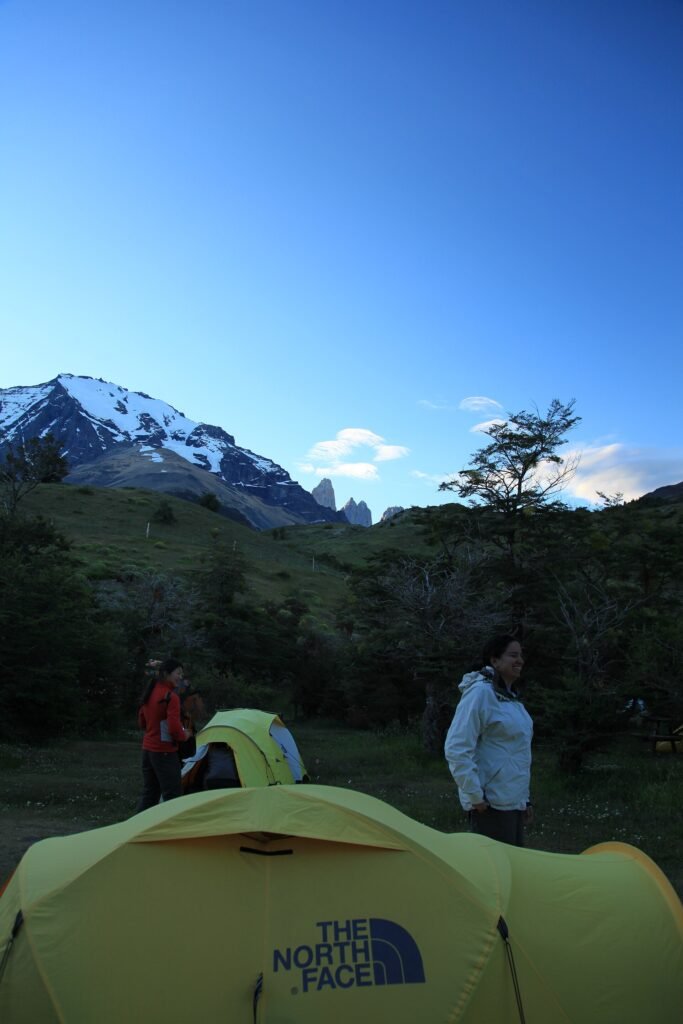
Fuel canisters cannot travel on planes, so buy gas in Puerto Natales, El Calafate or El Chaltén. Outdoor shops in those towns also rent tents, sleeping bags, pads and stoves, which saves weight and baggage fees if you only need them for one trek.
BEFORE AND AFTER THE TREK
Rest in a real bed in Puerto Natales or El Calafate
Gateway towns fill up fast in high season. Compare hostels, guesthouses and lodges with gear storage and drying rooms, and book with free cancellation on most rooms while your trek dates are still flexible.
✓ Free cancellation on most stays · ★ Verified reviews · ✓ Luggage storage options
Refugio vs Camping: How Your Pack Changes
The biggest packing decision in Patagonia is where you will sleep. In Torres del Paine, the refugios run by Vértice and Las Torres offer dorm beds, rented bedding and full-board meals, while campsites range from basic free sites to paid sites with platforms and hot showers. The choice changes your pack weight dramatically.
| Item | Refugio with full board | Camping with rented gear | Camping with own gear |
|---|---|---|---|
| Backpack size | 35-45 L | 55-65 L | 60-70 L |
| Typical pack weight | 6-8 kg | 11-14 kg | 13-17 kg |
| Tent, bag and pad | Not needed (bedding available) | Rented at campsite or in town | Carried from home |
| Stove and food | Not needed | Some meals purchased, rest carried | All carried |
| Cost per night (approx.) | Highest, often USD 150-250+ with meals | Medium | Lowest |
| Booking needed | Months ahead for high season | Months ahead for high season | Campsite reservation still required |
If you have not booked yet, read our step-by-step Torres del Paine W Trek guide, which explains reservations, park tickets and the daily route.
Electronics and Power
Patagonia’s remote trails mean no power outlets for days, and the cold drains batteries faster than you expect. Refugios usually have limited charging, sometimes for a fee.
- Power bank of 10,000 to 20,000 mAh, enough for several phone charges on a five-day trek. See our tests of the best power banks for Andes trekking.
- Plug adapters: Chile uses Type C and Type L sockets and Argentina uses Type I and Type C, all at 220 V. A universal adapter covers both.
- Offline maps: download maps of Torres del Paine and Los Glaciares before you leave town, since mobile data disappears on most trails.
- Camera gear: spare batteries kept warm inside your jacket, lens cloths for spray and a rain cover.
- Satellite messenger: optional but worth considering for remote routes such as the O Circuit, the Huemul Circuit or the Dientes de Navarino.
Toiletries and Health
- High-factor sunscreen (SPF 50) and lip balm with SPF. The ozone layer is thinner over southern Patagonia and UV can be intense even in cool weather.
- Biodegradable soap and a small quick-dry towel.
- Hand sanitizer and toilet paper with a small zip bag to pack it out.
- Blister kit, ibuprofen, antihistamines and any personal medication.
- Moisturizer: the wind and dry air crack skin quickly.
✓ Gear we recommend
Sawyer Squeeze water filter (SP129)
Streams in Patagonia are usually clean, but busy campsites and livestock on some routes make filtering a sensible habit. The Sawyer Squeeze weighs about 85 grams, screws onto standard bottles and filters fast, so you can refill at any stream instead of carrying extra liters.
As an Amazon Associate we earn from qualifying purchases.
Documents and Money
- Passport valid for at least six months, plus a digital copy. Check the Chile entry requirements and Argentina entry requirements if you will cross the border.
- Printed or offline copies of your Torres del Paine park ticket and every campsite or refugio reservation. Rangers check them on the trail.
- Travel insurance details with an emergency phone number.
- Credit cards from two different banks, plus some cash. Chilean pesos are useful in Puerto Natales, and Argentine pesos or US dollars help in El Chaltén where ATMs run out.
- Bus and flight confirmations, since many buses in the region sell out in January and February.
GUIDED TREKS AND TOURS
Let someone else carry the logistics
Full-day Torres del Paine tours, glacier hikes on Perito Moreno, kayaking on Lago Grey and guided W Trek packages. Compare options and cancel free up to 24 hours before on most bookings.
✓ Free cancellation on most tours · ★ Traveler reviews · ✓ Small-group options
How to Adjust Your Packing by Season
Summer: December to February
Long days and the warmest temperatures, but also the strongest wind. Prioritize the shell jacket, a cap with a chin strap or a beanie that will not blow away, sun protection and a buff. You can carry a lighter insulated jacket than in shoulder season, but never leave it behind.
Shoulder seasons: October, November, March and April
Colder mornings, possible snow on high passes such as John Gardner Pass on the O Circuit, and shorter days in autumn. Upgrade to a warmer sleeping bag (comfort around -5 °C), add a second pair of gloves and warmer socks, and consider microspikes if you are hiking in late April or October.
Winter: May to September
Torres del Paine only allows certain trails in winter, and many routes require a certified guide. Pack full winter clothing, insulated boots, and plan for daylight of only eight or nine hours. Most travelers in winter join guided day trips rather than trekking independently.
How Packing Differs Between Torres del Paine, El Chaltén and the Carretera Austral
| Destination | Typical style | Must-have items | Can leave behind |
|---|---|---|---|
| Torres del Paine (Chile) | Multi-day W or O trek, refugios or camping | Strong shell, reservations, layers, poles | Heavy cookware if using refugios |
| El Chaltén (Argentina) | Day hikes from town, optional camping | Daypack, windproof layers, headlamp for dawn starts | Big backpack if not camping |
| El Calafate and Perito Moreno | Glacier viewing and boat trips | Warm jacket, gloves, sunglasses | Trekking gear for most visitors |
| Carretera Austral (Chile) | Road trip, rain forest and fjords | Serious rain gear, dry bags, quick-dry clothes | Formal clothes, too many shoes |
| Tierra del Fuego and Ushuaia | Day hikes and boat trips | Waterproof boots, warm hat, layers | Summer-only clothing |
The Pacific side, including the Carretera Austral and the western part of Torres del Paine, is far wetter than the Argentine steppe around El Calafate and El Chaltén. If you are going to Chiloé or Aysén, assume rain every day and pack accordingly.
✓ Gear we recommend
Sea to Summit Lightweight Dry Bag
Roll-top dry bags keep your sleeping bag, down jacket and electronics dry even when rain blows sideways into your pack. Use one or two inside your backpack instead of relying on a rain cover.
As an Amazon Associate we earn from qualifying purchases.
What Not to Pack for Patagonia
- Cotton clothing. Jeans and cotton T-shirts stay wet and cold. Keep one cotton outfit for town at most.
- An umbrella. It will not survive the wind.
- Too many shoes. Boots plus one pair of light shoes or sandals is enough.
- Gas canisters or bear spray in your luggage. Airlines do not allow them, and there are no bears in Patagonia.
- Drones for national parks. They are prohibited without permits in Torres del Paine and Los Glaciares.
- Heavy guidebooks for the trail. Photograph the pages you need or use an e-book.
- Fresh fruit, meat or dairy across borders. Chile’s SAG agricultural control is strict and fines are heavy for undeclared food.
FLIGHTS TO PATAGONIA
Punta Arenas, Natales or El Calafate?
Fly into one gateway and out of another to save days of backtracking. Compare all airlines on open-jaw routes and set price alerts so you book on the cheapest day.
✓ Free price alerts · ✈ Open-jaw searches · ✓ No booking fees
Packing Tips From the Trail
- Pack in layers inside your backpack too: what you need during the day, such as the shell, gloves and snacks, goes at the top or in the lid.
- Keep your insulated jacket and sleeping bag in separate dry bags. Wet down loses most of its warmth.
- Weigh your pack before the trek. Every kilogram feels heavier in a headwind.
- Bring a few zip bags for rubbish. All waste must be carried out of the parks.
- Leave a bag of town clothes at your hotel in Puerto Natales or El Calafate. Most hostels store luggage for free or a small fee.
- Test every piece of gear at home, especially boots and rain gear. Patagonia is the wrong place to discover a leaking seam.
Patagonia Packing FAQs
What should I wear for hiking in Patagonia?
Wear layers: a merino or synthetic base layer, a fleece mid layer, a packable insulated jacket and a fully waterproof, windproof shell with a hood, plus quick-dry trousers and broken-in waterproof boots.
How cold is Patagonia in summer?
In December to February average highs are around 15 to 18 °C and lows around 5 to 7 °C in the main trekking areas, but strong wind can make it feel close to freezing on exposed ridges.
Do I need waterproof boots for Torres del Paine?
Yes. Trails are often muddy, rocky and crossed by streams, and rain is frequent. Broken-in waterproof boots with good grip and ankle support are strongly recommended.
Can I rent camping gear in Patagonia?
Yes. Outdoor shops in Puerto Natales, El Calafate and El Chaltén rent tents, sleeping bags, pads and stoves, and some campsites in Torres del Paine rent pre-pitched tents and bedding.
What sleeping bag do I need for Patagonia?
For summer, choose a bag with a comfort rating around 0 °C. In October, November, March and April, a comfort rating around -5 °C is safer, combined with an insulated sleeping pad.
Is it safe to drink stream water in Patagonia?
Streams are generally clean, especially high up, but busy campsites and livestock on some routes make a filter or purification tablets a sensible precaution.
What size backpack do I need for the W Trek?
About 35 to 45 liters if you stay in refugios with bedding and meals, or 55 to 70 liters if you carry a tent, sleeping bag, stove and food.
Do I need trekking poles in Patagonia?
They are not mandatory but highly recommended. Poles protect your knees on steep descents such as the Base of the Towers and Laguna de los Tres and help you stay stable in gusts.
What plug adapter do I need for Chile and Argentina?
Chile uses Type C and Type L sockets and Argentina uses Type I and Type C, all at 220 V. A universal travel adapter covers both countries.
Can I bring food into Chile from Argentina?
Only processed, sealed food is generally allowed. Fresh fruit, vegetables, meat, dairy, honey and seeds must be declared or discarded at the border, and Chile’s SAG inspectors fine undeclared items.
FLIGHT DELAYED? CANCELLED?
Lost a trek day to a delayed flight?
Delays on long-haul connections can ruin tight Patagonia reservations. If your flight was delayed by three hours or more, cancelled or overbooked, AirHelp checks whether you are owed up to 600 EUR per passenger.
✓ No win, no fee · ⚖ Millions of passengers helped · ✓ Free 2-minute check
Final Thoughts: Pack for Wind, Not for Temperature
The temperatures in Patagonia rarely look extreme on paper, which is why so many hikers underpack. What catches people out is the wind, the speed at which the weather changes and the fact that you may be days from the nearest shop. If you bring a strong shell, a warm insulated layer, good boots, dry bags and a couple of merino base layers, you will be comfortable in almost anything the region throws at you.
Start with the four core items, the shell, the insulated jacket, the boots and the backpack, then work through the checklist above. For in-depth gear tests, explore our Gear Lab guides to waterproof cases and dry bags and insulation jackets, and sort your travel insurance before you fly south.