

Argentina is one of South America’s most visited destinations — and one of the easiest to enter. Whether you’re planning to explore Buenos Aires, hike in Patagonia, or cross into neighboring countries, understanding Argentina’s visa rules for 2026 will make your trip planning much smoother. This complete guide covers who needs a visa, how long you can stay, what documents you need at the border, and practical tips for overland travelers.
Do I Need a Visa for Argentina in 2026?
Argentina operates one of the most open visa policies in South America. Citizens of over 80 countries can enter Argentina without a visa for stays of up to 90 days. The country eliminated nearly all reciprocity fees between 2016 and 2019, so you won’t face any surprise charges at entry regardless of your passport.
Visa-Free Countries for Argentina
- North America: USA, Canada, Mexico
- Europe: All EU member states, UK, Norway, Switzerland, Liechtenstein, Iceland, Andorra, Monaco
- South America: Brazil, Chile, Uruguay, Paraguay, Bolivia, Peru, Colombia, Ecuador, Venezuela
- Oceania: Australia, New Zealand
- Asia: Japan, South Korea, Singapore, Malaysia, Hong Kong SAR, Taiwan, Israel
- Middle East: UAE, Jordan, Kuwait
If your passport is not on the visa-exempt list — this currently includes China (mainland), India, and most African nations — you must apply for a tourist visa at an Argentine consulate before departure.
How Long Can I Stay in Argentina?
Visa-exempt tourists receive 90 days per entry in Argentina. Unlike some countries, Argentina actually offers a fairly straightforward extension option for tourists who want to stay longer.
Extending Your Stay: Renovación de Permanencia
You can extend your 90-day tourist stay by an additional 90 days without leaving Argentina. Here’s how:
- Apply at a Migraciones (immigration) office in person — the main office in Buenos Aires is at Av. Antártida Argentina 1355
- Cost is approximately ARS 5,000–10,000 (subject to change given Argentina’s inflation rate)
- You can only do this extension once per entry
- Apply before your initial 90 days expire — doing so after results in overstay penalties
After 180 days (original 90 + extension 90), most travelers simply cross to Uruguay or Chile for the day and return for a fresh 90-day stamp. This “border run” strategy is widely practiced and generally accepted, though immigration officers have discretion to question repeat short-stay patterns.
Argentina Entry Requirements 2026: What You Need
Valid Passport
Your passport must be valid for the duration of your stay in Argentina. Unlike many countries, Argentina does not technically require 6 months’ validity beyond your stay — but airlines frequently apply their own 6-month rule, so having 6+ months of validity is the safe approach. Your passport should have no significant damage.
Return or Onward Ticket
Argentine border officials can ask for proof of onward travel, particularly at airports. A return flight, a bus ticket out of Argentina, or a ticket to a third country all work. In practice, this is enforced inconsistently — more common at Ezeiza International Airport (Buenos Aires) than at land borders.
Proof of Accommodation
Hotel reservations, an Airbnb booking, or a letter from a local host may be requested. Like onward travel, this is usually only asked when an immigration officer wants more information about your plans.
Proof of Sufficient Funds
The informal guideline is approximately USD $50 per day of your intended stay. A credit card plus some cash generally satisfies this without issue for most nationalities.
Completed Arrival Declaration (DDJJ)
On international flights arriving in Argentina, you’ll complete a sworn declaration (Declaración Jurada). From 2020 onward, this has increasingly shifted to digital pre-registration through the Migraciones website or app. Check the latest requirements before your flight, as this process has continued to evolve.
Land Border Crossings Into Argentina
Argentina borders five countries, making it a natural hub for multi-country Andes itineraries. The same visa rules apply at land borders as at airports, though biosecurity checks vary by crossing.
From Chile
The Chile-Argentina border has multiple key crossings:
- Paso Los Libertadores (Mendoza side): The busiest crossing in South America — connects Santiago to Mendoza. Efficient most of the year, but expect long waits during Argentine/Chilean public holidays and summer peak season (January–February)
- Paso Cardenal Samoré (Bariloche side): Beautiful Patagonian crossing, seasonal closures possible in heavy winter snow
- Paso Jama (Jujuy province): Connects the Argentine northwest to San Pedro de Atacama in Chile — important high-altitude crossing (4,200m / 13,800ft)
- Paso Integración Austral / Monte Aymond: For Patagonia travelers connecting Rio Gallegos with Punta Arenas
See our Chile travel guide for info on the Chilean side of these crossings and what to expect.
From Bolivia
The main crossing is at Villazón (Bolivia) / La Quiaca (Argentina), the gateway between the southern Bolivian altiplano and Argentina’s Jujuy province. This is a popular route for travelers coming from the Salar de Uyuni area heading south. Check our Bolivia visa requirements guide for full details on the Bolivian side. The crossing is at around 3,400m altitude — take a day or two to acclimatize in either Tupiza or La Quiaca before descending to lower elevations.
From Brazil
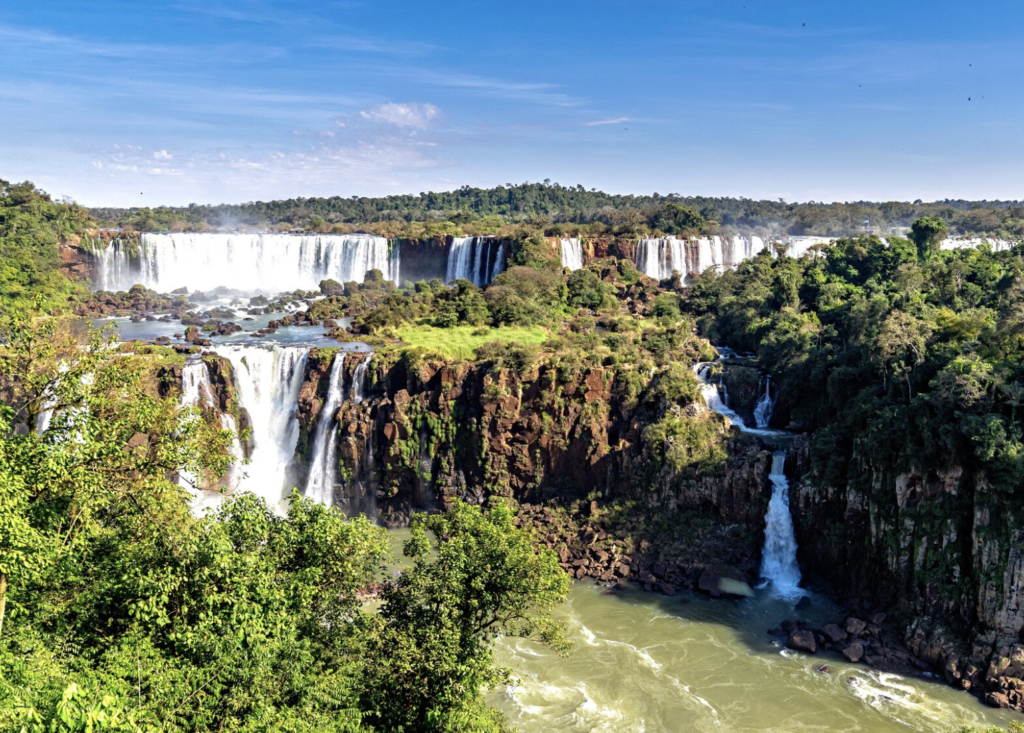
The main crossing is Puerto Iguazú (Argentina) / Foz do Iguaçu (Brazil) — famous for access to Iguazú Falls from both sides. It’s one of South America’s most frequently crossed borders with a streamlined process for tourists. Another crossing is Paso de los Libres / Uruguaiana connecting the northeast.
From Uruguay
Buenos Aires to Montevideo is one of the most traveled short international routes in South America, served by fast ferries (Buquebus, Seacat) across the Río de la Plata. The crossing takes 2.5–3 hours. There are also bus connections via Colón-Paysandú and other border towns for travelers in the interior.
From Paraguay
The main crossing is Clorinda (Argentina) / Asunción via the Puente Internacional San Ignacio de Loyola. Many Argentina-Paraguay travelers go through Posadas (Argentina) / Encarnación (Paraguay) in the north, especially during carnival season.
Applying for an Argentine Tourist Visa
If your nationality requires a visa, you must apply at an Argentine consulate before traveling. Argentina does not offer a visa on arrival or an e-visa for nationalities that require prior authorization.
Documents Required
- Valid passport with at least 6 months’ validity and 2 blank pages
- Completed visa application form
- 2 recent passport photographs (color, white background)
- Confirmed round-trip or onward travel reservations
- Proof of accommodation in Argentina
- Bank statements (last 3–6 months) showing sufficient funds
- Travel insurance with medical coverage
- Proof of employment or study (to demonstrate ties to home country)
- Application fee (varies by nationality and consulate)
Processing typically takes 5–10 business days. Apply well in advance, especially during peak travel seasons.
Argentina Currency: The Blue Dollar Reality in 2026
This section is important for practical travel planning. Argentina has historically operated with multiple exchange rates. As of 2026, the official exchange rate and the free market rate have converged significantly following the economic reforms under President Milei’s administration, which unified the exchange rate in December 2023 and substantially devalued the peso.
Key points for 2026 travelers:
- Check current exchange rates immediately before travel — Argentina’s rate situation remains dynamic
- ATMs now generally dispense pesos at or near the official rate
- Credit/debit cards are widely accepted in Buenos Aires and major cities
- Carry some USD in cash as a backup for rural areas and smaller establishments
- Inflation remains an ongoing factor — prices that were accurate 6 months ago may be significantly different at travel time
Digital Nomads in Argentina
Argentina launched a formal Digital Nomad Visa in 2022 under the “Rentista” visa framework, though the process has been inconsistently administered. As of 2026, the most practical approach for remote workers is:
- Enter on a tourist visa (90 days, extendable 90 more)
- For longer stays, apply through the Rentista or Trabajador a Distancia pathway at Migraciones
- Requires proof of income from abroad (typically USD $2,000+/month)
- Consult with a local immigration attorney for the current application process, as this has changed frequently
Travel Safety in Argentina
Argentina is one of South America’s safer countries for tourists overall, but standard precautions apply:
- Buenos Aires: Petty crime (pickpocketing, bag snatching) occurs in tourist areas like La Boca and crowded markets. Avoid displaying expensive electronics/jewelry, and use hotel safes
- ATM safety: Use ATMs inside banks during business hours, not standalone street machines at night
- Express kidnapping: Rare but reported — use registered taxis or Uber/Cabify rather than unmarked cabs, especially from Ezeiza airport
- Patagonia: Very safe for travelers; the main risk is weather and wilderness remoteness rather than crime
For broader safety context across the Andes, see our Andes travel guide.
Travel Insurance for Argentina
Argentina doesn’t mandate travel insurance at the border, but it’s essential — especially for adventure activities in Patagonia. Public hospitals provide free emergency care for foreigners, but the quality varies significantly outside Buenos Aires. Private clinics are excellent but expensive without coverage. Your policy must cover emergency evacuation from remote Patagonian locations, which can easily exceed USD $20,000–$50,000 for helicopter rescue. See our best travel insurance for South America guide for detailed coverage comparisons.
Essential Gear for Argentina
| Product | Why You Need It | Check Price |
|---|---|---|
| Osprey Farpoint 55 Travel Backpack | Ideal for Buenos Aires + Patagonia mix | Amazon → |
| Patagonia Nano Puff Jacket | Lightweight insulation for Patagonia cold | Amazon → |
| Merrell Moab 3 Mid Waterproof | Versatile trail boot for varied terrain | Amazon → |
| Sea to Summit Pocket Towel | Essential for hostel travel | Amazon → |
| Anker PowerCore Essential 20000 | Power bank for long bus journeys | Amazon → |
Argentina Quick Facts for 2026
- Capital: Buenos Aires
- Currency: Argentine Peso (ARS) — verify current rate before travel
- Language: Spanish (Argentine dialect with distinctive Rioplatense accent)
- Time Zone: UTC-3 (Argentina Standard Time, no daylight saving)
- Plugs: Type I (three-pin angled — you’ll need an adapter from most countries)
- Best time to visit Buenos Aires: March–May and September–November
- Best time for Patagonia: November–March (Southern Hemisphere summer)
- Emergency number: 911

Frequently Asked Questions
Do Americans need a visa to visit Argentina in 2026?
No. US citizens can enter Argentina visa-free for up to 90 days for tourism or business. There is no reciprocity fee. You need a valid passport but no prior visa application.
Can I extend my 90-day stay in Argentina?
Yes — Argentina is one of the few countries that lets you extend your tourist stay from within the country. You can apply at a Migraciones office for an additional 90 days (making 180 days total). The extension costs a fee and must be done before your initial 90 days expire.
How much money do I need to show at the Argentine border?
No specific amount is legally required, but the informal guideline is approximately USD $50 per day of your intended stay. A credit card generally satisfies any questions about finances.
Is Argentina safe for tourists in 2026?
Yes, Argentina is one of South America’s safer tourist destinations. Buenos Aires has standard big-city risks (pickpocketing in tourist areas); Patagonia is very safe. Use registered taxis or rideshare apps and standard urban precautions and you’ll be fine.
Can I work remotely in Argentina as a tourist?
Working for foreign clients on a tourist visa is in a legal gray area in Argentina. For proper long-term stays, Argentina has a Rentista/Trabajador a Distancia visa pathway — contact a local immigration attorney for current requirements, as the process changes frequently.
Do I need a return ticket to enter Argentina?
Technically yes — border officials can request proof of onward travel. In practice, this is inconsistently enforced, especially at land borders. Have a reservation ready to show if asked.
What is the currency situation in Argentina for 2026?
The official and parallel exchange rates were unified following the Milei government’s December 2023 devaluation. The situation has stabilized compared to prior years, but inflation remains ongoing — verify current rates immediately before travel as the situation continues to evolve.
Do I need travel insurance for Argentina?
It’s not legally required at the border, but strongly recommended — especially for Patagonia trekking. Emergency evacuation from Torres del Paine or Fitz Roy areas can cost tens of thousands of dollars without coverage.
Planning Your Argentina Trip
With entry requirements sorted, dive into the planning essentials. Argentina is a great hub for an Andes multi-country circuit. Check out the complete visa requirements for your other destinations:
- Chile Visa Requirements 2026
- Bolivia Visa Requirements 2026
- Peru Entry Requirements 2026
- Ecuador Visa Guide 2026
- Colombia Entry Requirements 2026
And for the full cross-country comparison, see our Andean Countries Visa Requirements overview.