

Ecuador packs more variety per square kilometer than almost any country on earth. Within a single trip you can stand on the equator at 2,800 meters, descend to black-sand Pacific beaches, trek through cloud forests on the flanks of active volcanoes, and board a boat for the Galapagos Islands — one of the most biodiverse places on the planet. Getting into Ecuador to do all of this is straightforward for most visitors, but the Galapagos adds a layer of documentation that catches first-timers off guard every year.
This guide covers everything a first-time visitor to Ecuador needs in 2026: whether your nationality requires a visa, what the T-3 tourist card is, how to get the Galapagos Transit Control Card (TCT), what to bring to the border, how long you can stay, the official websites, costs, and the best places to book tours before you arrive.
Search flights to Ecuador: Compare routes to Quito (UIO) and Guayaquil (GYE) on Skyscanner
Ecuador Entry Requirements at a Glance: 2026
| Nationality | Visa required? | Max stay | T-3 card issued? | Galapagos TCT required? |
|---|---|---|---|---|
| United States | No | 90 days | Yes, on arrival | Yes — if visiting Galapagos |
| European Union | No | 90 days | Yes, on arrival | Yes — if visiting Galapagos |
| United Kingdom | No | 90 days | Yes, on arrival | Yes — if visiting Galapagos |
| Canada | No | 90 days | Yes, on arrival | Yes — if visiting Galapagos |
| Australia | No | 90 days | Yes, on arrival | Yes — if visiting Galapagos |
| New Zealand | No | 90 days | Yes, on arrival | Yes — if visiting Galapagos |
| Japan | No | 90 days | Yes, on arrival | Yes — if visiting Galapagos |
| South American neighbors (CAN/MERCOSUR) | No | 90 days | Yes, on arrival | Yes — if visiting Galapagos |
| China | Yes — visa required | Varies | Yes (after visa) | Yes — if visiting Galapagos |
| India | Yes — visa required | Varies | Yes (after visa) | Yes — if visiting Galapagos |
Ecuador has one of the most open visa policies in South America — over 100 nationalities enter without a visa. Always confirm current requirements at the official Ecuador Cancillería before traveling, as policies can change.
The T-3 Card: Ecuador’s Tourist Entry Document
The T-3 is Ecuador’s tourist status card. It is issued to every foreign visitor on arrival — at the airport, at land border crossings, and at sea entry points. For arrivals by air, immigration hands you the T-3 with your passport after stamping your entry. For land arrivals, you fill it out at the border crossing.
The T-3 functions as your legal record of tourist status in Ecuador. It shows your authorized stay duration, your entry point, and your entry date. Keep it in the same place as your passport throughout your time in Ecuador. You do not need to surrender it when you leave (unlike Peru’s TAM), but you may need to show it at checkpoints in national parks, including at Galapagos airport inspections.
If you lose your T-3, visit the nearest Ministerio del Interior / Migración office to request a replacement before attempting to exit Ecuador or visit restricted areas.
Galapagos Islands Entry: The Transit Control Card (TCT)
The Galapagos Islands have their own entry requirements that apply in addition to your standard Ecuador entry. Every visitor to the Galapagos — regardless of nationality — must obtain a Transit Control Card (TCT) before boarding their domestic flight from Quito or Guayaquil to the islands.
The TCT is not obtained online before you fly. It is obtained at the INGALA (Instituto Nacional Galápagos) desk at Quito’s Mariscal Sucre Airport (UIO) or Guayaquil’s José Joaquín de Olmedo Airport (GYE), immediately before you board your Galapagos flight. The process happens on the same day as your domestic flight. Factor in at least 30 extra minutes before your gate closes to get through the INGALA desk.
Documents Required for the Galapagos TCT
- Valid passport
- Confirmed round-trip flight itinerary to and from the Galapagos
- Proof of accommodation or cruise booking in the Galapagos
- Cash or credit card for the Galapagos National Park entrance fee
Galapagos Entrance Fees 2026
| Visitor type | Entrance fee | Payment location |
|---|---|---|
| Adults (most nationalities) | USD 200 | At Galapagos airport on arrival |
| Citizens of Andean Community countries | USD 50 | At Galapagos airport on arrival |
| Children under 12 | USD 100 | At Galapagos airport on arrival |
| Students with valid ISIC card | Reduced rate | At Galapagos airport on arrival |
The Galapagos National Park entrance fee increased significantly in 2024. The current USD 200 rate for most foreign adults was introduced as part of the park’s conservation funding model. This fee must be paid in cash (USD) or by credit card at the Galapagos airport — it cannot be pre-paid online. Carry the full amount in cash as a backup since card readers occasionally experience connectivity issues on the islands.
The Galapagos total fee is also distinct from your cruise or tour cost. It comes on top of whatever you have paid your tour operator or cruise line.
Book your Galapagos tour or cruise: Browse Galapagos day tours, island-hopping, and live-aboard cruises on Viator
See our complete guide: Galapagos Islands Travel Guide 2026 — Tours, Costs, Permits and When to Go

How to Complete Ecuador’s Pre-Travel Requirements
Ecuador does not currently require a mandatory online pre-registration form (like Bolivia’s SIGEMIG or Colombia’s Check-Mig) that airlines enforce at check-in. Entry documentation for mainland Ecuador is handled entirely on arrival. The only pre-departure step that is sometimes recommended — but not mandatory — is informing your airline if you are traveling to the Galapagos, to ensure your luggage complies with biosecurity inspection rules.
Galapagos Biosecurity Requirements
The Galapagos Islands have the strictest biosecurity rules in South America. Every bag, piece of luggage, and personal item is X-rayed and inspected before you board your Galapagos flight in Quito or Guayaquil, and again on arrival at the islands. Prohibited items include fresh fruits, vegetables, seeds, live plants, soil, and certain animal products. Declare all food items and be prepared to surrender anything flagged during inspection. There is no penalty for surrendering items — only for attempting to conceal them.
Travel Insurance for Ecuador: What You Need and Why
Travel insurance is not legally required to enter mainland Ecuador or the Galapagos. However, it is essential for practical reasons. Ecuador combines high-altitude trekking (Cotopaxi at 5,897m, Chimborazo at 6,263m, Quilotoa at 3,914m), jungle expeditions in the Amazon basin, and the remote Galapagos environment where emergency evacuation is extremely expensive.
Medical evacuation from the Galapagos Islands to a hospital in Guayaquil requires a medevac flight and costs USD 20,000 to USD 50,000 for severe cases. No credit card travel benefit covers this. Even standard policies have caps that may not be sufficient — verify that your policy includes emergency evacuation explicitly.
Best Travel Insurance for Ecuador and Galapagos
| Insurer | Price (4 weeks) | Medical coverage | Evacuation included? | Buy while travelling? | Best for |
|---|---|---|---|---|---|
| SafetyWing | From USD 56 | USD 250,000 | Yes | Yes | Most visitors including Galapagos |
| IATI Seguros | From EUR 65 | EUR 150,000 | Yes with adventure add-on | No | European travelers, volcano trekking |
| AseguraTuViaje | Varies | Varies | Varies | No | Latin American travelers |
Our full guide: Best Travel Insurance for South America 2026
Complete Document Checklist for Entering Ecuador
| Document | Required? | Notes |
|---|---|---|
| Passport | Yes — mandatory | Valid for at least 6 months from arrival date. At least 1 blank page for T-3 card and entry stamp. |
| T-3 tourist card | Issued on arrival | Keep throughout your stay. You may need to show it at national park checkpoints. |
| Galapagos TCT | Required if visiting Galapagos | Obtained at INGALA desk at Quito or Guayaquil airports before your Galapagos flight. |
| Onward travel proof | Frequently requested | Airlines commonly ask at check-in. A flight out of Ecuador or to another country. |
| Accommodation confirmation | Sometimes requested | First night’s hotel or cruise booking in Ecuador or Galapagos. |
| Travel insurance | Recommended, essential for Galapagos | Emergency evacuation from Galapagos costs USD 20,000–50,000 without coverage. |
| Galapagos entrance fee (cash) | Required if visiting Galapagos | USD 200 per adult for most nationalities. Carry in cash as backup. |
| Yellow Fever certificate | May be required | Required if arriving from countries with Yellow Fever transmission. Carry regardless. |
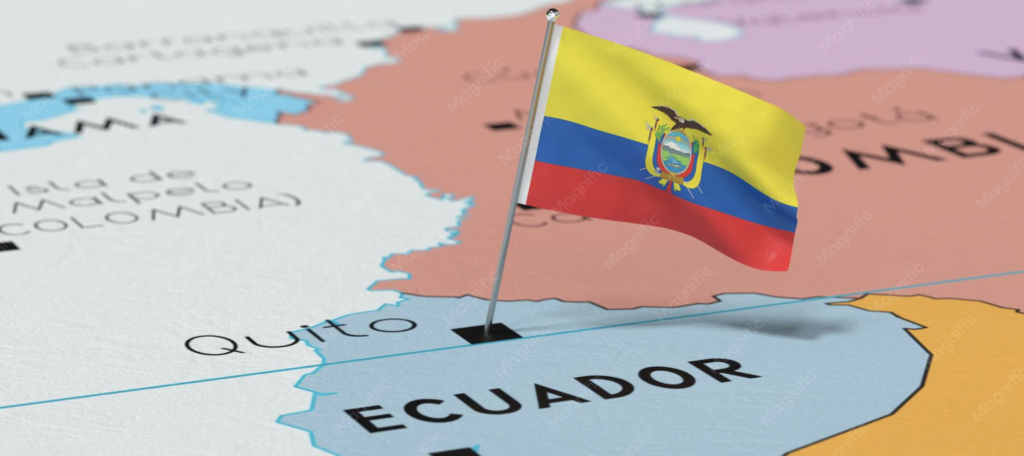
Ecuador’s Main Entry Points
Mariscal Sucre International Airport (Quito) — UIO
Ecuador’s main international gateway and the departure point for most Galapagos-bound visitors. The airport opened its current terminal in 2013 and is located 18 km northeast of Quito’s city center. Immigration processing is efficient — typical wait time is 15 to 30 minutes. The INGALA desk for Galapagos TCT processing is located in the departures hall near domestic check-in.
Important altitude note: Quito sits at 2,850 meters above sea level. Altitude sickness can affect first-time visitors within hours of landing. Plan a rest day on arrival, drink water, and avoid heavy meals and alcohol on your first evening. Most Galapagos itineraries begin the day after arrival in Quito.
José Joaquín de Olmedo Airport (Guayaquil) — GYE
Ecuador’s second international airport. Located at sea level, which makes it an easier transition for visitors sensitive to altitude. Many visitors fly Quito–Guayaquil by domestic flight and depart to the Galapagos from Guayaquil, which is approximately 30 minutes closer by air. The INGALA desk also operates at Guayaquil airport. Some regional flights from Lima, Bogota, and Sao Paulo land in Guayaquil.
Huaquillas — Peru/Ecuador Land Border
The main land crossing between Peru and Ecuador on the coastal Pan-American Highway, connecting Tumbes (Peru) with Machala and Guayaquil (Ecuador). This is a busy commercial and tourist crossing. Standard immigration procedures apply. The T-3 is issued at the border. Processing is generally fast — under an hour in normal conditions. Take precautions with your belongings in the Huaquillas area.
Tulcán — Colombia/Ecuador Land Border
The main land crossing between Colombia and Ecuador, on the Pan-American Highway connecting Ipiales (Colombia) with Quito (Ecuador). This is a high-altitude crossing at approximately 2,980 meters. Standard immigration on both sides. Processing is typically 30 to 90 minutes. Widely used by travelers on the Quito–Bogota overland route.
How Long Can You Stay in Ecuador?
The standard tourist entry grants 90 days. For citizens of most nationalities, this 90-day period applies from the date of entry. Ecuador’s immigration law allows a 90-day extension at a Ministerio del Interior / Dirección General de Migración office. The extension brings the maximum tourist stay to 180 days in any 12-month period.
The extension process requires visiting an immigration office in Quito, Guayaquil, Cuenca, or other major cities. Bring your passport, T-3 card, a passport-size photo, a completed application form, and proof of sufficient funds. The fee is approximately USD 50. Apply before your initial 90 days expire.
Ecuador uses the calendar year (January 1 to December 31) to calculate the 180-day maximum, not a rolling 12-month period. If you exit and re-enter within the same calendar year, the days count toward your annual total.
What Happens If You Overstay in Ecuador?
Overstaying in Ecuador is subject to fines. The fine is approximately USD 200 for the first overstay, payable when you exit the country. Repeated overstays increase fines and can result in a ban on future entries. If you overstay accidentally, report to the nearest Migración office before your departure and pay any applicable fines voluntarily — this avoids detention at the exit border.
Ecuador Entry Costs: Complete Breakdown
| Item | Cost | Notes |
|---|---|---|
| Tourist visa (US, EU, UK, CA, AU) | Free | No visa required for these nationalities |
| T-3 tourist card | Free | Issued at the border on arrival |
| 90-day extension | ~USD 50 | At Migración office before original 90 days expire |
| Galapagos National Park entrance fee | USD 200 (most adults) | Paid at Galapagos airport on arrival — carry in cash |
| Galapagos TCT card | Free | Obtained at INGALA desk in Quito or Guayaquil |
| Travel insurance (4 weeks) | From USD 56 | SafetyWing — essential given Galapagos evacuation costs |
| Airport departure tax | Included in ticket | Collected at point of sale |
| Overstay fine | ~USD 200 | Plus potential entry ban on repeat offenses |
Ecuador and Galapagos Tours Worth Booking in Advance
The Galapagos is one of the few destinations in South America where planning months in advance is not excessive — it is necessary. The best cruise itineraries and island-hopping packages sell out 3 to 6 months before departure. On mainland Ecuador, Cotopaxi and Chimborazo climbing permits also have limits during peak season.
| Experience | Location | Price range | Book via |
|---|---|---|---|
| Galapagos 5-day/4-night cruise | Galapagos Islands | USD 1,200–3,500 | Viator |
| Galapagos island-hopping day tours | Santa Cruz / San Cristóbal | USD 60–150/day | Viator |
| Cotopaxi day hike | Quito / Cotopaxi NP | USD 60–120 | Civitatis |
| Quilotoa Loop trek | Latacunga | USD 40–80 | Viator |
| Amazon jungle lodge (3 days, Tena/Misahualli) | Ecuadorian Amazon | USD 200–500 | Viator |
| Old Town Quito guided walking tour | Quito | USD 25–55 | Civitatis |
| Mitad del Mundo (Equator monument) | Quito | USD 20–45 | Civitatis |
Browse all Ecuador and Galapagos tours on Viator
Book Ecuador tours in Spanish with Civitatis — instant confirmation, local guides
Ecuador Entry Tips for First-Time Visitors
Carry USD in cash — Ecuador uses the US dollar
Ecuador’s official currency is the US dollar. This means no currency exchange headaches — but it does mean ATMs and cash are as critical here as at home. The Galapagos entrance fee (USD 200) is best paid in cash. Small islands and national park areas often have limited card readers. Withdraw sufficient cash before leaving Quito or Guayaquil for the islands.
Book Galapagos tours before you arrive in Ecuador
The best-value Galapagos itineraries sell out well in advance. Last-minute deals do occasionally exist in the low season (September–November, February–May), but you will have limited choice. Book a cruise or island-hopping package before you fly to Ecuador for the widest selection and best prices.
Acclimatize in Quito before heading to altitude
Quito at 2,850m is already at significant altitude. Before attempting Cotopaxi (4,800m base) or other high-altitude activities, spend 2 to 3 days in Quito acclimatizing. Your body needs time to adjust. Drink water, rest, and avoid alcohol on your first 48 hours.
Get travel insurance before your Galapagos flight
SafetyWing can be purchased after you have left home — useful if you forgot to sort insurance before departing. This is particularly valuable for last-minute Galapagos add-ons decided after arrival in Ecuador.
Keep your Galapagos biosecurity rules in mind when packing
Before your Galapagos flight, remove all fresh food from your bags. Declare any medicines or supplements. Bring only factory-sealed snacks. Inspectors are thorough — the biosecurity of the islands depends on it, and the fines for non-compliance are significant.
Flight delays to the Galapagos happen — plan accordingly
Galapagos flights, particularly those routing through Guayaquil, experience weather-related delays regularly. If your cruise or tour starts on the day you arrive at the islands, build in a same-day buffer or fly the day before. AirHelp can help you claim compensation for delays over 3 hours on your international leg to Ecuador.
Frequently Asked Questions: Ecuador Visa Requirements 2026
Do US citizens need a visa to visit Ecuador in 2026?
No. US citizens do not need a visa to enter Ecuador. On arrival, immigration issues a T-3 tourist card and an entry stamp authorizing a stay of up to 90 days, extendable to 180 days at a Migración office.
What is the T-3 card in Ecuador?
The T-3 is Ecuador’s tourist status card, issued to every foreign visitor on arrival. It documents your entry date, authorized stay duration, and entry point. Keep it with your passport throughout your stay and produce it at national park checkpoints if requested.
What is the Galapagos Transit Control Card (TCT)?
The TCT is a required document for all Galapagos visitors. It is obtained free of charge at the INGALA desk at Quito (UIO) or Guayaquil (GYE) airports before you board your domestic flight to the islands. Bring your passport, confirmed Galapagos flight, and accommodation/cruise booking to the INGALA desk.
How much does it cost to enter the Galapagos?
The Galapagos National Park entrance fee is USD 200 for most adult visitors (most nationalities). Citizens of Andean Community countries pay USD 50. Children under 12 pay USD 100. This fee is paid at the Galapagos airport on arrival and is separate from your tour or cruise cost. Carry the full amount in cash.
How long can I stay in Ecuador as a tourist?
Up to 90 days on initial entry, extendable to 180 days per calendar year at a Migración office. The fee for the extension is approximately USD 50. Apply before your initial 90-day stamp expires.
Do I need travel insurance for the Galapagos Islands?
It is not legally required, but it is strongly recommended. Emergency medical evacuation from the Galapagos to a mainland hospital costs USD 20,000 to USD 50,000. No standard credit card benefit covers this adequately. SafetyWing and IATI Seguros both include evacuation coverage.
What are the main airports for entering Ecuador?
Mariscal Sucre International Airport in Quito (UIO) and José Joaquín de Olmedo Airport in Guayaquil (GYE) are the two main international gateways. Quito is the more common arrival point for tourists heading to the Sierra, Amazon, or Galapagos.
Can I enter Ecuador by land from Colombia?
Yes. The main land crossing is at Tulcán/Ipiales on the Pan-American Highway, connecting southern Colombia with northern Ecuador. The crossing is open daily. Immigration for both countries is processed at the border. T-3 is issued on the Ecuador side. Processing time is typically 30 to 90 minutes.
Do I need a Yellow Fever vaccination to enter Ecuador?
A Yellow Fever certificate is required if you are arriving from countries with active transmission (parts of Africa, some South American countries). Ecuador’s Amazon region is endemic — vaccination is strongly recommended if you plan jungle activities. Carry your vaccination certificate regardless of the formal requirement.
What should I do if my flight to Ecuador or the Galapagos is delayed?
For international flight delays of more than 3 hours or cancellations, you may be entitled to compensation. AirHelp handles the claim process and only charges a fee if successful. For domestic Galapagos flight delays, contact your airline directly — domestic compensation rules differ from international ones.
Related Guides
- Visa Requirements for All Six Andean Countries 2026
- Best Travel Insurance for South America 2026
- Galapagos Islands Travel Guide 2026
- Quito Travel Guide 2026
- Machu Picchu Travel Guide 2026
Disclosure: This article contains affiliate links. If you purchase travel insurance, book flights, or reserve accommodation through our links, Uncover the Andes earns a commission at no extra cost to you.