Machu Picchu is the highlight of almost every Peru itinerary, but it is also the stop travelers find hardest to budget. Between circuit-based entry tickets, some of the priciest train rides in South America, a gateway town where everything costs extra, and a base city with its own expenses, the final bill can land anywhere from under US$250 to well over US$1,200 per person. This guide breaks down every cost of a Machu Picchu trip in 2026, line by line, and ends with three sample budgets: backpacker, mid-range and comfort. For the bigger picture, see our breakdown of what it costs to travel to the Peruvian Andes, and for routes and logistics, our Machu Picchu travel guide 2026. One warning before the numbers: prices change with the season and official fee updates, so treat every figure below as an approximate range and check the official Machu Picchu booking site and operators for current rates before you pay.
Key takeaways
- Entry tickets: roughly US$40–65 per foreign adult, depending on the circuit you choose.
- Realistic totals from Cusco (2 days, 1 night): backpacker US$240–350, mid-range US$450–675, comfort US$850 and up.
- The train is the biggest cost — often more than your ticket, hotel and food combined.
- Book entry tickets weeks ahead: the classic Circuit 2 route sells out first in high season.
- Prices change: confirm current rates on the official booking site before paying.
Machu Picchu entry tickets: what you will pay in 2026
Since the circuit system was introduced, Machu Picchu no longer sells a single general ticket. There are ten circuits, and the price depends on the route you pick. Foreign adults generally pay somewhere in the range of US$40–65: the classic routes that reach the famous postcard viewpoint, such as Circuit 2, sit toward the middle of that range, while routes that add a mountain hike, like Huayna Picchu or Machu Picchu Mountain, cost a little more and sell out much earlier. Students with valid ID and children pay less, and Andean Community citizens get a discount, but the exact amounts are updated by the Ministry of Culture, so check the official booking platform for the current figure for your circuit.
Two practical points matter more than the small price differences. First, tickets are sold for a specific date and entry hour, entry is staggered, and you cannot switch circuits inside. Our guide to the new entry rules and staggered entry times explains how the system works. Second, buy only through the official government site or a reputable agency: resellers add service fees, and in peak months the best circuits can be gone four to six weeks ahead.
Getting there: train options compared
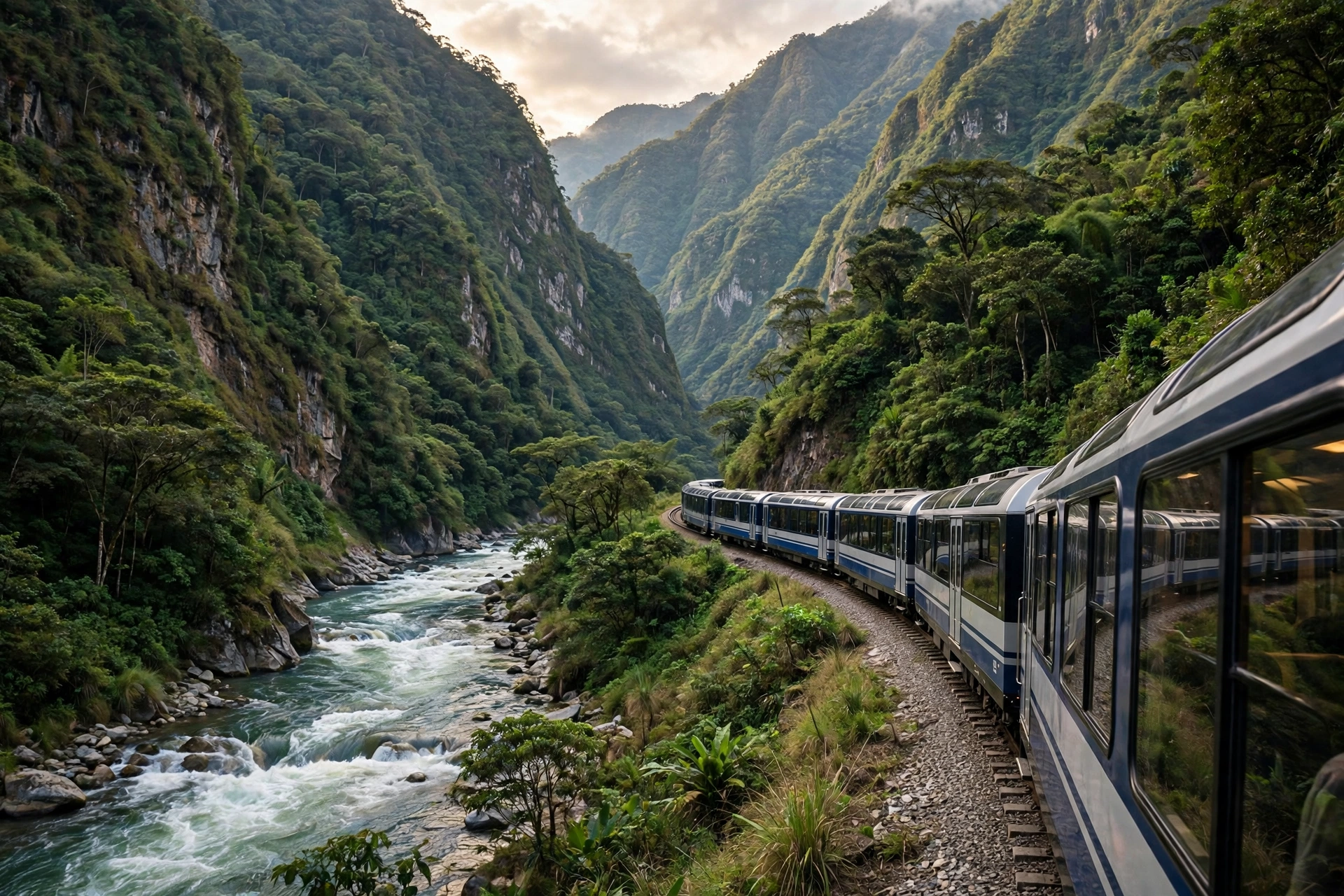
Unless you hike the Inca Trail or take the longer backpacker route via Hidroeléctrica, the train is how you reach Aguas Calientes, the town below Machu Picchu. Two companies, PeruRail and Inca Rail, run from Ollantaytambo (about 1.5–2 hours from Cusco) and from Poroy, closer to Cusco. Prices swing widely by departure time: the earliest and latest trains are usually the cheapest, mid-morning departures the most expensive. As a rough guide for 2026, expect to pay in these ranges one way, and always check the operators for current rates, because fares change with demand.
| Train class | Companies | One-way price (approx.) | What you get |
|---|---|---|---|
| Tourist / Expedition class | PeruRail Expedition, Inca Rail Voyager | US$60–90 | Comfortable seats, large windows, snack service on some departures |
| Panoramic class | PeruRail Vistadome, Inca Rail 360° | US$90–140 | Glass-dome windows, better views of the gorge, included snacks and drinks |
| Luxury class | Belmond Hiram Bingham, Inca Rail First Class | US$400–500+ | Gourmet meals, open bar, live music, bus and guide often included |
For most travelers the sweet spot is simple: ride a budget tourist train one way and, if you want the views, a panoramic train back in daylight. The money saved is better spent on an extra night or a good guide.
The bus from Aguas Calientes to the gate
From Aguas Calientes, a shuttle bus climbs the switchback road to the entrance gate in about 25 minutes. Tickets cost roughly US$12 one way or US$24 round trip for foreign visitors; buy them in town with your passport, ideally the day before. The alternative is walking: a steep stone staircase that takes most people 1.5 to 2 hours uphill. Many budget travelers ride up for a sunrise entry and walk down afterwards, which saves half the bus fare.
Guides: what they cost and whether you need one
Your entry ticket does not include a guide, and Machu Picchu has no information panels inside, so a guide adds a lot: the history of each sector, the astronomy behind the temples, and help following your circuit’s one-way route. Licensed guides wait at the gate and in Aguas Calientes. Expect roughly US$10–20 per person for a shared group tour of two to three hours, or US$60–100 for a private guide for your own small group, which often works out cheaper per person if you are three or four travelers. Agree on the total before you start.
Where to sleep: Aguas Calientes hotels by tier
Aguas Calientes exists for one reason, and its prices sit well above Cusco’s. The good news: one night is enough for most itineraries. As a general guide for 2026: dorm beds in hostels run about US$15–35, simple private rooms with breakfast around US$40–80, comfortable mid-range hotels roughly US$90–180, and the town’s upscale properties US$250–500 or more per night. In high season the mid-range places fill fast, so book ahead. Sleeping in Ollantaytambo instead is a classic money-saver: it is prettier, cheaper, and you board the train there in the morning.
Food and drink costs
Eating in Aguas Calientes is pricier than in Cusco, but the range is wide. Local spots a street or two away from the main plaza serve a menú del día (soup, main course and a drink) for roughly US$5–10. Main-street tourist restaurants charge around US$12–25 for a main dish, a mid-range dinner with a drink lands near US$15–30, coffee costs US$3–5 and a large beer US$4–7. Bakeries and the small market are the budget traveler’s friends for breakfast and train snacks. As a daily food budget, plan on US$15–25 backpacker style, US$30–50 mid-range, and US$60 or more if you eat well.
Your Cusco base: costs before and after the trip
Almost everyone spends at least two nights in Cusco, to acclimatize and to catch the train. Dorm beds cost about US$10–20, guesthouses US$25–50, and solid mid-range hotels US$60–120 per night. A taxi from the airport to the historic center is roughly US$5–10. A shared minivan (colectivo) to Ollantaytambo costs around US$5–10 per person; a private taxi for the same route runs about US$30–45. If you tour the Sacred Valley on the way, the Boleto Turístico (tourist ticket) for the main sites costs roughly US$35–40. Our Cusco travel guide covers neighborhoods, altitude tips and what to see with your remaining days.
Three sample budgets compared
Here is what a standard 2-day, 1-night trip from Cusco costs per person at three comfort levels. Totals are estimates: your figure depends on the circuit, train times and season, and prices change, so confirm current rates before booking.
| Cost item | Backpacker | Mid-range | Comfort |
|---|---|---|---|
| Entry ticket | US$45 | US$55 | US$60 |
| Train (round trip) | US$130 | US$220 | US$380 |
| Bus to the gate | US$12 (up only) | US$24 | US$24 |
| Guide | US$15 (shared) | US$25 (small group) | US$100 (private) |
| Hotel in Aguas Calientes (1 night) | US$25 | US$130 | US$350 |
| Food (2 days) | US$30 | US$75 | US$150 |
| Cusco transfers and extras | US$20 | US$40 | US$100 |
| Estimated total | US$240–350 | US$450–675 | US$850–1,400 |
Heading further south after Peru? Compare these numbers with our breakdown of the Salar de Uyuni trip cost on our sister site The Mirror of the World, so you can budget the Bolivia leg of the same journey.
Hidden costs most travelers miss
A few expenses rarely appear in headline budgets. The Boleto Turístico for Sacred Valley sites adds roughly US$35–40 if you stop at Pisac or the Ollantaytambo fortress. Group tours to the Sacred Valley cost US$20–40 per person before entry fees. Agencies charge service fees on top of official ticket prices, sometimes 20% or more. Add the small things: luggage storage in Aguas Calientes, tips for guides and porters, altitude remedies, and the transfer to Poroy station if your train leaves from there instead of Ollantaytambo. Finally, paying in dollars at a poor informal exchange rate quietly inflates everything by a few percent.
Money-saving tips that actually work
- Travel in the shoulder season (April–May or September–October): better availability, softer hotel prices, fewer crowds.
- Pick unpopular train times: the earliest and latest departures are usually the cheapest in every class.
- Walk down from the gate after your visit and save half the bus fare.
- Eat the menú del día a couple of streets away from the plaza, and carry snacks from Cusco.
- Sleep in Ollantaytambo instead of Aguas Calientes when your entry time allows it.
- Buy tickets on the official site as soon as your dates are fixed, and share a private guide between three or four people.
Stretching the trip into a longer Andean journey spreads the fixed costs even further; our 1-month Andes backpacking itinerary and budget shows how Machu Picchu fits into a month on the road.
Plan your trip
Ready to lock in your dates? Compare flights to Cusco on Skyscanner to find the cheapest way into the region, browse Machu Picchu and Sacred Valley tours on Civitatis if you prefer everything organized, and travel covered with travel insurance from Asegura tu Viaje, which matters at altitude and on mountain roads. Then book your entry ticket on the official site before anything else, because everything else is built around that date and hour.
Frequently asked questions
How much does a Machu Picchu trip cost in total in 2026?
From Cusco, a 2-day, 1-night trip costs roughly US$240–350 per person backpacker style, US$450–675 mid-range, and US$850–1,400 or more in comfort. The train and your hotel tier move the total most. Prices change, so check the official booking site and operators for current rates.
How much is the Machu Picchu entry ticket in 2026?
Foreign adults generally pay about US$40–65 depending on the circuit, with mountain routes such as Huayna Picchu at the higher end. Students and children pay less with valid ID. The Ministry of Culture updates prices, so confirm the exact figure on the official booking platform before paying.
What is the cheapest way to visit Machu Picchu?
Take the cheapest tourist-class trains at off-peak times, ride the bus up and walk down, sleep in a hostel or in Ollantaytambo, and eat the menú del día. The absolute cheapest route is the bus to Hidroeléctrica plus a two-hour walk to Aguas Calientes, but it adds a full day of travel.
Is the train to Machu Picchu worth the money?
For most travelers, yes: it is the only direct way to reach Aguas Calientes without hiking, and the ride through the Urubamba gorge is beautiful. You do not need the panoramic classes to enjoy it, though; a budget tourist train plus one daylight return gives you the views for far less.
Can I visit Machu Picchu in one day from Cusco?
Yes: take an early train from Ollantaytambo or Poroy, spend three to four hours inside on your circuit, and return the same evening. It is a long day of roughly 14–16 hours; an overnight in Aguas Calientes or Ollantaytambo is more relaxed and barely more expensive.
How much should I budget for food in Aguas Calientes?
Plan on US$15–25 per day if you eat set menus and bakery breakfasts, US$30–50 for mid-range restaurants, and US$60 or more for the town’s better dining rooms. Prices are higher than in Cusco, and the streets away from the main plaza are noticeably cheaper.
Do I need a guide for Machu Picchu in 2026?
A guide is not included in your ticket, and hiring one is strongly recommended: there are no explanatory panels inside, and circuits are one-way routes that are easy to rush through alone. Shared tours cost about US$10–20 per person, and private guides US$60–100 per group.
How far ahead should I book Machu Picchu tickets?
Book as soon as your dates are fixed. In high season (June to August), Circuit 2 and the Huayna Picchu route can sell out four to six weeks ahead. Trains and mid-range hotels in Aguas Calientes also fill early, so reserve those right after your entry ticket.
Is it cheaper to stay in Aguas Calientes or Ollantaytambo?
Ollantaytambo is usually cheaper for hotels and food, and it is a far prettier town. The trade-off is an early start: morning train to Aguas Calientes, then the bus up. Stay in Aguas Calientes only if you have one of the first entry slots.
Should I pay in soles or dollars in Peru?
Carry both. Official tickets and trains are often priced in dollars or paid by card, while buses, markets, taxis and small restaurants work in soles. Pay in the currency the price is quoted in to avoid poor informal exchange rates, and keep small notes for tips.