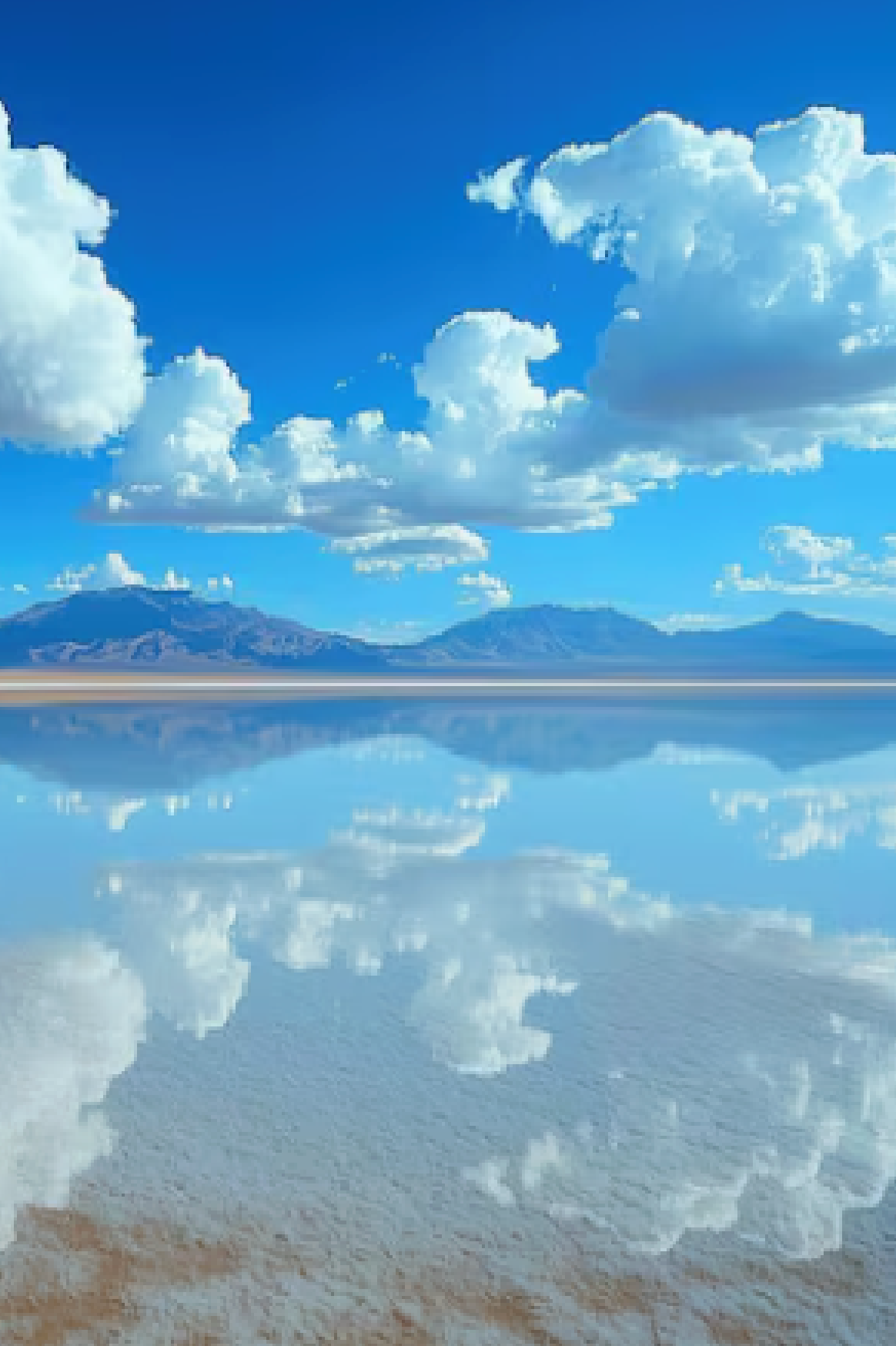

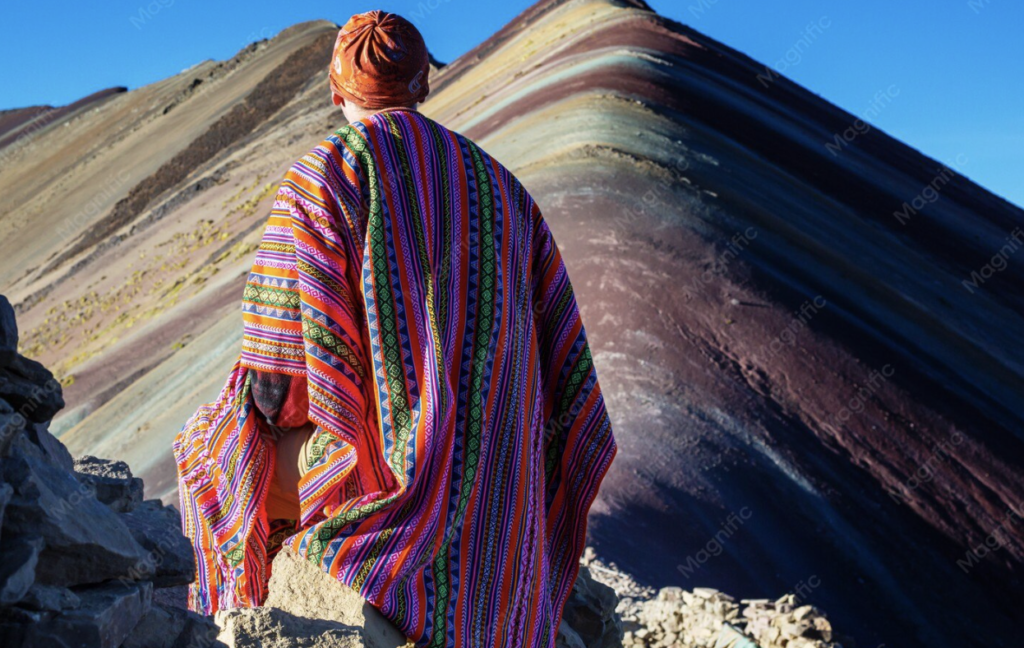
Vinicunca — Rainbow Mountain — was essentially unknown to international travelers before 2015. A combination of glacier retreat (the ice that had covered the mountain for decades receded rapidly due to climate change) and social media exposure turned a hidden Andean peak into one of the most photographed landscapes in South America within just a few years. Today it draws several hundred visitors per day in peak season, and the challenge for photographers is no longer finding the location but making images that go beyond the now-ubiquitous “tourist on the ridge” photograph.
Cusco, the ancient Inca capital at 3,400 metres in the southern highlands of Peru, offers a completely different photography challenge: a living city where colonial Spanish baroque churches sit on Inca stone foundations, where women in traditional pollera skirts walk past backpackers consulting Google Maps, and where the quality of light at the Plaza de Armas changes hourly from the flat midday sun to the extraordinary golden-hour warmth that saturates the honey-coloured stone of the cathedral and Coricancha.
This guide covers both Rainbow Mountain (Vinicunca) and Cusco as complementary Peru photography destinations in 2026 — with detailed analysis of the best light conditions, the specific camera approaches for each location, the practical logistics of reaching the rainbow-coloured mineral ridge at 5,200 metres, and the Cusco neighbourhood photography that most visitors miss entirely in their rush to Machu Picchu.
Machu Picchu Photography Guide 2026
Planning a full Peru photography trip? Our Machu Picchu guide covers the 4 light windows, the best gate entry times, and the compositions that go beyond the postcard shot.
Read the Guide →Rainbow Mountain (Vinicunca): Understanding the Mineral Colours
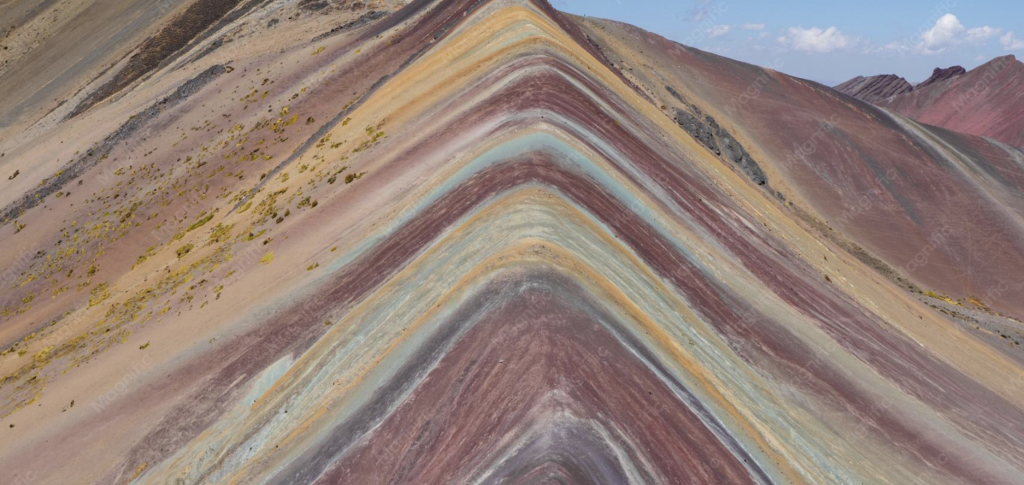
The colours of Rainbow Mountain are not a trick of light or post-processing — they are genuine mineral deposits exposed by glacial erosion. The mountain is composed of layered sedimentary rock strata containing different mineral compositions: red iron oxide (hematite), yellow iron sulfide (limonite), green copper sulfate, white calcium carbonate, and the characteristic purple-pink that comes from iron-rich clay minerals. The overall effect resembles a geological colour wheel revealed by the retreating glacier.
Understanding the mineral composition has direct implications for photography. The colours are most saturated in specific conditions — and least saturated in others.
The conditions
Best colour conditions: Overcast light with a bright (not dark) cloud cover — the classic “soft box” effect — produces the most even, saturated mineral colours. Direct sunlight creates harsh shadows in the ridge topography that obscure colour detail in the shadow areas. Wet conditions (immediately after rain or in light drizzle) increase surface saturation dramatically — the colours intensify by 30–50% when the mineral surface is wet. Morning (8:00–10:00 AM) before the afternoon cloud build-up offers the most reliable soft light.
Worst colour conditions: Direct overhead midday sun, particularly in the dry season (May–September) when the mountain surface is dry and dusty. The colours appear washed out and the shadows are too deep and directional. If you arrive at the ridge in harsh midday light, wait for cloud cover to develop — it typically does in the afternoon months of November–April.
Arrive at the ridge by 8 AM for the best light and smallest crowds
The tour buses from Cusco arrive at Rainbow Mountain between 9:30 and 10:30 AM, filling the ridge with hundreds of visitors by mid-morning. To photograph the mountain without crowds and in the best soft morning light, take a private transfer from Cusco (leaving by 4:30 AM) or hire a horse for the final section to arrive at the ridge by 8:00 AM. The 30-minute window between your arrival and the first bus groups is the entire photography opportunity with manageable crowds.
Getting to Rainbow Mountain: Routes, Logistics, and Altitude Preparation
Rainbow Mountain is located in the Cusipata district of Quispicanchi Province, approximately 100km south-east of Cusco by road. The combination of high altitude (the ridge viewpoint is at 5,200m) and the demand for early arrival makes logistics critical for photographers.
| Option | Departure Time | Arrival at Ridge | Cost (approx.) | Photography Flexibility | Best For |
|---|---|---|---|---|---|
| Group tour (min-van) | 5:00 AM | 9:30–10:30 AM | $20–35 USD | Low — fixed schedule | Budget travelers |
| Private transfer + guide | 4:00–4:30 AM | 7:45–8:30 AM | $60–120 USD | High — your schedule | Photographers |
| Horse (from trailhead) | Variable | +45 min faster | $15–20 USD add-on | Medium | Altitude-affected visitors |
| Self-drive + local guide | 4:00 AM | 7:30–8:00 AM | $80–150 USD all-in | Maximum | Experienced Andes drivers |
| Red Valley extension | Early departure | +2h from main ridge | $10–15 USD extra | High — far fewer people | Serious photographers |
The Red Valley (Valle Rojo): An extension of the Rainbow Mountain visit that fewer than 20% of visitors attempt, the Red Valley is reached by a 2km trail from the main Vinicunca ridge. The valley floor is a vivid blood-red from iron oxide deposits, surrounded by ochre and purple slopes, with Ausangate (6,384m) visible in the background. It is arguably more photogenic than Rainbow Mountain itself and is almost always empty. Any photographer visiting Vinicunca should include the Red Valley — allow an extra 2 hours and leave the main ridge before the tour bus arrival.
Cusco Photography: Beyond the Plaza de Armas
Cusco is one of the great photography cities of South America, but most visitors photograph only the obvious subjects: the Plaza de Armas cathedral at golden hour, the Coricancha sun temple, and the Sacsayhuaman fortress above the city. The neighbourhoods between these landmarks — San Blas, San Cristobal, Santa Ana — contain some of the most photogenic street photography in Peru, largely unvisited by the tour bus circuit.
San Blas neighbourhood: The bohemian hillside neighbourhood north of the Plaza de Armas, built on original Inca stone foundations with whitewashed colonial walls and painted wooden balconies. The cobblestone streets narrow to shoulder-width in places and frame compositions of distant mountain peaks above terracotta rooftops. Early morning (6:00–8:00 AM) before the tourist shops open delivers the neighbourhood at its most authentic — local women carrying bundles to the San Blas market, artisans opening their workshops, light streaming diagonally across the white walls.
San Cristobal church: The 16th-century church on the hillside above Sacsayhuaman offers an elevated perspective on Cusco that few visitors reach. The platform in front of the church provides a panoramic view across the city to the mountain ranges beyond — a 24–35mm wide-angle framing the city below with the colonial church dome in the upper left produces a composition that captures Cusco’s layered history in a single frame.
The Cusco market circuit: San Pedro Market (7:00 AM – 5:00 PM) is the primary food and craft market for local residents rather than tourists — produce stalls, coca leaf vendors, traditional textile weavers, and food stalls serving uchucuta sauce with cuy (guinea pig). The interior market hall has dramatic shaft lighting from high windows that creates natural spotlighting on market stall displays. A 50mm f/1.8 lens at ISO 800 captures the interior light without disturbing vendors with flash.
Ausangate: The Photography Extension That Most Rainbow Mountain Visitors Miss
Visible from the Rainbow Mountain ridge on clear days, Ausangate (6,384m) is the highest peak in the Cusco region and one of the most sacred Apu (mountain deity) in Andean cosmology. The Ausangate Circuit — a 6-day trekking route that circumnavigates the massif through high passes between 5,000m and 5,400m — is one of the great landscape photography treks in South America, less visited than the Inca Trail but offering a wider range of high-altitude subjects: turquoise glacial lakes, vicuna herds on the altiplano, cholitas (indigenous women) in traditional dress at isolated villages, and the glaciated faces of Ausangate itself in morning alpenglow.
For photographers extending beyond Rainbow Mountain, the Ausangate Circuit base camp at Laguna Sibinacocha (4,900m) is reachable in 2 days from the Vinicunca trailhead and offers unobstructed dawn photography of the Ausangate massif reflected in a lake the colour of malachite. No permit is required (unlike the Inca Trail); camping gear can be hired in Cusco or Tinki village.
The Best Light Windows in Cusco: A Photographer’s Daily Schedule
Cusco’s light follows a predictable daily rhythm that photographers can plan around precisely. Understanding the sequence of light conditions across the day allows you to allocate each time slot to the subjects that reward it most.
Pre-dawn (5:00–6:30 AM):
The Plaza de Armas in deep blue hour, with the cathedral and La Compania de Jesus lit by a combination of streetlamps and the remaining blue in the sky. Almost no tourists, local market porters setting up their stalls, occasional early mass attendees. A tripod and 14–24mm wide-angle produces the most dramatic perspective — the full cathedral facade framed by the arcade columns of the portales. ISO 1600, f/4, 15–30 seconds.
Tours y Excursiones
Excursiones guiadas a la Montagna de Siete Colores, el Valle Rojo y el Circuito Ausangate desde Cusco
Tours de madrugada con salida a las 4 AM para llegar antes que los grupos — guias locales que conocen los mejores angulos fotograficos y los puntos menos transitados.
Ver Tours en CivitatisSunrise golden hour (6:30–8:00 AM):
The honey-coloured stone of the cathedral and Coricancha ignites in warm orange light that is unique to Cusco’s altitude and clear morning air. The Plaza de Armas fountains create reflections on still mornings. The San Blas neighbourhood streets catch raking directional light that reveals every texture in the Inca stonework. This is the single best 90-minute window for Cusco architectural photography.
Midday (10:00 AM–3:00 PM):
Overhead sun creates deep shadows in narrow streets. Avoid the major architectural subjects; use this window for San Pedro market interiors (the shaft lighting from high windows is best at midday), for portrait photography in open plazas where reflected light fills shadow areas, and for the panoramic viewpoints above the city (Sacsayhuaman, Cristo Blanco) where the midday sun illuminates the full city spread.
Late afternoon golden hour (4:00–6:30 PM):
The second great architectural window. The western-facing walls of the cathedral and portales are fully illuminated in warm late-afternoon light. The Coricancha garden is bathed in golden light that emphasises the contrast between the Inca stone foundation walls and the colonial baroque structure built on top. Crowds are highest at this window — arrive at least 30 minutes before golden hour begins to establish your position.
Blue hour (6:30–7:30 PM):
The Plaza de Armas floodlights illuminate the cathedral in warm amber while the sky transitions through teal and deep blue. The colour contrast between the amber-lit stone and the blue sky is the most technically dramatic light condition available in Cusco. Set up at the southeast corner of the plaza for the best angle on the full cathedral facade, or at the fountain for a reflection element.
Peru Sacred Valley Photography Guide 2026
Between Cusco and Machu Picchu lies the Sacred Valley — some of the most photogenic Inca ruins and traditional Andean communities in Peru. Our guide covers every major location.
Read the Guide →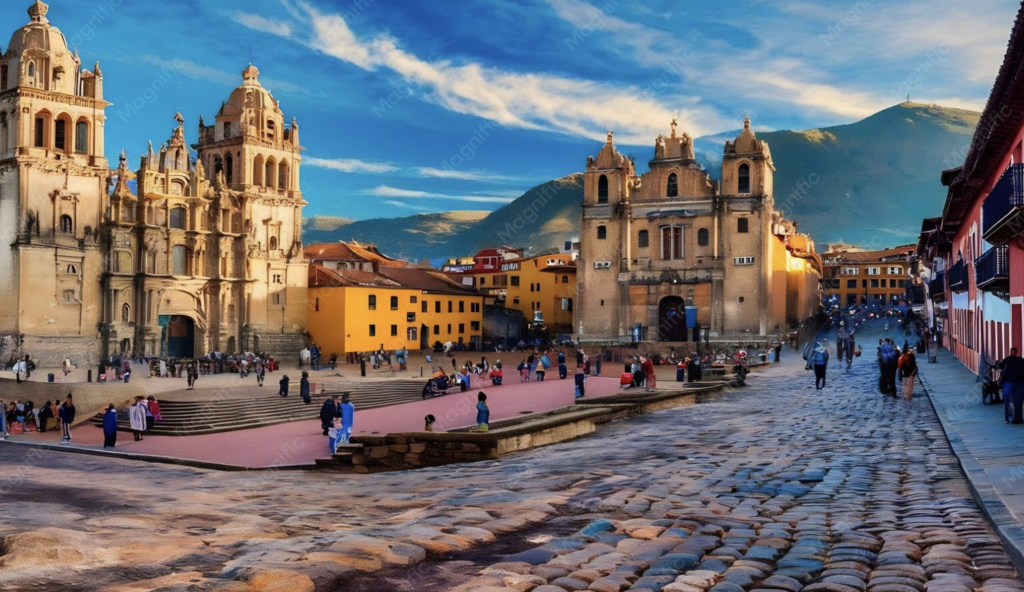
Altitude Management for Photographers at Rainbow Mountain
At 5,200 metres, the Vinicunca ridge is one of the highest accessible photography locations in Peru. Altitude affects not just your body but your photography decisions — slower reaction times, reduced concentration, and physical fatigue all impact the quality of field photography decisions made at altitude.
Acclimatisation minimum: Spend at least 2 full days in Cusco (3,400m) before attempting Rainbow Mountain. Ideally 3–4 days, including a day hike to Sacsayhuaman (3,700m) to test your altitude response before committing to 5,200m. Altitude sickness symptoms — headache, nausea, fatigue, breathlessness beyond normal exertion — are a genuine risk at Rainbow Mountain for visitors arriving from sea level without acclimatisation.
Coca tea and medication: Coca tea (mate de coca) is widely available in Cusco and genuinely effective for mild altitude symptoms. It does not prevent altitude sickness but alleviates the headache and fatigue that affect photography concentration. Acetazolamide (Diamox) is the pharmaceutical option for altitude prevention — consult a physician before your trip. Do not attempt Rainbow Mountain if you are experiencing altitude sickness symptoms in Cusco; the 1,800m gain from Cusco to the ridge will significantly worsen any existing symptoms.
Photography implications of altitude: Your camera performs normally at 5,200m but your ability to review images, assess compositions, and make creative decisions is affected by reduced oxygen. Simplify your kit for Rainbow Mountain — one body and two lenses rather than a full system. Pre-programme your camera settings at lower altitude the night before. Use a strap or clip system that keeps the camera accessible without bending over (bending and lifting at altitude causes head-rush that takes 30–60 seconds to clear).
Flights
Fly to Cusco and start your Peru photography adventure
Compare all flights to Cusco (CUZ) from Lima and international connections — book early for the best fares.
Cusco (CUZ) is the gateway to Rainbow Mountain, Machu Picchu, and the Sacred Valley. Search all routes on Skyscanner.
Where to Stay
Find the best accommodation in Cusco for your photography base
Stay in San Blas for the most photogenic neighbourhood access — book 4+ weeks ahead for peak season.
San Blas guesthouses are closest to the best street photography in Cusco. Search hotels on Booking.com.
Frequently Asked Questions
What is the best time to photograph Rainbow Mountain (Vinicunca)?
The best photography conditions at Rainbow Mountain are early morning (8:00–10:00 AM) in overcast or lightly cloudy conditions. Overcast light produces the most even and saturated mineral colour — the soft-box effect eliminates the harsh directional shadows that obscure colour detail in full sun. The early window also avoids the tour bus crowds that arrive from 9:30 AM onward. The best overall months are November–April (wet season), when the mineral surfaces are damp more frequently and the colour saturation is visibly greater than in the dry season.
How do you photograph Rainbow Mountain without crowds?
There are three strategies: arrive before 8 AM (requires a private transfer leaving Cusco at 4:00–4:30 AM), extend to the Red Valley (2km beyond the main ridge, visited by fewer than 20% of day-trippers), or visit in the shoulder season (May or October) when tour numbers are lower. The combination of an early private departure and a Red Valley extension gives you approximately 3 hours of uncrowded photography time before the main ridge fills. Visiting on a weekday in the off-season can leave the Red Valley essentially empty for the full morning.
Is it safe to trek to Rainbow Mountain with camera equipment?
Yes — the Rainbow Mountain trail is a well-established, signposted route with a continuous stream of visitors in season. Safety concerns are altitude sickness (see altitude management section) rather than security. Your camera equipment is at greater risk from dust (endemic on the dry-season trail) and rain (common in the wet season) than from theft. Bring a camera rain cover and a dust cloth. A camera clip or chest harness frees your hands for trekking poles — more important on the steep final section than on the main trail.
What camera settings work best at Rainbow Mountain?
In overcast conditions (ideal): ISO 200–400, aperture f/8–f/11 for full-depth sharpness across the mineral bands, shutter speed as required by the available light. No tripod is typically needed in daylight overcast conditions. In direct sunlight: ISO 100, aperture f/11, and consider using a polarizer to reduce glare and increase colour saturation. In wet conditions: protect your camera with a rain cover and shoot RAW — wet mineral surfaces have extraordinary colour depth that is best captured in RAW and processed carefully to recover shadow detail without blowing highlights in the bright mineral patches.
What is the Red Valley and is it better than Rainbow Mountain for photography?
The Red Valley (Valle Rojo) is a geological extension of the Rainbow Mountain area, 2km beyond the main Vinicunca ridge. It is a broad valley floor of vivid iron-red earth surrounded by ochre and purple mineral slopes, with Ausangate (6,384m) visible at the head of the valley on clear days. Many landscape photographers consider the Red Valley more photogenic than Rainbow Mountain itself — the scale is larger, the colour contrast is greater, and it is almost always uncrowded. The trade-off is an extra 2 hours of walking at altitudes between 5,000m and 5,300m.
Can I photograph Cusco at night?
Yes — and Cusco night photography is significantly underrepresented in travel photography. The Plaza de Armas after dark, lit by warm amber street lamps and the cathedral floodlights, is one of the great architecture photography subjects in South America. The blue-hour window (20–40 minutes after sunset) balances the amber artificial light against the remaining blue in the sky. ISO 800–1600 at f/4–5.6, shutter 2–8 seconds on a tripod. The San Blas neighbourhood at night, with its narrow cobblestone streets and doorway light spilling onto Inca stonework, requires a fast 35mm or 50mm lens at ISO 1600–3200 for hand-held street photography.
Do I need a guide for Rainbow Mountain?
A guide is not strictly required — the Rainbow Mountain trail is well-marked and the route to Vinicunca is straightforward. However, for photographers, a local guide adds significant value: they know the lighting conditions for the current season, the best angles at the ridge, the easiest access to the Red Valley, and can manage the altitude logistics (horse hire, timing) while you focus on photography. For the Ausangate Circuit extension, a guide is strongly recommended for navigation and emergency altitude management.
What is the altitude of Rainbow Mountain and how should I prepare?
The Rainbow Mountain (Vinicunca) ridge viewpoint is at approximately 5,200 metres above sea level. The trailhead is at 4,300m, and the trail gains 400m over 5km. The standard acclimatisation recommendation is a minimum of 2 days in Cusco (3,400m) before attempting the hike. Experienced altitude travelers recommend 3–4 days including at least one day hike to 3,700–4,000m. Carry at least 2 litres of water, bring energy snacks, and consider carrying prescription altitude medication (acetazolamide) prescribed by a physician before your trip. If you experience severe headache, vomiting, or confusion at altitude, descend immediately.
What is the best lens for Cusco street photography?
A 35mm or 50mm prime lens at f/1.8 is the ideal Cusco street photography combination. The focal length is close to natural human perspective, making street compositions look organic rather than compressed or distorted. The f/1.8 aperture allows hand-held photography in the shaded narrow streets of San Blas and San Pedro market without flash. A zoom lens (24–70mm) is more versatile but its larger size draws more attention in tight market and street environments. For the Plaza de Armas wide compositions and the Sacsayhuaman fortress overview shots, a 16–35mm wide angle adds significant compositional options.
How do I combine Rainbow Mountain and Machu Picchu in one Peru photography trip?
The classic Cusco-based photography itinerary combines both locations over 7–10 days: Days 1–2 acclimatise in Cusco, Days 3–4 photograph Cusco city (Plaza de Armas, San Blas, San Pedro market, golden hour at Sacsayhuaman), Day 5 Rainbow Mountain (early departure), Days 6–7 Sacred Valley (Pisac ruins, Ollantaytambo, Moray), Days 8–9 Machu Picchu (two days allows both sunrise entry and afternoon light sessions), Day 10 return to Cusco. This 10-day circuit is the most photographically comprehensive Peru itinerary available without extending to Lake Titicaca or the altiplano.
Conclusion: Two Faces of Peru’s Photography Landscape
Rainbow Mountain and Cusco represent two distinct faces of Peru photography — one a natural geological phenomenon that rewards patience, early starts, and a willingness to go beyond the obvious viewpoint; the other a 500-year layering of civilisations that rewards slow observation, early morning street walks, and attention to the human detail that most visitors rush past on the way to the next ruin.
The photographers who make the most compelling images in this region are the ones who allocate time for both. Spend a week in Cusco before you rush south to Machu Picchu. Walk the San Blas streets at 6 AM. Stay at Rainbow Mountain until the tour buses arrive and then move to the Red Valley where the crowds never go. The photographs are there — they have always been there — waiting for the person willing to be in the right place at the right time.
The full Uncover the Andes Peru photography guide series covers every major location from Vinicunca to Machu Picchu to the Sacred Valley. Explore all our Peru guides, bookmark the site, and return before every trip to the southern highlands for the most current light window information, permit updates, and photography conditions. Peru rewards every return visit with something new.