

You land in Lima, clear customs, and immediately discover that the hostel WiFi is shared among forty guests and barely reaches your room on the third floor. Your Bolivian SIM card does not work yet because the activation process requires a local phone call. Your laptop is on 8% battery and the airport lounge is on the other side of the terminal. Welcome to South American connectivity.
Connectivity across the Andes is one of the most underestimated logistical challenges for travelers and remote workers who plan to stay productive, stay in touch with family, or simply navigate reliably between cities. The infrastructure varies dramatically — Lima and Buenos Aires have world-class 4G/5G coverage; the Bolivian altiplano has almost none. Cusco has reliable coverage in the city centre and almost nothing on the Ausangate circuit. Patagonia has extraordinary landscapes and approximately the mobile data coverage of rural Iceland in 1998.
A portable travel router or SIM-based mobile hotspot changes this equation fundamentally. Instead of fighting for bandwidth on shared hostel WiFi, you carry your own private network. Instead of buying a new SIM card in every country, a global eSIM hotspot covers the entire continent on a single plan. This guide covers the best portable travel routers and mobile hotspots for South America in 2026 — with detailed analysis of which devices work on the specific frequency bands used by the major carriers in Peru, Bolivia, Chile, Argentina, and Colombia.
Flights to South America
Find the best flights to Peru, Bolivia, Chile, and Argentina
Compare all routes and book with flexibility — search Skyscanner for the best Andes gateway fares.
Fly into Lima (LIM), La Paz (LPB), Santiago (SCL), or Buenos Aires (EZE) as your Andes base. Search all routes on Skyscanner.

Why South America Needs a Different Connectivity Strategy
Most global travelers arrive in South America with a strategy built for Western Europe or Southeast Asia — a local SIM card and reliance on accommodation WiFi for heavy data use. This strategy works poorly across the Andes for several structural reasons specific to the region.
SIM card fragmentation: South America has no regional roaming equivalent to the EU’s single-market roaming rules. Each country operates independent carrier infrastructure. A Peru SIM card (Entel, Claro, or Movistar Peru) has zero roaming relationship with a Bolivia SIM (Tigo Bolivia) — your Peru SIM becomes a local voice-only device the moment you cross into Bolivia. Travelers covering the full Peru-Bolivia-Chile-Argentina circuit often buy and discard four separate SIM cards, navigating a different activation process in each country.
Accommodation WiFi quality: The WiFi quality at Andes accommodations ranges from excellent (international hotel chains in Lima and Santiago) to essentially non-functional (guesthouses in rural Bolivia where the entire village shares a single 4 Mbps DSL connection). A private portable hotspot using the local carrier’s 4G network almost always outperforms shared accommodation WiFi in coverage areas.
Be prepare …
Frequency band variation: South American carriers operate on frequency bands that differ from North American and European networks. The critical bands for Andes coverage are Band 28 (700 MHz — the primary rural and long-distance coverage band used by Entel Peru, Entel Chile, and Claro Argentina) and Band 2/4 (1900/1700 MHz — urban coverage). A device that lacks Band 28 support will have dramatically poorer coverage in the rural Andes even with a valid local SIM inserted.
Multi-device travel: Modern travel involves multiple devices — smartphone, laptop, tablet, e-reader, action camera with WiFi transfer, smartwatch. Managing SIM cards for each device is impractical; a travel router or hotspot creates a single WiFi network that serves all devices simultaneously from one data plan.
Always check Band 28 (700 MHz) support before buying a travel router for the Andes
Band 28 (700 MHz) is the most important frequency band for rural Andes coverage. It penetrates buildings better, travels further, and is the primary band used by Entel Peru and Entel Chile for their rural network expansion. A travel router or hotspot without Band 28 support will lose signal significantly faster as you move away from urban centres. Check your device’s technical specification sheet under ‘LTE Bands’ before purchase.
SIM Cards vs. eSIM vs. Global Hotspot Devices: Which Strategy Is Right for Your Andes Trip?
| Strategy | Cost | Coverage | Setup Effort | Best For | Andes Rating |
|---|---|---|---|---|---|
| Local SIM per country | Low per country | Excellent in each country | High — repeat per country | Budget, single-country stays | Good |
| Global eSIM (Airalo, Holafly) | Medium | Good in cities, less rural | Low — app activation | Short trips, digital nomads | Good |
| Pocket hotspot (SIM-based) | Medium | Best with local SIM | Medium — one SIM per country | Multi-device travelers | Excellent |
| Global hotspot (built-in eSIM) | Higher | Variable by provider | Very low — one device always | Long trips, multiple countries | Very Good |
| Hostel/hotel WiFi only | Included | Urban only — quality varies | None | Budget city travelers | Poor |
| Satellite WiFi (Starlink) | High | Anywhere with sky view | Medium — equipment needed | Remote base camps, research | Outstanding (if budget allows) |
Top 6 Portable Travel Routers and Hotspots for South America 2026
Frequency Bands by Country: What Your Router Needs to Work in the Andes
The single most important technical detail for travel router selection in South America is frequency band compatibility. A router that covers all North American and European bands but lacks Band 28 will deliver significantly inferior rural coverage across the Andes. Below is the key band information for the major Andes countries.
| Country | Main Carriers | Key LTE Bands | 5G Cities | Rural Coverage Band |
|---|---|---|---|---|
| Peru | Entel, Claro, Movistar | B1, B2, B3, B4, B28 | Lima, Arequipa | Band 28 (700 MHz) — critical |
| Bolivia | Tigo, Entel Bolivia | B2, B4, B28 | La Paz, Santa Cruz | Band 28 — limited rural coverage |
| Chile | Entel, Movistar, WOM | B1, B3, B4, B28 | Santiago, Valparaiso | Band 28 — Patagonia coverage |
| Argentina | Claro, Movistar, Personal | B2, B4, B7, B28 | Buenos Aires, Cordoba | Band 28 — Patagonia + altiplano |
| Colombia | Claro, Movistar, Tigo | B1, B3, B4, B28 | Bogota, Medellin | Band 28 — Amazon/Andes border |
| Ecuador | Claro, Movistar | B2, B4, B28 | Quito, Guayaquil | Band 28 — Sierra coverage |
Best Power Banks for Andes Trekking & Travel 2026
Your travel router and hotspot need power — our power bank guide covers the best options for keeping all your devices charged on multi-day Andes circuits.
Read the Guide →
Setting Up Your Travel Router in South American Accommodation
The practical setup process for a travel router varies by accommodation type across the Andes, and knowing the right approach for each scenario saves significant time and frustration on arrival.
Hotels with ethernet ports: The fastest and most reliable configuration — plug your router’s WAN port into the room ethernet port and your router creates a private WiFi network at full hotel bandwidth without any authentication interference. Most business hotels in Lima, Santiago, and Buenos Aires have ethernet ports in the room. Many guesthouses in Cusco and La Paz do not.
Best Portable Solar Panels for Andes & Patagonia 2026
Remote trekking means no outlets — a portable solar panel keeps your router, hotspot, and power bank charged on circuits far from the grid.
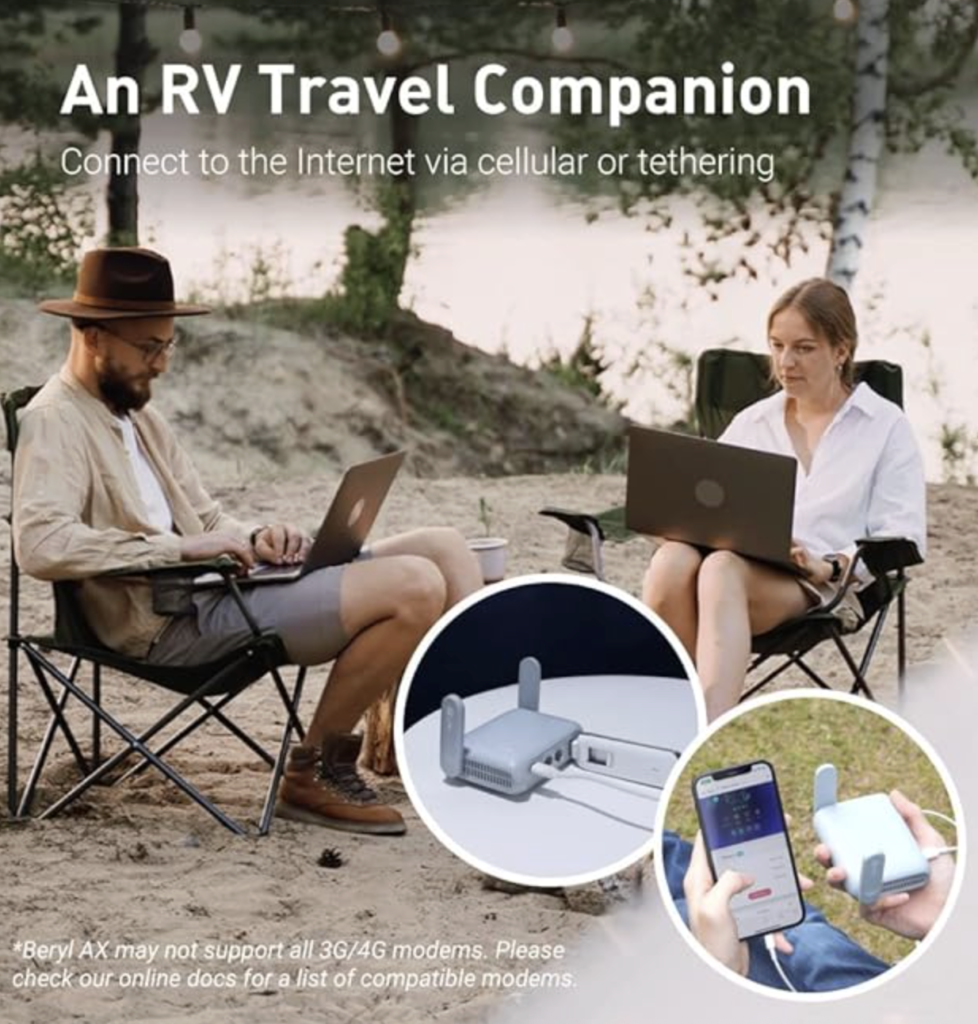
Read the Guide →Hotels with WiFi-only (repeater mode): Your router connects to the hotel WiFi as a client and rebroadcasts it on its own private network — this eliminates the hotel’s captive portal from affecting your devices, but it does not increase bandwidth. The GL.iNet Beryl AX and Mango both support this mode. Note that some hotels use client isolation that prevents router-to-WiFi connection — test the ethernet option first where available.
Using a local SIM with a USB 3G/4G modem:
Purchase a local data SIM (available at airports and carrier stores in all Andes countries), insert it into a USB 4G modem dongle (widely available on Amazon), and plug the dongle into your router’s USB port. The router shares the SIM data connection across all your devices. This is the most cost-effective high-speed solution in countries where local SIM data plans are inexpensive (Peru: 25 GB for approximately $8; Bolivia: 10 GB for approximately $5).
Guesthouses with shared computers: In rural Andean guesthouses where WiFi is either absent or limited to a single desktop computer in the common area, a SIM-based hotspot is the only reliable connectivity solution. Buy the local SIM at the nearest town before entering remote trekking areas.

Accommodation in South America
Find accommodation across the Andes with reliable WiFi
From Lima business hotels to Patagonia lodges — check WiFi ratings before you book.
Filter by Free WiFi on Booking.com — but always bring your own hotspot as backup. Search accommodation on Booking.com.
Frequently Asked Questions
What is the best travel router for South America?
The GL.iNet Beryl AX (GL-MT3000) is the best travel router for South America for users who will connect to ethernet ports and share that connection across multiple devices. For an all-in-one SIM-based hotspot without any configuration, the TP-Link M7350 with a local SIM is the most practical option. If you are covering multiple Andes countries and do not want to manage multiple SIM cards, the Skyroam Solis X with its global eSIM eliminates the country-by-country SIM process at a higher cost per gigabyte.
Does a travel router work in Bolivia and Peru?
Yes — both Peru and Bolivia have functional 4G LTE networks on standard bands (B2, B4, B28) in and around major cities and tourist centres. Coverage drops significantly in remote areas: the Bolivian altiplano between Uyuni and the Chilean border has very limited coverage; the Ausangate circuit in Peru has almost no mobile signal. For these remote sections, a travel router is useful only as a WiFi extender at accommodation — for genuine remote communication, a satellite communicator (Garmin inReach) is the correct tool.
What SIM card should I buy for Andes travel?
In Peru, Entel is the recommended carrier for rural Andes coverage — it has the best Band 28 network expansion and the most competitive data plans for travelers. In Bolivia, Tigo provides the best urban coverage; Entel Bolivia covers some rural areas. In Chile, Entel Chile is again the recommendation for Patagonia and rural coverage. In Argentina, Claro and Personal cover Buenos Aires and major cities well; rural Patagonia coverage is limited across all carriers. Buy SIMs at airport carrier stores on arrival — avoid street vendors, as traveler SIM plans sold at official stores include activated data without an ID-intensive registration process.
Can I use my travel router on Andes buses?
Yes — a SIM-based travel router or hotspot works on any Andes bus as long as the local carrier has coverage along the route. Insert a local SIM and the hotspot connects automatically to available cells as the bus moves. This is particularly useful on the long overnight bus journeys between Andes cities (Lima to Cusco: 21 hours; La Paz to Uyuni: 10 hours; Santiago to San Pedro de Atacama: 24 hours) — a hotspot with a local SIM provides productive connectivity for the majority of the urban sections of these routes. Download offline content before entering the rural sections.
What is a good data plan for Bolivia for a travel router?
Tigo Bolivia is the most practical option for urban Bolivia (La Paz, Cochabamba, Santa Cruz). Pre-paid tourist data plans are available at Tigo stores in El Alto airport and major shopping centres in La Paz. Data costs approximately $5–8 for 10–15 GB valid for 30 days. Entel Bolivia has better coverage in some altiplano regions but the tourist SIM purchase process is more complex. For Uyuni salt flats and remote altiplano travel, no Bolivian carrier provides reliable data coverage — download all offline maps and content before leaving Uyuni or Potosi.
Is a travel router worth it for a short Andes trip?
For a trip of 7 days or less in a single Andes country, the setup cost and learning curve of a travel router may not be justified. The GL.iNet Mango costs approximately $25 and pays for itself in improved connectivity on even a single week-long trip — the question is whether you will use it. If you have multiple devices (phone, laptop, tablet) and work remotely, even a short trip justifies the investment. If you are traveling with a smartphone only and will rely on local SIM data through your phone’s hotspot, a dedicated travel router adds little practical value.
How do I avoid hotel WiFi captive portals with a travel router?
When you connect to a hotel WiFi using your travel router in wireless repeater mode, the captive portal (the login page requiring room number, password, or terms acceptance) is triggered the first time you connect the router itself to the network. Log in once from your router’s admin interface or from any device connected to the router before the captive portal detects the router as a non-browser client. After initial authentication, most hotel captive portals maintain the session for 12–24 hours. Some advanced hotel networks use MAC address filtering or client isolation — in these cases, ethernet connection to the router avoids the problem entirely.
What is the difference between a travel router and a mobile hotspot?
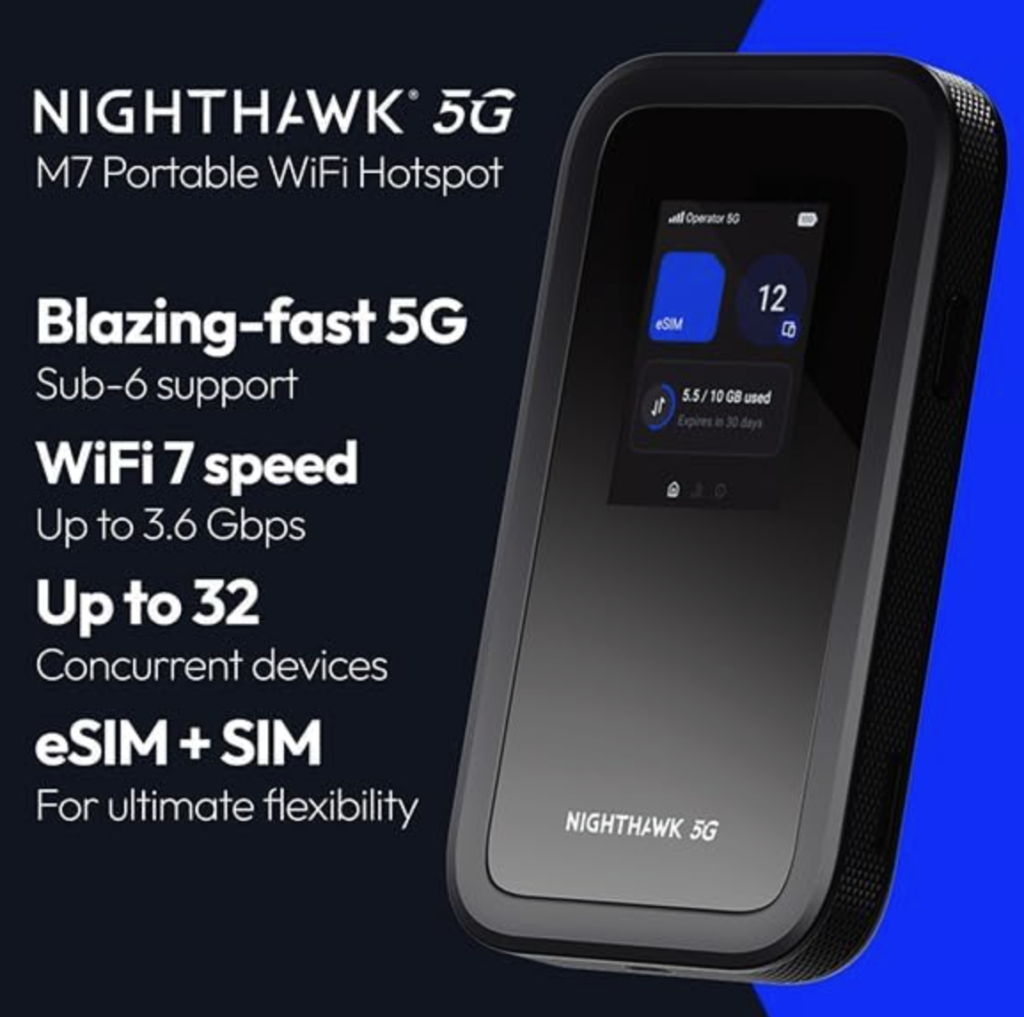
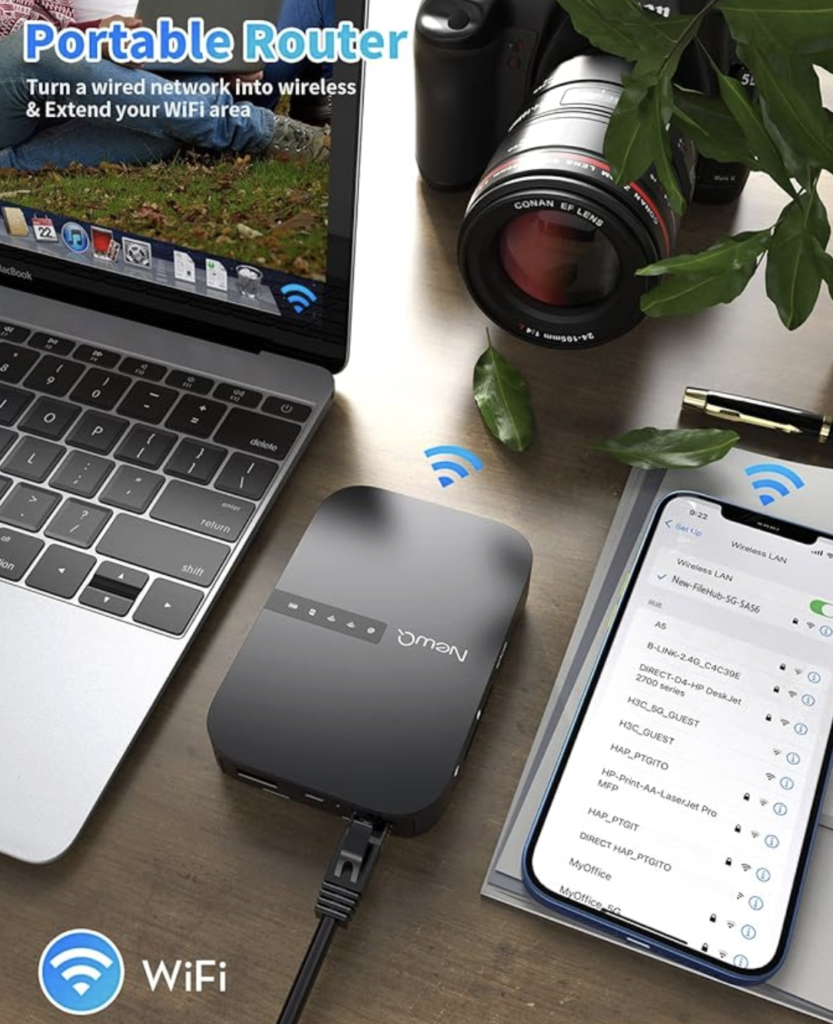
A travel router (GL.iNet Beryl AX, Mango) takes an existing internet connection — ethernet, WiFi, or USB modem — and reshares it as a private WiFi network. It requires an upstream connection to work. A mobile hotspot (TP-Link M7350, Netgear Nighthawk M6 Pro) has a built-in SIM card slot and cellular radio — it creates internet access from a cellular data plan. Some devices combine both (GL.iNet Beryl AX with USB modem). For Andes travel, the most flexible setup uses a travel router for accommodation ethernet connections and a SIM-based hotspot for mobile use.
Can I stream Netflix on a travel router in South America?
Yes, with some important caveats. South American Netflix libraries differ from US and European libraries — some shows and films are not available. Using a VPN through your travel router can access other regional libraries but violates Netflix’s terms of service. Streaming quality depends entirely on available bandwidth — on rural Andes LTE networks, 720p streaming is realistic on good signal; 1080p and above requires strong LTE signal, best found in major cities. Buffer downloads in areas with strong hotel WiFi or good LTE signal before entering lower-coverage rural areas.
What happens to my travel router’s connectivity in the Atacama Desert and Patagonia?
The Atacama Desert (northern Chile) has excellent coverage in San Pedro de Atacama town and along the main tourist roads due to Entel Chile’s Band 28 LTE network. Remote salt flats and high-altitude geyser fields (above 4,200m, 50+ km from San Pedro) lose signal entirely. In Patagonia, Torres del Paine town centre and Puerto Natales have functional LTE; the W Circuit trail itself has almost no coverage. El Chalten has one small coverage cell in the village centre. For both regions, offline maps and content downloaded before arrival are essential — your travel router and hotspot will have nothing to work with until you return to a covered area.
Best Signal Boosters & Satellite Communicators for Remote Andes Travel 2026
When mobile networks disappear entirely — on high passes, remote glaciers, and deep valleys — a satellite communicator is the only connection to the outside world. Our complete guide covers every option.
Read the Guide →VPNs and Security: Protecting Your Data on Andes Networks
South American public WiFi networks — in airports, hostels, cafes, and guesthouses — present the same security risks as public WiFi anywhere: man-in-the-middle attacks, credential harvesting on unencrypted connections, and rogue access points that mimic legitimate network names. Using a travel router with built-in VPN capability transforms any insecure public WiFi into an encrypted private connection.
Why VPN matters on Andes hostel WiFi: High-traffic hostels in Cusco, La Paz, and Buenos Aires attract technically capable opportunists who target the laptops of digital nomads connecting to banking, cloud storage, and remote work tools. A VPN encrypts all traffic from your router before it leaves your network — any data intercepted on the hostel WiFi is unreadable without the encryption key.
What else …
Recommended VPN configuration for the GL.iNet Beryl AX and Mango: Both devices run OpenWrt and support WireGuard (faster, more battery-efficient) and OpenVPN (broader compatibility). WireGuard is the recommended protocol for Andes travel use — it connects in under one second, maintains connection through network changes, and uses significantly less battery than OpenVPN on both the router and connected devices. Configure your VPN server before departure; most commercial VPN providers (Mullvad, NordVPN, ExpressVPN) publish WireGuard configuration files for router use.
Speed trade-off: VPN adds 5–15% latency overhead depending on server distance. For Andes travel, connect to a South American VPN server (Santiago, Buenos Aires, or Bogota) to minimise latency — a nearby server adds less than 10ms overhead versus a North American or European server that may add 80–150ms.
Conclusion: Own Your Connectivity Across the Andes
The difference between frustrating Andes connectivity and reliable, productive connectivity is usually a single device and a local SIM card. A travel router costs less than a single night in a Lima business hotel. A local data SIM in Peru costs less than a coffee at the airport. The combination provides private, fast, multi-device internet for your entire stay — with no shared WiFi, no captive portals, and no dependency on accommodation infrastructure that may or may not function.
Match the device to your trip: the GL.iNet Beryl AX or Mango for digital nomads who work from accommodation ethernet; the TP-Link M7350 for the simplest possible SIM-insert-and-go hotspot; the Netgear Nighthawk M6 Pro for heavy remote workers who need reliable video call quality; the Skyroam Solis X for multi-country travelers who refuse to deal with SIM cards. Every scenario has a clear best choice — this guide gives you the information to make it.
Explore the full Uncover the Andes Gear Lab Hub for every tech and gear category covered for Andes and South American travel — from rugged protection to power management to satellite communication for the most remote circuits on the continent.