
You are standing at 4,800 metres on the Ausangate Circuit in southern Peru. The wind picks up without warning, your footing shifts on a frost-covered boulder, and your phone — your navigation device, your emergency contact, your camera backup — hits the rock face. What happens next depends entirely on the case you chose before you left home.
The Andes are one of the most demanding environments on earth for electronic devices. Altitude means reduced air pressure, which affects battery performance. Extreme temperature swings — from 30°C at midday in the Sacred Valley to -15°C overnight on a high pass — stress every component from the screen adhesive to the charging port seal. And the constant movement of trekking: scrambling over talus, crossing glacial streams, summiting passes in driving hail, means your phone is never truly safe unless its case is built to absorb everything the mountains can deliver.
This guide covers the best rugged phone cases for Andes trekking and high-altitude travel in 2026 — tested against the full range of conditions from the Bolivian altiplano to Patagonian storms, with detailed analysis of waterproofing ratings, drop protection standards, and the practical trade-offs that matter when you are five days from the nearest town.
Flights to the Andes
Find the best flights to Peru, Bolivia, Chile, and Argentina
Compare all airlines serving Andes gateway airports and book with full flexibility.
Fly to Lima (LIM), La Paz (LPB), Santiago (SCL), or Buenos Aires (EZE) to start your Andes adventure. Search all routes on Skyscanner.
Why Standard Phone Cases Fail in the Andes
Most phone cases sold for everyday urban use are designed to survive a drop onto a pavement from pocket height — roughly 1 to 1.5 metres onto a flat, hard surface. This corresponds approximately to MIL-STD-810G testing at 1.2 metres onto a plywood-covered concrete surface. The Andes introduce failure modes that these cases are never designed to address.
Temperature cycling: When you trek above 4,000 metres, your phone moves daily through temperature ranges of 30–40°C. Polycarbonate cases expand and contract at different rates from the device underneath — over weeks in the field, this cycling gradually breaks the seal between case and screen, allowing moisture and dust ingress. Cheaper TPU (thermoplastic polyurethane) cases become brittle and crack in sustained cold.
Interesting? right …..
Altitude pressure changes: Reduced atmospheric pressure at altitude affects sealed, waterproof cases differently than at sea level. Cases rated IP68 at sea level (water submersion up to 1.5 metres for 30 minutes) may not maintain equivalent protection at altitude due to the pressure differential across the seal. The best Andes-rated cases use double-sealed port covers and locking mechanisms rather than simple friction seals.
Fine dust and grit: The altiplano and high desert valleys of Bolivia, northern Chile, and northern Argentina generate extremely fine mineral dust that penetrates standard cases through speaker grilles, port covers, and screen-to-case gaps. This dust is abrasive and, when combined with moisture from condensation or stream crossings, forms a grinding paste that damages screen surfaces and corrodes charging contacts.
Impact geometry: Trail falls are not the flat-surface drops of MIL-810G testing. Rock faces, boulders, and scree slopes produce point-impact forces concentrated on edges, corners, and protruding camera modules — exactly where standard case designs are thinnest. The best rugged cases for the Andes add dedicated corner reinforcement and raised bezels of 1.5mm or more above both screen and camera lens.
Test your waterproof seal before every trek
Fill a bowl with water and submerge your cased phone for 60 seconds before any multi-day trek. If your case has a transparent back, check for condensation rings. Even IP68-rated cases degrade with age — port covers and O-ring seals should be replaced annually if you trek regularly.
Protection Standards Explained: IP Ratings, MIL-SPEC, and What They Mean at Altitude
| Standard | What It Tests | Drop Height | Water Rating | Andes Relevance |
|---|---|---|---|---|
| MIL-STD-810G | US military drop, vibration, temperature | 1.2m onto plywood | None (separate) | Baseline — good but not sufficient alone |
| MIL-STD-810H | Updated 2019 standard, more cycles | 1.8m in some tests | None (separate) | Better — look for 810H certification |
| IP67 | Dust-tight + 1m water / 30 min | Not tested | 30 min at 1m | Adequate for rain; fails stream crossing |
| IP68 | Dust-tight + 1.5m water / 30 min | Not tested | 30 min at 1.5m | Good baseline for Andes wet conditions |
| IP69K | High-pressure, high-temp water jet | Not tested | Jet spray, not submersion | Overkill for trekking; use for kayaking |
| Rugged + IP68 | Both drop and water tested | 1.2–2.1m | 30+ min at 1.5m | Ideal for high-altitude Andes trekking |
The most important combination for Andes trekking is a case with both a MIL-STD-810 drop certification AND an IP68 or higher water rating. Either alone is insufficient: a case that survives drops but lets in water from a sudden cloudburst above the treeline is as dangerous as one that keeps water out but shatters on the first boulder contact.
Additionally, look for cases that specify their drop-test surface material. Testing onto plywood (the MIL-810G standard surface) produces different results from concrete or natural rock. Some manufacturers test onto steel or concrete and achieve higher real-world protection despite the same certification label — always check the manufacturer’s published test methodology.
Top 6 Rugged Phone Cases for Andes Trekking 2026
Phone Case Comparison: Which Protection Level Do You Need?
| Case | Drop Rating | Waterproof | Dustproof | Slim | Best For |
|---|---|---|---|---|---|
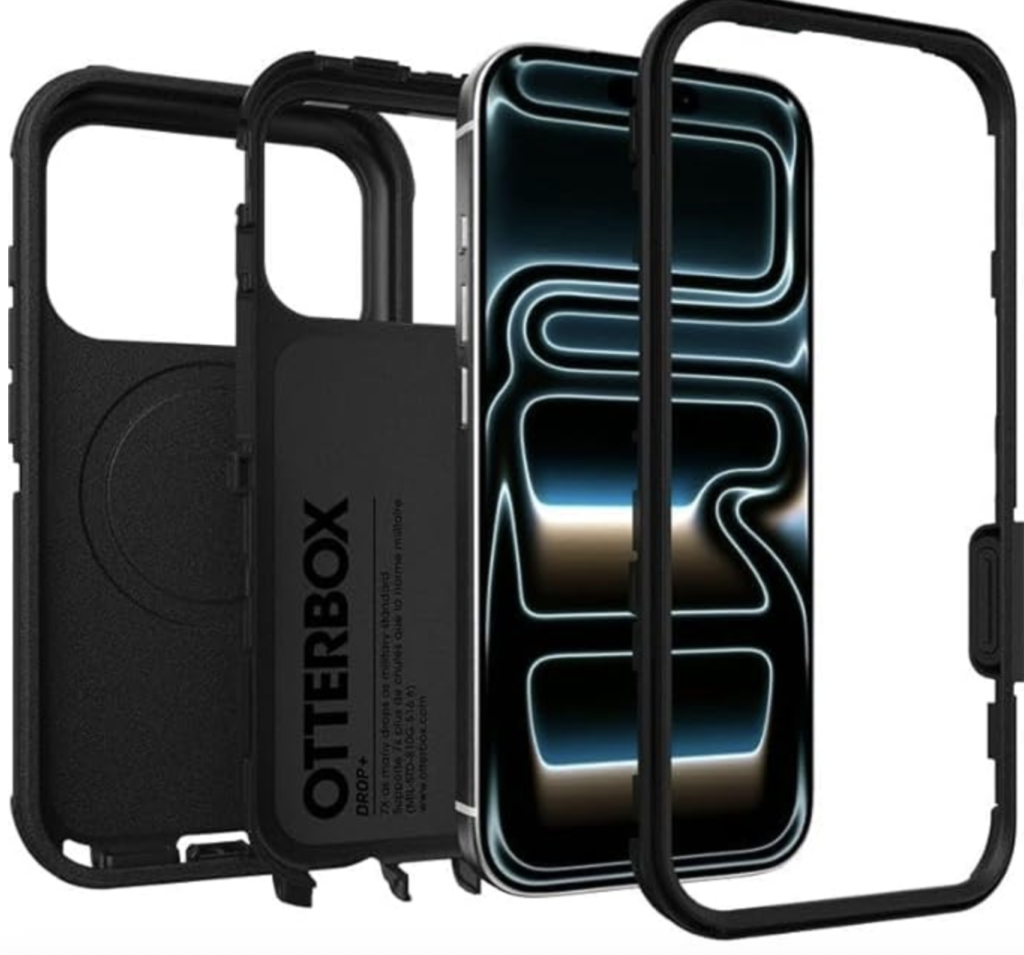
| OtterBox Defender | MIL-810G+ | Splash only | Yes | No | General Andes trekking |
| Pelican Voyager | MIL-810H | IP68 altitude | Yes | Moderate | High-pass crossings, streams |
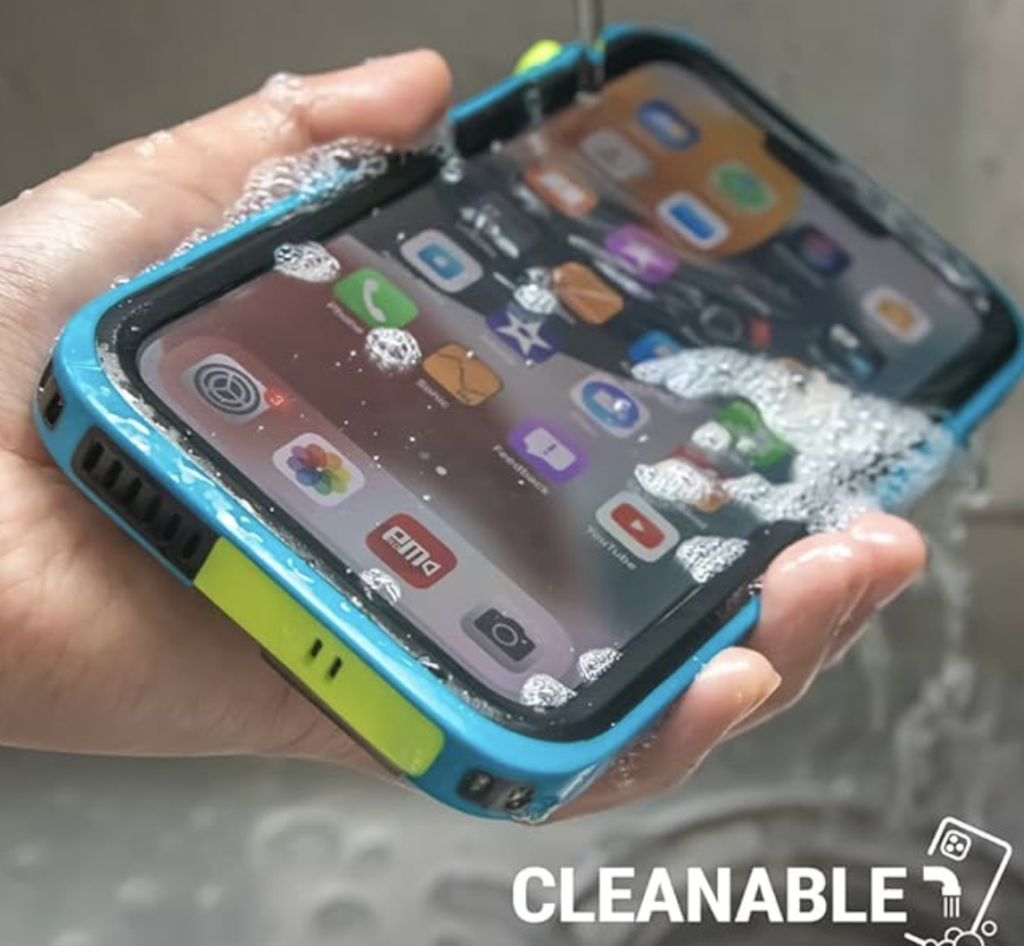
| Catalyst Waterproof | MIL-810G | IP68 full | Yes | Moderate | Photography + wet conditions |
| Spigen Tough Armor | MIL-810G | Splash only | Partial | Yes | Day hikes, urban Andes travel |
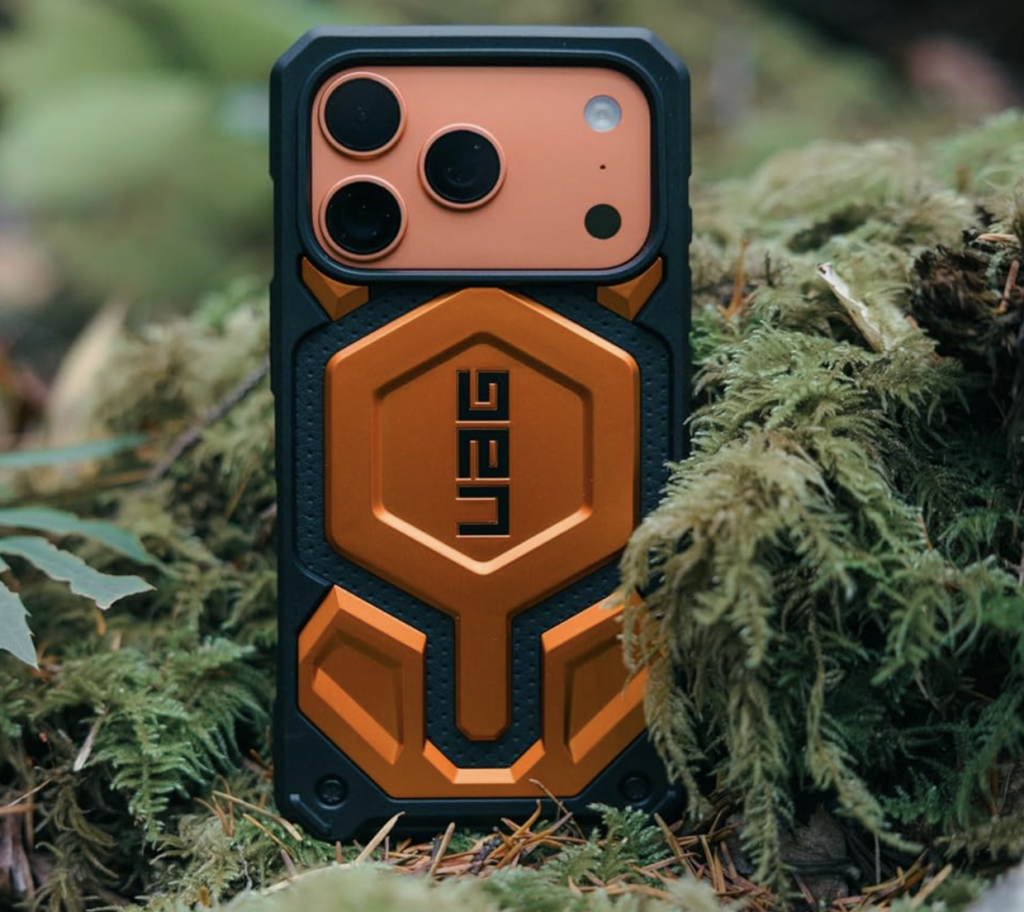
| UAG Monarch | MIL-810G 26-cat | Splash only | Yes | Moderate | Expedition + altitude tested |
| LifeProof NEXT | MIL-810G | Rain/splash | IP6X | Yes | Dusty altiplano + rain |
Best Power Banks for Andes Trekking & Travel 2026
Your rugged phone case protects the hardware — a quality power bank keeps it charged through multi-day circuits where mains power is unavailable.
Read the Guide →Best Waterproof Cases & Dry Bags for Electronics in the Andes 2026
Rugged cases protect your phone during active use — but what about when your device is packed away? Our waterproof case and dry bag guide covers full-system electronics protection.
Read the Guide →Screen Protectors and Additional Accessories for Andes Conditions
A rugged case protects the body and sides of your device, but the screen remains the most exposed surface during a face-down drop. For Andes trekking, a tempered glass screen protector is not optional — it is as essential as the case itself.
Tempered glass vs. film protectors: Standard PET film protectors scratch easily and provide no impact resistance. Tempered glass protectors — typically rated at 9H hardness on the Mohs scale — absorb and distribute the energy of a point impact, often sacrificing themselves rather than the underlying display. In high-UV Andes environments, look for protectors with anti-reflective coatings that maintain screen readability at high altitude where UV intensity can be 25–50% greater than at sea level.
Also ….
Wrist lanyards: On exposed ridge traverses and via ferrata sections in the Andes, a wrist lanyard is the last line of defence against phone loss on technical terrain. Most rugged cases include a lanyard attachment point — always use it on exposed sections. Replace the lanyard if you can see any fraying or if it has sustained a sudden load (if your phone has dropped and been arrested by the lanyard).
Magnetic mount systems: MagSafe-compatible mounting systems allow you to attach your phone to a handlebar mount on a mountain bike, a dashboard mount in a rental vehicle driving to the trailhead, or a chest harness for photography. The magnetic connection must be strong enough to hold under vibration — look for systems rated to at least 4kg of force in the case specifications.
Carry a dedicated offline map before leaving signal range
The Andes cellular network disappears rapidly above valley floors. Download offline maps for your trekking area in Maps.me or Gaia GPS before you leave town. A rugged phone case is only useful if your navigation is available when you need it. Charge your phone and bank fully before every early-morning departure from base camp.
How Temperature and Altitude Affect Your Phone and Case
High altitude introduces two simultaneous stresses that accelerate battery drain and can temporarily disable your phone: reduced temperature and reduced atmospheric pressure. Understanding how these interact with your case choice helps you manage your device effectively in the field.
Cold-temperature battery performance: Lithium-ion batteries lose effective capacity in cold temperatures. At 0°C, most smartphone batteries operate at 80–85% of rated capacity. Or at -10°C, capacity drops to 50–60%. At -20°C (common on high Andes passes overnight), effective capacity can fall below 40%. The solution is not to rely on the case for insulation — no consumer phone case provides meaningful thermal protection. Instead, keep your phone in an inner chest pocket close to body warmth during cold periods and only expose it for navigation or photography.
Altitude and screen response: Touchscreen sensitivity is not directly affected by altitude, but glove compatibility becomes critical above the treeline. Capacitive touchscreens require either bare fingers or gloves with conductive fingertip patches. The OtterBox Defender and UAG Monarch both maintain full touchscreen functionality with standard wool or fleece liners — test this at home before your trek.
Condensation: When you move from cold external temperatures into a warm tent or refugio, condensation forms on cold surfaces — including the inside of cases that are not fully sealed. Even a splash-resistant case can accumulate internal condensation over weeks of temperature cycling in the Andes. If you notice fogging on the inside of a clear-back case, allow the device to equalise temperature before use.
Maintaining Your Rugged Case on the Trail
Even the best rugged case degrades if not maintained during extended Andes expeditions. A five-day circuit in the Bolivian altiplano subjects your case to more environmental stress than years of urban use — dust, UV, temperature cycling, moisture, and mechanical abrasion from pack straps, tent fabric, and rock surfaces.
Daily port cover inspection: Dust and grit accumulate in port cover hinges and can prevent covers from sealing fully. Inspect and clear port covers every morning before departure, particularly after dusty trail sections. A toothbrush is the ideal tool for clearing grit from cover hinge mechanisms without risk of damage.
O-ring care for waterproof models: Cases with rubber O-ring seals (Catalyst, Pelican) should have their seals lightly cleaned with a damp cloth every few days. Sand and grit caught in an O-ring creates channels for water ingress. Do not use sunscreen or insect repellent near case seals — both degrade rubber seal materials on contact.
UV degradation: High-UV Andes environments (especially at altitude in Bolivia and Peru, where UV index regularly reaches 14–16) accelerate the yellowing and embrittlement of clear polycarbonate back panels. If your case back is clear, check for brittleness by gently flexing it at the corners before each trek — a cracked clear-back compromises the structural integrity of the entire case.
After a significant impact: If your cased phone survives a serious fall — boulder impact, tumble down scree — inspect the case carefully before trusting it for the rest of the trek. Cracks in the outer shell, port covers that no longer snap shut, or a screen protector with fractures indicate the case has expended its impact-absorbing capacity. A compromised case may not survive the next fall.
Do you have any question? …..
Frequently Asked Questions
What is the most rugged phone case for trekking at high altitude in the Andes?
The Pelican Voyager and UAG Monarch offer the most comprehensive protection for high-altitude Andes trekking. The Pelican Voyager is the only consumer case that specifically addresses altitude pressure variation in its IP68 seal design, making it the best choice for pass crossings above 4,500 metres where atmospheric pressure drops significantly. The UAG Monarch is certified across 26 MIL-STD-810G test categories including altitude/low-pressure chamber testing — the most comprehensive drop and environmental certification available in a consumer rugged case.
Is IP68 waterproofing enough for Andes trekking?
IP68 (dust-tight, submersion-resistant to 1.5m for 30 minutes) is sufficient for Andes trekking conditions including heavy rain, stream crossings, and snow. What IP68 does not cover is sustained submersion in deeper water (river crossings above chest depth) or high-pressure water jets. For the vast majority of Andes trekking scenarios, IP68 with a good seal is more than adequate. Supplement with a waterproof dry bag for your phone during genuine river crossings on technical routes.
Does altitude damage phone cases?
Altitude itself does not physically damage cases, but the pressure differential across seals in waterproof cases can slightly reduce their effectiveness relative to sea-level ratings. More significantly, the UV intensity at high altitude (UV index 14–16 in Bolivia and Peru) accelerates UV degradation of polycarbonate and TPU case materials, causing yellowing and eventual embrittlement. Cases with UV-stabilised materials degrade more slowly — check manufacturer specifications for UV resistance.
Can I use a rugged case with trekking pole wrist straps and gloves?
Yes, but test your specific glove-and-case combination before the trek. Most MIL-rated rugged cases (OtterBox Defender, Pelican Voyager, UAG Monarch) maintain full touchscreen functionality with thin liner gloves (wool or fleece). Thick insulating gloves require capacitive fingertip patches or a touchscreen stylus. All of the cases in this guide have raised side buttons that remain operable with gloved hands — check that your specific glove thickness allows button operation before you go.
What is better for Andes trekking — a rugged case or a waterproof phone pouch?
For serious multi-day Andes trekking, a dedicated rugged case is superior to a waterproof pouch for daily use. Pouches restrict touchscreen use, are more easily lost or forgotten, and do not provide impact protection for drops. A rugged case is always on the device, requires no extra steps to protect the phone, and is designed to allow full operation in the protected state. Pouches are best used as a supplementary backup for genuine submersion situations (river crossings, kayaking) where a pouch protects a rugged-cased phone against the unlikely worst case.
How do I keep my phone charged on a multi-day Andes trek?
A combination approach works best: a rugged case protects the device, a high-capacity power bank (20,000–30,000 mAh) provides 5–8 full recharges, and a portable solar panel supplements charging on clear-sky days at altitude. Bolivian and Peruvian altiplano treks offer the most reliable solar charging conditions — up to 10–12 hours of strong sunlight. Patagonian treks require a larger power bank reserve due to the less predictable solar conditions. See our dedicated power bank guide for Andes trekking for detailed recommendations.
What phone is best for Andes trekking?
The phone that works best in the Andes is the one you are most familiar with navigating under pressure. That said, phones with larger batteries (4,500+ mAh) survive cold-temperature capacity loss better than smaller-battery devices. Phones with optical image stabilisation (OIS) produce better results in low-light Andes conditions (golden hour, inside caves, overcast passes). iPhone 15 Pro and Samsung Galaxy S24 Ultra are commonly used by Andes photographers for their camera systems — both are compatible with the rugged cases in this guide.
Do rugged phone cases add too much weight for a lightweight trekking kit?
The weight penalty of a quality rugged case ranges from 45g (Spigen Tough Armor) to 120g (OtterBox Defender with holster). In the context of a full Andes trekking kit of 10–15kg, 45–120g is negligible. The weight of losing or destroying a phone on a remote trail — in navigation, safety, and financial terms — is infinitely larger than the case weight. The only scenario where case weight is genuinely worth optimising is ultralight trekking where every gram is tracked — in which case the Spigen Tough Armor or LifeProof NEXT represent the best protection-to-weight ratio.
Can I charge my phone wirelessly through a rugged case?
Several cases in this guide support wireless (Qi/MagSafe) charging without case removal: the Pelican Voyager (clear back designed for wireless charging), the Catalyst Waterproof Case, and the Spigen Tough Armor. Wireless charging through a case typically charges 10–15% slower than wired charging — acceptable at base camp where you have time but less efficient on a tight battery management schedule. Note that wireless charging generates more heat than wired charging, which can stress battery cells in cold recovery situations.
Should I buy a screen protector separately if I have a rugged case?
Yes — always add a tempered glass screen protector regardless of whether your rugged case includes a built-in screen protector. Built-in case screen protectors (like the OtterBox Defender’s) reduce touchscreen sensitivity and glove compatibility. A separate tempered glass protector (9H hardness or higher) provides better impact resistance for face-down drops, maintains full touchscreen sensitivity, and is far cheaper to replace than the screen itself. In high-UV Andes environments, an anti-reflective tempered glass protector also significantly improves screen readability at altitude.
Conclusion: Protect Your Phone the Way You Protect Your Trek
The Andes will test every piece of gear you bring. Your tent, your boots, your base layers, your navigation device — all of them face conditions that most equipment is never designed for. The phone in your pocket is no different, and it is often the piece of gear with the highest consequences if it fails: your GPS track, your emergency contacts, your summit photograph.
The cases in this guide represent the genuine upper tier of protection available in 2026 — from the altitude-rated seals of the Pelican Voyager to the slim, pocket-sized protection of the Spigen Tough Armor. None of them are perfect for every situation, but all of them will survive what most Andes treks can deliver if maintained correctly and paired with a sensible screen protector and wrist lanyard.
Choose the case that matches your specific route, your trekking style, and the conditions you expect. Then test it before you leave. The mountains are not where you want to discover that your protection system has a gap. Bookmark Uncover the Andes and explore our full Gear Lab Hub — every piece of equipment you need for a safe, well-equipped Andes expedition, reviewed and tested by trekkers who have been there.
Machu Picchu Photography Guide 2026
Your phone is your backup camera at altitude — make sure it is protected and charged for the shots that matter. This guide covers every shooting window at Machu Picchu.
Read the Guide →