
Best Insulation Jackets for Andes & Patagonia Trekking 2026: Down vs Synthetic Complete Guide

At 4,630 metres on the Salkantay Pass, the temperature dropped 11°C in the 40 minutes it took to ascend the final approach. The trekker in front of me was wearing a cotton hoodie. The guide — a man who has crossed that pass several hundred times — was wearing a 60g down hoody that packed to the size of a baseball. The cotton hoodie was soaked through before we reached the top. The down hoody was inside a waterproof shell, dry and effective, and came off the moment we started the descent and the exertion heat began building again. That is the difference an insulation jacket makes on an Andes trek.

The insulation jacket is the warmth layer in the three-layer system — it sits between your moisture-wicking base layer and your windproof or waterproof outer shell. Its job is simple: trap warm air close to your body when you are not generating enough body heat through movement to stay warm unaided. On an Andes trek, that moment comes at every summit, every lunch stop, every morning start, and every evening at camp. It comes earlier at altitude than at sea level, and it lasts longer when the wind is blowing.

This guide covers the best insulation jackets for Andes and Patagonia trekking in 2026: down fill vs synthetic, packability vs warmth, and the specific conditions that determine which jacket is right for your route. Every recommendation includes an Amazon link with my affiliate code.

FIND YOUR FLIGHT

Fly to Cusco, Punta Arenas, or Lima for your Andes trek. Compare flights and find the best fare.

Cusco (CUZ) for Peru, Punta Arenas (PUQ) for Patagonia, Lima (LIM) for connections. Compare all airlines and book with flexibility.

Prices update in real time. Booking through this link supports Uncover the Andes at no extra cost to you.

Down vs Synthetic Insulation: The Critical Choice for Andes and Patagonia

The choice between down and synthetic insulation is the most important decision in the insulation jacket category — and it depends almost entirely on the weather conditions of your specific route, not on price or performance in isolation. Both materials have significant advantages; neither is universally superior.

Down insulation

Down insulation — clusters of goose or duck underfeathers — provides the best warmth-to-weight ratio of any natural or synthetic insulation material. A 700-fill-power down jacket weighing 250g will outperform a 300g synthetic jacket in warmth for that weight. Down also compresses more completely, packing to smaller volumes for equivalent warmth. The critical weakness: down loses its insulating properties almost entirely when wet. A down jacket soaked in rain or with a damp base layer beneath it has approximately 20–30% of its dry insulating effectiveness. In the Bolivian altiplano (dry season, very low humidity) and on the Inca Trail in dry season, this is not a problem. In Patagonia or on the Inca Trail during wet season, it is a significant one.

Synthetic insulation

Synthetic insulation (PrimaLoft, Thermoball, Polartec Alpha) is made from engineered polyester fibres designed to mimic the loft of down while retaining warmth when wet. A wet synthetic jacket retains 60–80% of its dry insulating effectiveness — a fundamental difference from down. Synthetic is also less expensive, hypoallergenic, and easier to wash. The drawbacks: heavier than equivalent-warmth down, does not compress as well, and loses loft faster over years of use. For Patagonia trekking — where rain is a near-daily certainty — synthetic insulation is the more pragmatic choice.

PropertyDown (700–900 fill)Synthetic (PrimaLoft/Thermoball)Best For
Warmth-to-weightBest — 250g jacket covers -5°C to -15°CGood — needs 300–400g for equivalent warmthDown for dry conditions
Wet performancePoor — loses 70–80% warmth when wetGood — retains 60–80% warmth when wetSynthetic for Patagonia/wet season
PackabilityExcellent — fits in fistGood — larger than downDown for ultralight/travel
PriceHigher — $180–$400Lower — $120–$280Synthetic for budget
DurabilityExcellent — 10+ years with careGood — loft reduces after 5–7 yearsDown for long-term investment
Drying timeVery slow when wetFastSynthetic for rainy conditions
Best Andes routeBolivia altiplano, dry-season PeruPatagonia, wet-season Inca TrailRoute-dependent
Down vs synthetic insulation for Andes and Patagonia trekking.
GEAR GUIDE

Best Waterproof Hiking Boots for Patagonia 2026

The footwear guide for the same conditions this jacket faces — wet, cold, windy Patagonia.
Read the Guide
Best Insulation Jackets for Andes & Patagonia Trekking

Understanding Fill Power: What the Numbers Actually Mean for Andes Trekking

Fill power is the volumetric measurement of down quality — specifically, how many cubic inches one ounce of down occupies when allowed to loft freely. Higher fill power means more air-trapping loft per gram of down, which translates to better warmth-to-weight ratio. The numbers commonly seen in trekking jackets range from 550 to 900 fill power.

550–650 fill power: Entry-level down. Heavier for equivalent warmth, less packable. Used in budget down jackets and heavy winter sleeping bags. Acceptable for Andes use but not the optimal choice for weight-conscious trekkers.

700–750 fill power: The performance benchmark for trekking use. Most of the jackets in this guide use 700–750 fill power — the sweet spot between warmth, weight, packability, and price. A 700-fill jacket in the 200–280g range covers temperatures from -5°C to -15°C when used as a mid-layer under a shell.

800–900 fill power: Premium down used in the lightest, most packable jackets. The Arc’teryx Cerium SL and Rab Microlight Alpine at this fill power level weigh under 200g while providing genuine sub-zero warmth. The premium is significant — these jackets cost $300–$450 — but for trekkers who count every gram and carry their jacket on every single day, the weight savings compound meaningfully over a multi-week trip.

The 6 Best Insulation Jackets for Andes and Patagonia Trekking 2026
BEST OVERALL DOWN JACKET

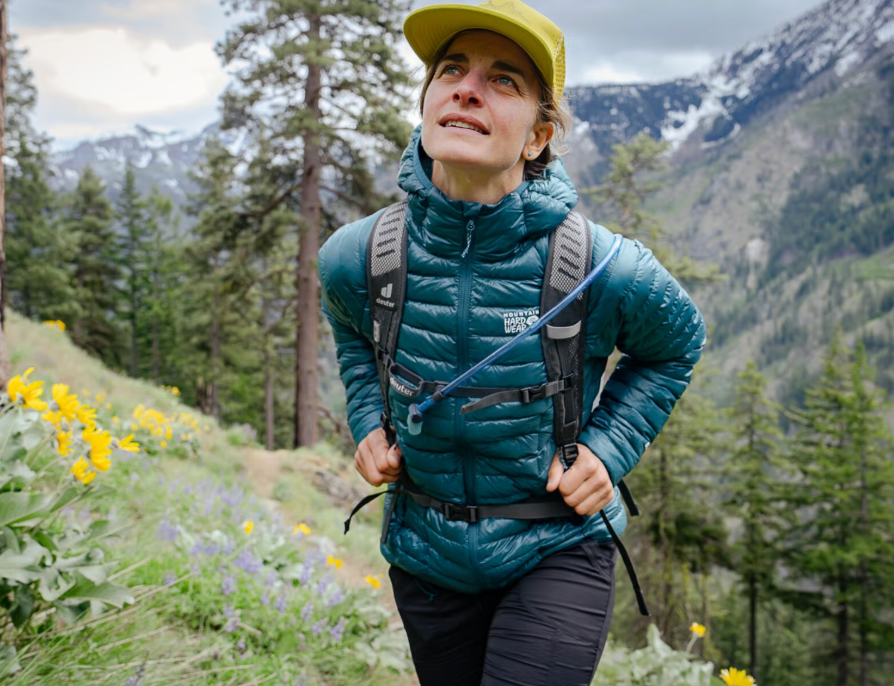
Patagonia Down Sweater Hoody

The benchmark down hoody for Andes trekking — trusted by guides and trekkers across a decade of use.

The Patagonia Down Sweater Hoody has been the reference down jacket for Andes trekking for years, and the 2025 version maintains its position through a combination of reliable 700-fill-power down performance, a helmet-compatible hoody that adds meaningful head protection at summit stops, and Patagonia’s Traceable Down standard which guarantees the sourcing ethics of the fill. At approximately 340g, it is not the lightest down jacket available — the Arc’teryx and Rab options below it in this guide are both lighter — but it offers the best balance of warmth, durability, and year-round versatility of anything in the $200–$280 price range. The slim fit works under a hardshell without excess bulk.

Fill: 700-fill-power RDS-certified downWeight: ~340g (M)Shell: Ripstop recycled nylonPackability: Stuffs into chest pocketCertification: Traceable Down Standard
  • +700-fill-power certified down — genuine warmth for Andes passes and camp use
  • +Helmet-compatible hoody — fits over a wool beanie on cold summit approaches
  • +Stuffs into own chest pocket — no separate stuff sack required
  • +Slim fit works cleanly under a hardshell without binding
  • +Patagonia Traceable Down — sourcing ethics verified from farm to jacket
Check Price on Amazon

As an Amazon Associate, Uncover the Andes earns from qualifying purchases at no extra cost to you.

Best Insulation Jackets for Andes & Patagonia Trekking
BEST ULTRALIGHT DOWN

Arc’teryx Cerium SL Hoody

When every gram matters at altitude — the lightest performance down jacket in this guide.

The Arc’teryx Cerium SL is the choice for trekkers who have weighed their kit, identified the insulation jacket as the heaviest single piece of clothing, and want to fix that without sacrificing warmth. At approximately 185g for a men’s medium — one of the lightest down hoodies with genuine sub-zero warmth performance — it uses 850-fill European goose down in an Arato 10 nylon shell so light it is almost translucent. The warmth-to-weight ratio is the best of any jacket in this guide. The trade-offs: it is the most expensive option, it is not as durable as thicker-shelled alternatives, and it requires more careful use around campfire sparks, pack buckles, and rough rock edges that can damage the ultra-light shell fabric.

Fill: 850-fill European goose downWeight: ~185g (M)Shell: Arato 10 ripstop nylon — ultra-lightPackability: Baseball-sized when packedPrice: Premium — highest in guide
  • +185g — lightest down hoody with genuine sub-zero warmth in this guide
  • +850-fill European goose down — highest fill power, maximum warmth-to-weight
  • +Packs to baseball size — negligible pack volume on multi-day expeditions
  • +Arc’teryx precision cut — anatomic fit moves with the body without fabric bunching
  • +Best for ultralight trekkers, multi-week trips, and any route where every gram is counted
Check Price on Amazon

As an Amazon Associate, Uncover the Andes earns from qualifying purchases at no extra cost to you.

BEST FOR TECHNICAL TERRAIN

Rab Microlight Alpine Down Jacket

British mountain engineering for Andean conditions — cold, reliable, built to last.

Rab has been making high-altitude jackets for British mountaineers since 1981, and the Microlight Alpine is their most refined trekking-to-mountaineering crossover down jacket. The 750-fill hydrophobic down (treated to resist moisture absorption) addresses the principal weakness of standard down in the wet conditions of Inca Trail cloud forest and Patagonian shoulder seasons — it retains approximately 40% more warmth when damp than untreated equivalent fill-power down. The Pertex Quantum shell is more durable than Arc’teryx’s Arato 10 fabric and handles the snags and abrasion of technical terrain and pack-contact better. For Andes routes that include both high-altitude cold and regular rain exposure, the Rab Microlight Alpine is the most balanced single option in this guide.

Fill: 750-fill hydrophobic downWeight: ~270g (M)Shell: Pertex Quantum ripstopNotable: Hydrophobic down — retains warmth when dampOrigin: UK design
  • +750-fill hydrophobic treated down — 40% more warmth-when-damp than standard down
  • +Pertex Quantum shell — more durable than ultra-light shells, handles technical terrain
  • +Helmet-compatible hood with single-hand adjustment
  • +Best balance of wet-weather performance and dry-condition warmth in the guide
  • +Rab’s 30-year reputation in high-altitude performance clothing — consistent quality
Check Price on Amazon

As an Amazon Associate, Uncover the Andes earns from qualifying purchases at no extra cost to you.

Best Insulation Jackets for Andes & Patagonia Trekking
BEST FOR PHOTOGRAPHERS

Black Diamond Access Down Hoody

Free arm movement, a hoody that stays put on a tripod setup, and warmth that lasts a pre-dawn wait.

Photographers on Andes treks spend substantial time stationary — waiting for the light to change, setting up a tripod on a windy ridge, lying prone for a reflection shot at Uyuni. The Black Diamond Access Down Hoody is designed for exactly this use case: it combines 700-fill down warmth with an articulated pattern that provides unrestricted arm movement for camera operation, and a hoody design with a secure adjustment system that stays in place without constant readjustment in Andean wind. The gusset-patterned arms — borrowed from BD’s rock climbing apparel engineering — mean you can raise both arms to eye level for a camera without the jacket riding up and exposing the lower back to cold air.

Fill: 700-fill RDS-certified downWeight: ~295g (M)Notable: Articulated for arm movementPockets: 2 hand + 1 chest stuff pocketBest For: Photography stops, technical arm work
  • +Articulated arm pattern — unrestricted overhead reach for camera and tripod work
  • +700-fill RDS-certified down — genuine warmth for pre-dawn photography sessions
  • +Stays in place in wind — better hoody retention than most down jackets
  • +Chest stuff pocket — packs small for pack accessibility between shots
  • +Best choice for photographer-trekkers doing stationary shooting at altitude
Check Price on Amazon

As an Amazon Associate, Uncover the Andes earns from qualifying purchases at no extra cost to you.

BEST SYNTHETIC (WET CONDITIONS)

Patagonia Nano Puff Jacket

The synthetic reference for Patagonia and wet-season Andes trekking.

The Patagonia Nano Puff has been the reference synthetic insulation jacket for Patagonia (both the place and the brand) for over a decade. Its 60g PrimaLoft Gold insulation — the premium grade of PrimaLoft’s synthetic down — retains 60–80% of its warmth when wet, making it the correct insulation choice for the Torres del Paine W Circuit where rain is a near-daily certainty. At approximately 340g, it is heavier than the down options in this guide, but on a Patagonia trek where the jacket will be wet for portions of every day, synthetic is not a trade-off — it is the technically correct choice. The Nano Puff’s packability (it stuffs into its own pocket) makes it practical to carry even when the down jacket would be the default for a drier route.

Insulation: 60g PrimaLoft Gold syntheticWeight: ~340g (M)Shell: Ripstop recycled nylonWet Performance: Retains 60–80% warmth when wetBest For: Patagonia, wet-season trekking
  • +PrimaLoft Gold — premium synthetic, best warmth-when-wet of any synthetic in guide
  • +Correct choice for Patagonia W Circuit where rain is daily reality
  • +Wind-resistant shell — effective standalone in 30–40 km/h Patagonian wind
  • +Stuffs into own pocket — easily accessible without digging through pack
  • +Patagonia’s most durable insulation jacket construction — handles daily use well
Check Price on Amazon

As an Amazon Associate, Uncover the Andes earns from qualifying purchases at no extra cost to you.

Best Insulation Jackets for Andes & Patagonia Trekking
BEST BUDGET INSULATION

Columbia Powder Lite Hooded Jacket

Genuine insulation performance at a price that leaves room for the rest of the gear list.

The Columbia Powder Lite is the best genuine-performance insulation jacket available under $130 and the correct recommendation for trekkers on a tight budget who still need reliable warmth on Andes passes and in camp. Columbia’s Omni-Heat thermal-reflective lining adds approximately 20% warmth to the insulation fill weight through radiant heat reflection — a technology that partially compensates for the lower fill quality compared to premium alternatives. The jacket is heavier than equivalent-warmth premium options (450g vs 270–340g for the Patagonia and Arc’teryx options) but for a trekker doing one Andes trip and evaluating whether frequent multi-day altitude trekking is their thing, the performance gap is acceptable and the price gap is significant.

Insulation: Thermal-Reflective Insulation + Omni-Heat liningWeight: ~450g (M)Price: Best value under $130Hoody: Adjustable — helmet compatibleBest For: Budget first-time Andes trekkers
  • +Omni-Heat reflective lining adds 20% warmth bonus to insulation fill weight
  • +Genuine pack-into-pocket functionality — not just a marketing claim at this price
  • +Helmet-compatible hoody — same feature as premium jackets at a fraction of the cost
  • +Columbia sizing runs accurate — reliable fit across production runs
  • +Best value insulation jacket for one-time or first-time Andes trekkers
Check Price on Amazon

As an Amazon Associate, Uncover the Andes earns from qualifying purchases at no extra cost to you.

When to Wear Your Insulation Jacket on the Trail: The Andes-Specific Protocol

The most common insulation jacket mistake on Andes treks is wearing it during ascent. At altitude, your body generates significantly more heat than you expect relative to the apparent physical effort. Wearing a down jacket during a sustained uphill causes heavy sweating that saturates the base layer and — critically — transfers moisture to the down fill, reducing its insulating effectiveness precisely when you need it most: at the summit.

The correct protocol: Pack your insulation jacket at the top of your pack or in a hip-belt pocket, accessible within 30 seconds. On ascents above 3,500 metres, trek in your base layer and a light wind layer only — let your body heat work for you. As soon as you stop — at a summit, a viewpoint, a lunch break — put your insulation jacket on before you feel cold, not after. The 2–3 minutes it takes to feel cold after stopping at altitude is the window where heat loss is most rapid; covering it proactively prevents the deep chill that takes 20–30 minutes of renewed effort to recover from.

BOOK YOUR TREK

The Inca Trail, Salkantay, Bolivian altiplano, and Patagonia. Book your guided trek and let the outfitter handle the logistics.

Professional guides on the Inca Trail and Salkantay know every weather window and altitude trick. Book with a reputable outfitter and focus on the experience.

Viator

Guided Andes treks with full gear support, acclimatisation schedules, and permits included. Viator covers the Inca Trail, Salkantay, and Bolivia altiplano routes in English.

Browse on Viator

GetYourGuide

Small-group and private Andes and Patagonia treks — instant booking, photography-focused options, and comprehensive logistics.

Browse on GetYourGuide

The belay jacket system: Experienced mountaineers and altitude guides use a system called the “belay jacket” — an extra warm insulation layer that only comes out during full stops and goes back in the pack immediately on movement. On a multi-day Andes trek, your down or synthetic jacket functions exactly this way. If you find yourself wearing your insulation jacket while moving uphill and sweating through it, that is the signal to adjust — remove it before the next uphill section regardless of the ambient temperature.

SituationWhat to WearWhy
Sustained uphill ascent above 3500mBase layer + wind/shell layerBody heat keeps you warm; insulation causes overheating and sweat
Summit stop / col crossingBase + insulation + shell over topWind chill at summits is extreme; put on jacket before feeling cold
Lunch break (30+ min)Base + insulation — shell if windRapid heat loss on extended stop at altitude
Morning start (pre-dawn)Base + insulation + shellColdest point of day; insulation kept on until body heat builds
Evening camp above 3500mBase + insulation — add extra layer if neededTemperatures drop rapidly after sunset at altitude
Rain with moderate exertionBase + synthetic insulation + waterproof shellSynthetic retains warmth when wet; down should stay dry in pack
When to wear and when to pack your insulation jacket — Andes trekking protocol.
Best Insulation Jackets for Andes & Patagonia Trekking
TRAVEL INSURANCE

Your layering system is ready. Is your insurance?

Altitude sickness, hypothermia exposure, and gear loss are real risks on Andean and Patagonian treks. Two reliable policies below.

Asegura Tu Viaje

Medical evacuation from altitude, gear theft, and trip cancellation. Strong Andean and Latin American network.

Get a Quote

IATI Seguros

International adventure insurer — covers high-altitude trekking, cold-weather exposure, emergency repatriation, and camera equipment.

Get a Quote

Caring for Your Down Jacket on a Long South America Trip

Down jackets require specific care to maintain loft — the measure of the down’s ability to trap air and insulate. Compressed down (from being stuffed in a pack for weeks), damp down (from sweat transfer or rain exposure), and dirty down (from sustained use) all lose loft and therefore warmth. Understanding how to restore and maintain loft on the trail keeps your jacket performing as intended.

Daily loft restoration:

After a day of being stuffed in your pack, shake your down jacket vigorously for 20–30 seconds when you unpack it in camp. This redistributes the down clusters back to their natural loft position. A jacket that has been compressed for 8 hours and is shaken out before wearing is significantly warmer than one worn immediately from the stuff sack.

Damp down recovery:

If your down jacket has become damp from sweat transfer through a base layer, spread it fully open and allow it to air dry before re-packing. In camp, hang it from a ridgeline or tent guyline with full surface exposure for 30–45 minutes. At altitude in dry conditions (the Bolivian altiplano, the Salkantay above the cloud forest zone), down dries quickly. In humid cloud forest conditions, this is more difficult — prioritise keeping the jacket in its stuff sack when not in use to minimise humidity absorption.

Washing on a long trip:

A down jacket worn daily for 2–3 weeks accumulates body oils and dirt that gradually reduce loft. In Cusco, La Paz, or Buenos Aires, hand wash in cold water with a specialist down wash (Nikwax Down Wash) or use a laundromat machine on the delicate cycle at 30°C maximum. Tumble dry on the lowest heat setting with 3–4 clean tennis balls to break up clumped down clusters as they dry. Never hang a wet down jacket to dry — the weight of the wet down clusters tears the baffles. Lay it flat if tumble drying is not available.

GEAR GUIDE

Best Base Layers for High-Altitude Andes Trekking 2026

The companion guide to this article — what to wear against your skin underneath the insulation jacket, and why the base layer determines how well the insulation performs.

Read the Guide

Insulation Jacket Layering: What Goes Over and Under in Andean Conditions

An insulation jacket functions as the middle layer in a three-piece system. Its performance depends not only on its own properties but on how well it interfaces with the layers above and below it.

What goes under the insulation jacket

A dry base layer is the essential prerequisite. Down insulation does not work properly over a damp base layer — moisture from the base layer transfers to the down clusters and reduces loft. On the ascent, trek in base layer plus a light windproof layer, keeping the insulation packed. At stops, ensure the base layer is not saturated before putting on the down jacket. If the base layer is damp, a synthetic insulation jacket (Nano Puff, Powder Lite) is more forgiving — it maintains warmth even over a damp base layer.

What goes over the insulation jacket

A waterproof-breathable shell is the standard outer layer for Andes and Patagonia conditions. The shell prevents rain from reaching and saturating the down fill. It also provides windproofing that multiplies the insulation jacket’s warmth significantly — a down jacket that provides 10°C of warmth protection in still air provides 15–18°C of warmth protection inside a windproof shell because it eliminates convective heat loss through the insulation.

Sizing note: buy your insulation jacket in your normal size if you plan to wear it alone or under a shell in your normal size. If you are buying a shell specifically to wear over this jacket, buy the shell one size up from your normal fit — the base layer plus insulation layer adds approximately one size of circumference bulk that most shells do not account for in standard sizing.

GEAR GUIDE

Best Expedition Backpacks for Andes Trekking 2026

The pack that carries your insulation jacket — how to pack a 65L expedition pack for multi-day altitude use with the layering system accessible at the top.
Read the Guide
Best Insulation Jackets for Andes & Patagonia Trekking
FIND YOUR HOTEL

Hotels in Cusco, Puerto Natales, and La Paz before your trek. Book your base camp early.

Cusco for Peru treks, Puerto Natales for Patagonia, La Paz for Bolivia altiplano. Book accommodation for your acclimatisation days before the trail begins.

Prices shown include all taxes. Booking through this link supports Uncover the Andes at no extra cost to you.

Packing Your Insulation Jacket: Volume, Weight, and Accessibility

The insulation jacket is the one piece of clothing gear that benefits most from strategic placement in your pack. It needs to be accessible within 30 seconds at any point on the trail — not buried under two days of food and a sleeping bag at the bottom of a 65L expedition pack. The setup that experienced Andes trekkers use most consistently: the insulation jacket lives in a top lid pocket, a hip belt pocket, or at the very top of the main compartment under the rain cover, accessible without unpacking anything else.

Down jackets that stuff into their own chest pocket — the Patagonia Down Sweater, the Arc’teryx Cerium SL, and the Black Diamond Access Down all do this — provide the most accessible storage: compressed to baseball size in the hip belt pocket, pulled out and on in under 20 seconds at a summit stop.

Weight comparison for context: The range of jackets in this guide spans 185g (Arc’teryx Cerium SL) to 450g (Columbia Powder Lite). The 265g difference is measurable in a pack — experienced Andes trekkers count grams because every extra 100g on a 5-day 65L pack means additional fatigue at altitude. If you are already carrying a full camera system, expedition boots, and the clothing layers required for the Salkantay Pass, the lightweight down premium is justified by the compounding weight savings over the duration of the trek.
FAQ

Frequently Asked Questions

What is the best insulation jacket for the Inca Trail?

The Patagonia Down Sweater Hoody is the most widely recommended for the standard 4-day Inca Trail in dry season (May–October). For wet season (November–April), the Patagonia Nano Puff or another synthetic option is more appropriate — rain on the cloud forest section will saturate standard down. For a single jacket that covers both seasons, the Rab Microlight Alpine with hydrophobic down treatment offers the best wet-weather performance of any down jacket in this guide.

Should I choose a down or synthetic jacket for Patagonia?

Synthetic is the technically correct choice for Patagonia. The Torres del Paine W Circuit has rain on 50%+ of trekking days in even the peak summer season — a standard down jacket will lose 70–80% of its warmth when wet. The Patagonia Nano Puff (PrimaLoft Gold synthetic) or a similar synthetic option retains 60–80% warmth when wet, which is the critical difference. If you insist on down for Patagonia, choose the Rab Microlight Alpine with hydrophobic treated down — it is the best wet-weather down option available.

What fill power should I choose for an Andes trekking jacket?

700–750 fill power is the sweet spot for Andes trekking use. At this fill power, a 270–340g jacket covers the temperature range from -5°C to -15°C as a mid-layer — which covers every Andes condition from the Inca Trail cloud forest to the Salkantay Pass and Bolivia altiplano. 800–900 fill power (Arc’teryx, Rab Microlight Alpine) is worth the premium only if weight is a primary concern.

How do I keep my down jacket dry on a rainy Andes trek?

Always carry your down jacket inside your pack’s waterproof liner or a dry bag when trekking in rain — do not wear it in heavy rain without a waterproof shell over the top. The shell layer is what faces the rain; the down jacket stays dry inside it. If you do not have a shell, a synthetic insulation jacket (Nano Puff, Powder Lite) is better than down for direct rain exposure. Pack the down jacket in the centre of your main compartment surrounded by clothing — not in the outer mesh pocket where pack rain covers may not fully protect it.

What temperature does a 700-fill down jacket cover?

A 700-fill-power down jacket in the 270–340g range (Patagonia Down Sweater, Rab Microlight Alpine, Black Diamond Access) covers temperatures from approximately -5°C to -15°C as a mid-layer — meaning worn between a base layer and a windproof shell. As a standalone jacket without a shell, the effective temperature range is approximately 0°C to -8°C in still air, less in wind. The Salkantay Pass at -5°C with 20 km/h wind requires this jacket under a shell.

Can I travel to South America with just one insulation jacket?

Yes — the Rab Microlight Alpine with hydrophobic down, or a similar treated-down option, is the most versatile single jacket for a multi-destination South America trip that includes both Andes high-altitude trekking and Patagonia. If your itinerary includes both dry Andes conditions (Bolivia, dry-season Peru) and wet Patagonia conditions, the hydrophobic treated down provides performance in both scenarios. Standard untreated down is a better choice if your route is exclusively dry-season Andes.

How do I wash a down jacket on a long South America trip?

Use a specialist down wash (Nikwax Down Wash) on a delicate cycle at 30°C maximum, or hand wash in cold water. Tumble dry on the lowest heat setting with 3–4 clean tennis balls to break up clumped clusters — do not hang a wet down jacket to dry, as the weight tears baffles. Allow 2–3 hours of tumble dry time for full moisture removal. In Cusco and La Paz, most traveller-focused laundromats have dryers suitable for down jackets.

Do I need a separate insulation jacket for camp and for on-trail use?

Not unless your route includes winter Bolivian altiplano crossings or high-altitude mountaineering above 5,000m. For standard Andes trekking routes, a single mid-weight down jacket (700-fill, 270–340g) covers both on-trail summit stops and evening camp use. Some trekkers carry a lighter down jacket for on-trail use and a heavier synthetic puffy for camp — a system that adds weight but provides maximum flexibility in variable conditions.

Is the Arc’teryx Cerium SL worth the premium price for Andes trekking?

Yes, if weight is a primary concern and your route is dry-season Andes trekking (not Patagonia). The 185g weight is the best warmth-to-weight ratio available in a down hoody. Over a 3-week Andes trip with daily pack loading, 150g of savings on the insulation jacket versus the Patagonia Down Sweater translates to meaningful comfort. If your route includes Patagonia or wet-season Inca Trail, the Arc’teryx Cerium SL is not the right choice — its standard (non-hydrophobic) down loses warmth quickly when wet.

What is the difference between a down hoody and a down jacket?

A down hoody has an attached, adjustable hoody that covers the head and neck; a down jacket does not. For Andes trekking, the hoody version is strongly preferred — the neck and head are major heat-loss zones at altitude, and having the hoody integrated means one fewer item to carry and adjust on the trail. All six jackets in this guide are hoody versions. The hoody adds approximately 20–30g to the jacket weight and significant warmth at summit stops and in camp.

Best Insulation Jackets for Andes & Patagonia Trekking

Conclusion: The Layer That Separates a Good Trek From an Extraordinary One

The trekker in the cotton hoodie on the Salkantay Pass made it to the top. He was cold, wet, and miserable for the final 40 minutes of the ascent, and even colder on the descent until the elevation dropped enough for temperatures to normalise. He had an extraordinary experience despite the jacket, not because of it. Your insulation jacket should be invisible — doing its job so reliably that you do not think about it.

A 270g down jacket worn at every summit stop on the Inca Trail takes up less space than a paperback book and adds less weight than a litre of water. A 340g synthetic jacket on the Patagonia W Circuit means warm, dry evenings at the refugio and comfortable morning starts regardless of what the weather delivered during the day. These are not luxuries. They are the difference between trekking and enduring.

The full Gear Lab Hub at Uncover the Andes covers every layer of the system — base layers, insulation jackets, trekking boots, expedition packs, and the destination guides for every major Andes and Patagonia route. Everything is linked. Everything is built around the same principle: the gear should serve the experience, not distract from it. See you at the top of the pass.

Join the Conversation

Leave a Reply

Your email address will not be published. Required fields are marked *

Close
Close