

I was born in La Paz. Raised at 3,600 metres. I took my first steps on streets where the air is thin enough to make grown adults dizzy. then I ate salteñas on school mornings in Sopocachi, watched the teleférico cables being strung across the canyon, and stood at the mirador above the city more times than I can count, watching the afternoon thunderstorms roll in over Illimani and I know this city the way you only know a place you grew up in — not from a guidebook, but from memory.
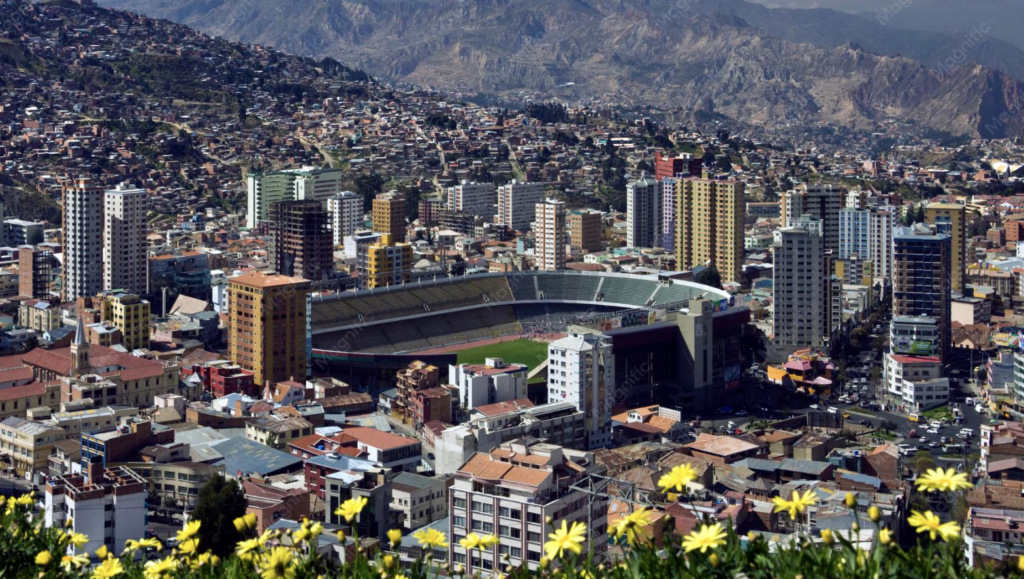
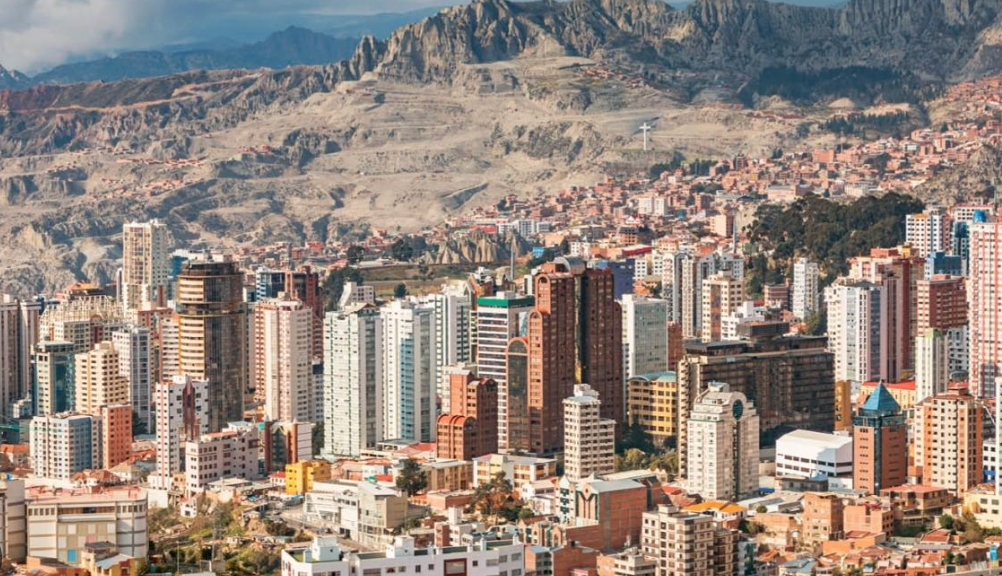
La Paz is the most dramatic city in South America. That is not hyperbole. It sits inside a canyon that drops 400 metres from the altiplano above it, with 2 million people packed into a geological bowl that should not, by any rational assessment, be a city at all. The satellite city of El Alto — higher, colder, and predominantly Aymara — sprawls across the plateau rim like a crown. Below it, the neighbourhood of Sopocachi has more good restaurants per block than most European capitals. Between them: the cables of the Mi Teleférico system, the world’s highest urban cable car network, threading across the canyon like a web.
This guide is not a tourist brochure. It is what I would tell a close friend before they visited the city I grew up in. It covers everything — how to handle the altitude, where to eat, which neighbourhoods to stay in, the Death Road, the teleférico, the cholitas, the Witches Market, and the things most travel guides simply do not know because they were written by someone who spent 72 hours here on a press trip.
La Paz at a Glance: The City That Should Not Exist
La Paz is technically the seat of government of Bolivia — the executive and legislative branches sit here, although the constitutional capital is Sucre. It sits at 3,600 metres above sea level in the city centre, dropping to around 3,200m in the wealthier southern zone (Zona Sur) and climbing to 4,150m in El Alto above. The airport — El Alto International (LPB) — sits at 4,061 metres, making it one of the highest commercial airports in the world. You will feel the altitude within minutes of landing.
The city’s population of roughly 2 million includes the La Paz municipality and the urban sprawl of El Alto, which has grown from a rural migrant camp to a major city in its own right over the past 40 years. El Alto is predominantly Aymara — one of the indigenous peoples of the Andes — and is known for its extraordinary Cholita fashion, the Feria 16 de Julio market (one of the largest open-air markets in South America), and a food scene that most tourists never find because they stay in the canyon below.
| Quick Facts | Detail |
|---|---|
| Official name | Nuestra Señora de La Paz |
| Altitude (city centre) | 3,600m (11,811 ft) |
| Altitude (airport — LPB) | 4,061m (13,323 ft) |
| Population (metro) | ~2 million (La Paz + El Alto) |
| Official language | Spanish (Aymara widely spoken in El Alto) |
| Currency | Bolivian Boliviano (BOB) — USD 1 = ~BOB 6.9 (May 2026) |
| Time zone | BOT — UTC-4 (no daylight saving) |
| Best months to visit | May–September (dry season); June–August coldest nights |
| Airport code | LPB — El Alto International Airport |
| Emergency number | 110 (police), 118 (ambulance) |
The Altitude: What Really Happens When You Land at 4,061 Metres
I need to address this immediately because it is the single most important thing to understand about visiting La Paz — and the thing most travel advice handles poorly. The airport is at 4,061 metres. That is higher than the summit of many European peaks. When you step off the plane, you will be walking at altitude before you have acclimatised. The bus into the city descends to 3,600m — still 400 metres higher than Cusco, which already challenges most visitors.
Here is what to expect on day one: a headache (usually mild to moderate), shortness of breath on any incline, a strange fatigue that sleep does not fully fix, and — for about 30% of visitors — nausea. These symptoms peak 6–12 hours after arrival and improve significantly by day two. The mistake most people make is trying to do too much on day one. La Paz rewards patience. Arrive. Rest. Drink water. Eat light. Walk slowly. By day two you will feel like a different person.
What actually helps: water (3+ litres per day), coca tea (mate de coca — available in every hotel, café and pharmacy, and genuinely effective for mild symptoms), light food, and keeping your first day’s activities gentle. What makes it worse: alcohol on night one (even one beer hits differently at 3,600m), running or rushing anywhere, skipping meals, and dehydration. Diamox (acetazolamide) is available at pharmacies without prescription — take 125mg twice daily starting the day before arrival if you are sensitive.
Table os sickness
| Symptom | How Common | Duration | What Helps |
|---|---|---|---|
| Headache | Very common (60–70% of arrivals) | 6–24 hours | Water, paracetamol, rest, coca tea |
| Shortness of breath on stairs | Universal | 2–3 days | Move slowly, take lifts/teleférico |
| Fatigue | Very common | 1–2 days | Rest, light food, early night |
| Nausea | Common (~30%) | 12–24 hours | Ginger tea, light food, Dramamine |
| Dizziness | Moderate (~20%) | Hours to 1 day | Sit down, water, do not rush |
| Severe AMS (rare) | Rare but possible | Until you descend | Descend immediately, seek medical help |
Altitude Sickness: The Complete Prevention and Treatment Guide
Landing at 4,061m is not trivial. Our in-depth altitude guide covers Diamox, coca tea, acclimatisation schedules, and when to be genuinely worried.
Getting to La Paz: Flights, Buses and Border Crossings
By Air
El Alto International Airport (LPB) is the main gateway. Direct international flights connect La Paz with Lima (LATAM, ~1.5 hours), Bogota (Avianca/BoA, ~3 hours), Buenos Aires (LATAM/Aerolíneas, ~3.5 hours), São Paulo (LATAM, ~4 hours), and Santa Cruz de la Sierra (domestic, ~1 hour). There are no direct flights from North America or Europe — all routes connect through Lima, Bogota, Buenos Aires, or São Paulo. LATAM and Boliviana de Aviación (BoA) operate most routes. Book international connections at least 6 weeks ahead — the Lima-La Paz route in particular fills quickly during peak season.
The taxi from the airport to the city centre takes 30–45 minutes and costs BOB 80–120 (approximately USD 12–18). Use only official taxis from the authorised rank inside the terminal — not the informal drivers who approach you at the exit. The Mi Bus airport service (BOB 3) runs to central La Paz but takes 50–60 minutes and involves handling luggage on a crowded bus immediately after landing at altitude. The extra BOB 80 for a taxi is worth it on arrival day.
By Bus from Copacabana or Puno
If you are arriving from Copacabana (Lake Titicaca), buses take 3–3.5 hours and depart multiple times daily. The Tiquina Strait ferry crossing is included. From Puno, Peru, the journey is 6–7 hours including the border crossing at Kasani and the Tiquina crossing. Several tourist bus operators run this route directly. Buses arrive at the Terminal Terrestre in Villa Fátima or at various central stops depending on the operator.
| Route | Duration | Cost | Notes |
|---|---|---|---|
| Lima to La Paz (flight) | ~1.5 hours | USD 80–200 | LATAM or BoA; connect in Lima |
| Bogota to La Paz (flight) | ~3 hours | USD 150–350 | Avianca or BoA; book early |
| Cusco to La Paz (bus) | 9–10 hours | USD 20–35 | Via Puno and Copacabana; scenic |
| Puno to La Paz (bus) | 6–7 hours | USD 15–25 | Border crossing at Kasani included |
| Copacabana to La Paz (bus) | 3–3.5 hours | USD 3–5 | Multiple daily departures |
| Santa Cruz to La Paz (flight) | 1 hour | USD 50–100 | BoA or Ecojet; domestic |
| Uyuni to La Paz (bus) | 10–12 hours | USD 15–25 | Overnight; comfortable cama buses available |
La Paz Neighbourhoods: Where to Stay and Why It Matters
La Paz is a city of radical neighbourhood contrasts compressed into a very small geography. The neighbourhood you choose determines your altitude (a 400m difference between centre and Zona Sur), your restaurant and nightlife access, your noise level, and your commute to everything. Here is the honest breakdown.
Sopocachi
Sopocachi is the neighbourhood I would choose every time. It sits at around 3,500m — slightly lower than the historic centre — and has the best concentration of restaurants, wine bars, and cafes in La Paz. Avenida 20 de Octubre and the streets around Plaza Avaroa are lined with good food at every price point. It is safe, walkable, and close enough to the centre that everything is 10–20 minutes away. Mid-range to boutique hotels and Airbnbs dominate here.
Centro Histórico / San Francisco
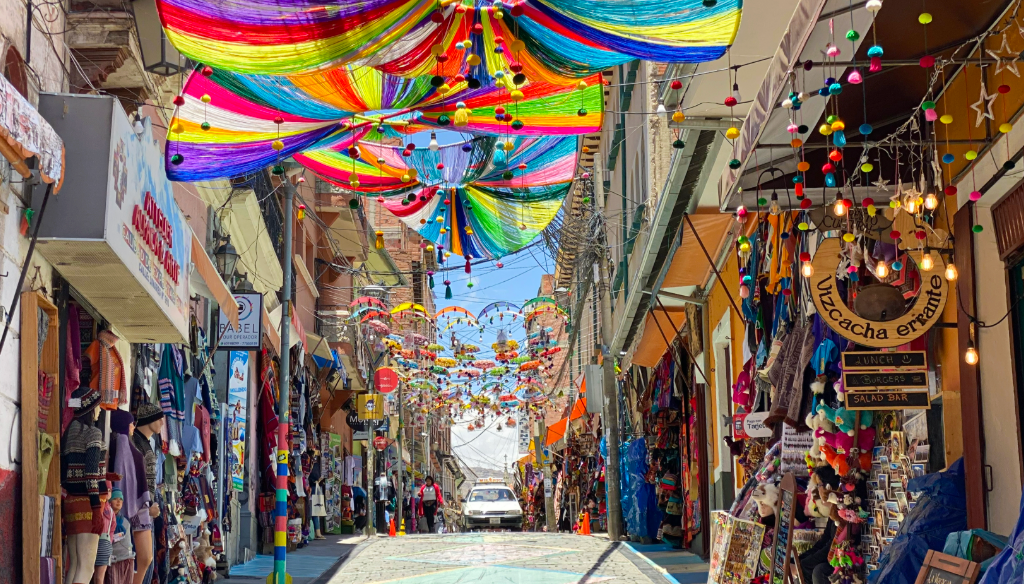
The historic centre around Plaza San Francisco and Calle Sagárnaga is the most central, most chaotic, and most affordable area. It is where the Witches Market is, where the backpacker hostels cluster, and where the noise of La Paz is at its most intense. It is ideal for budget travellers and those who want to be in the middle of everything. Less ideal for light sleepers — it is loud until late every night.
Zona Sur (Calacoto, San Miguel)
Zona Sur sits 400m lower than the city centre at around 3,200m — a difference you can physically feel. It is where La Paz’s wealthiest residents live and where the best international restaurants and modern shopping centres are found. For altitude-sensitive travellers, the lower elevation makes a real difference. The downside: it is a 20–30 minute taxi or teleférico ride from the historic centre and most sights. Comfortable but disconnected.
| Neighbourhood | Altitude | Best For | Price Level | Key Streets |
|---|---|---|---|---|
| Sopocachi | ~3,500m | Food, nightlife, culture, comfort | Mid to high | Av. 20 de Octubre, Plaza Avaroa |
| Centro / San Francisco | ~3,600m | Budget, central access, atmosphere | Budget to mid | Calle Sagárnaga, Jaén, Linares |
| Miraflores | ~3,450m | Quiet residential, families, mid-range | Mid | Av. Busch, Ecuador |
| Zona Sur (Calacoto) | ~3,200m | Altitude relief, luxury, international food | Mid to luxury | Av. Ballivian, Calle 21 |
| El Alto | ~4,100m | Authentic local experience, market culture | Budget | Calle 16 de Julio |
Mi Teleférico: The Cable Car Network That Changed a City
The Mi Teleférico system
Is one of the most remarkable pieces of urban infrastructure in the world. When I was growing up in La Paz, getting from El Alto to the city centre meant either a slow, packed minibus on a road that could take over an hour in traffic, or an expensive taxi. Today, it takes 12 minutes by cable car and costs BOB 3 (less than USD 0.50). That is not a typo. The world’s highest urban cable car network, connecting 11 lines across the canyon between La Paz and El Alto, costs less than a cup of coffee to ride.
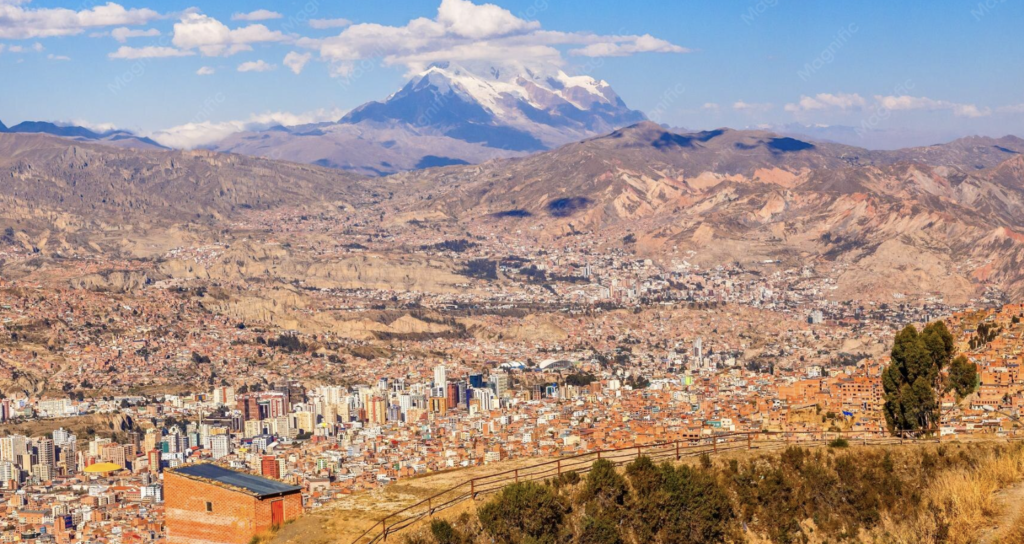
As a tourist, the teleférico is not just transport — it is one of the great city experiences in South America. Take the Red Line (Línea Roja) from the city centre up to El Alto and you get 12 minutes of unobstructed views over the canyon, the city, and — on clear days — the permanent snowcap of Mount Illimani (6,438m) to the southeast. At sunset, this cable car ride is genuinely one of the most beautiful urban experiences I have ever had in any city in the world, and I grew up here.
Lines run from approximately 6am to 10pm daily. Tickets are BOB 3 per ride (slightly more for some longer inter-line journeys). Buy tokens at any station — no advance purchase needed. A Mi Teleférico day pass (pasaje multiple) costs BOB 18 and covers unlimited rides.
The lines
| Line | Colour | Route | Journey Time | Best For |
|---|---|---|---|---|
| Línea Roja | Red | Av. El Prado (La Paz) to Ceja (El Alto) | 12 min | Best city views, Illimani panorama |
| Línea Amarilla | Yellow | El Alto to Villa San Antonio (La Paz) | 15 min | Connecting south El Alto |
| Línea Verde | Green | Sopocachi to Irpavi | 10 min | Access to Zona Sur from Sopocachi |
| Línea Azul | Blue | El Alto intercity | 8 min | El Alto market connections |
| Línea Naranja | Orange | South La Paz extension | 12 min | Obrajes and Calacoto access |
The Death Road: What It Is and What to Expect in 2026
The Camino de la Muerte — the Death Road — is the most famous tourist experience in Bolivia. It is a 64-kilometre mountain biking descent from La Cumbre pass at 4,700 metres down through cloud forest and subtropical valleys to Coroico at 1,200m. The road was rated the world’s most dangerous road in the 1990s, when heavy trucks and buses shared a single-lane gravel track with no guardrails above 600-metre drops. Today, motor traffic uses a new paved highway — the old Death Road is mostly reserved for guided mountain bike tours.
The experience is extraordinary. You descend 3,500m in altitude in a single day, passing through cloud forest, waterfalls that spray the road, and corners where the valley floor is visible 600 metres directly below. It is not actually dangerous for cyclists on a guided tour — the operators use proper full-suspension bikes, provide helmets and full protective gear, and run safety briefings before departure. Hundreds of thousands of tourists have done it. Serious accidents are extremely rare.
What most guidebooks do not tell you: the first 20 kilometres from La Cumbre descend on the new paved road at high speed. This section is exhilarating but cold — bring a warm layer you can remove. The Death Road section itself begins at around the Unduavi junction and is gravel, narrow, and where you will actually be riding above the famous drops. Book a tour from a reputable operator — not the cheapest option on the street. The difference in bike quality and safety briefing between a BOB 200 tour and a BOB 450 tour is significant.
La Paz Is a City Best Understood With a Local Guide.
Death Road biking, cholita wrestling evenings, witches market walking tours, Valle de la Luna sunset hikes, and food tours through the mercados. The best experiences here sell out — especially Death Road in high season.
The Witches Market, San Francisco and the Historic Centre
Mercado de las Brujas (Witches Market)
The Witches Market on Calle Linares and Calle Melchor Jiménez is one of the most genuinely unusual shopping experiences in South America. It is not a tourist trap — or rather, it is partly a tourist trap, but the underlying reality is authentic. The yatiri (Aymara medicine women and ritual specialists) and the vendors genuinely use these products for Pachamama offerings, good luck ceremonies, and traditional healing. The dried llama foetuses (used in house-blessing ceremonies), the herbs, the amulets, the incense — all of it has a real function in contemporary Bolivian spiritual life.
Spend an hour walking the two main streets. Buy a small bag of incense or a set of sweets (dulces) arranged in the patterns used for offerings to Pachamama — it costs almost nothing and is a genuine connection to Aymara culture. Ask before photographing vendors — some decline, and respecting that matters.
Calle Jaén and the Museums
Calle Jaén is the best-preserved colonial street in La Paz — a single cobblestone block of colourful 18th-century townhouses that now house four small museums. The Museo de Metales Preciosos (pre-Columbian gold) and the Museo del Litoral (the War of the Pacific and Bolivia’s lost coastline) are the most interesting. Entry to each museum is BOB 10–15. The street itself is free and beautiful at any time of day.
Iglesia de San Francisco
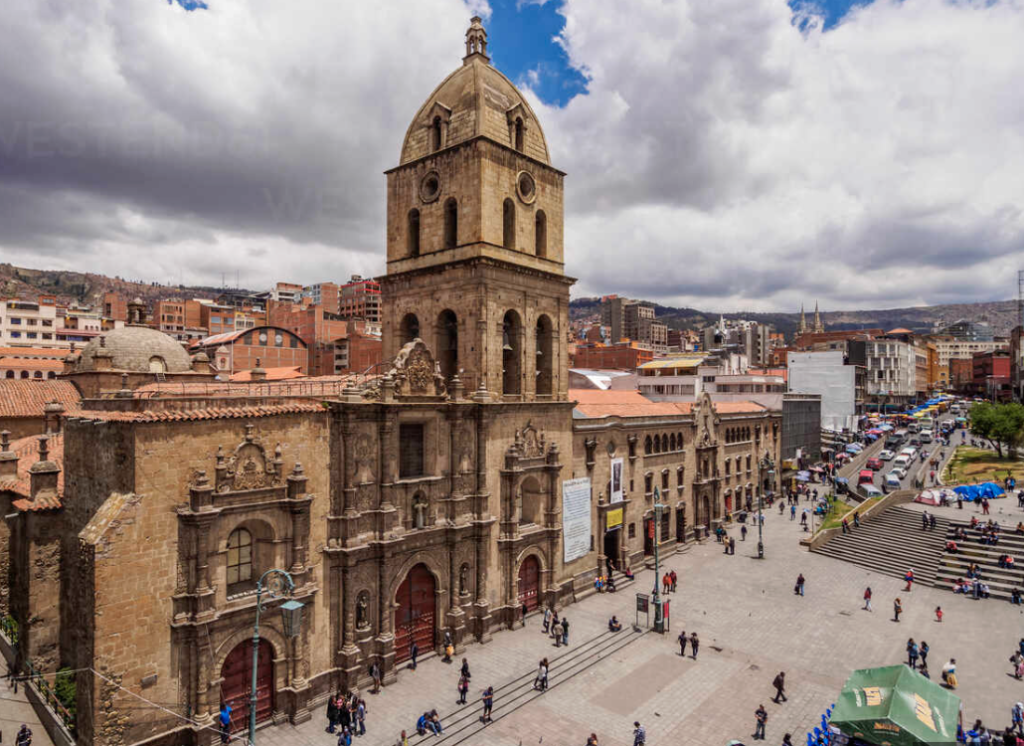
The baroque facade of the Iglesia de San Francisco, completed in 1772, dominates the plaza of the same name at the top of the pedestrian shopping street Calle Sagárnaga. The church interior is dark, ornate, and genuinely atmospheric. The rooftop terrace (accessed through the museum inside — BOB 20) gives one of the best views of the canyon and the city below.
| Sight | Location | Entry Cost | Time Needed | Best Time |
|---|---|---|---|---|
| Mercado de las Brujas | Calles Linares / Jiménez | Free to browse | 45–60 min | Morning (most vendors open) |
| Calle Jaén + museums | Calle Jaén | BOB 10–15 per museum | 1.5–2 hours | Morning to early afternoon |
| Iglesia San Francisco + rooftop | Plaza San Francisco | Free church / BOB 20 museum | 45–60 min | Late afternoon light |
| MUSEF (ethnography museum) | Calle Ingavi 916 | BOB 15 | 1–1.5 hours | Anytime |
| Plaza Murillo (govt buildings) | Historic centre | Free | 30–45 min | Weekday mornings |
| Valle de la Luna | 12 km south (Zona Sur) | BOB 20 | 2 hours | Afternoon (better light) |
Where and What to Eat in La Paz: A Local’s Honest Guide
La Paz has a food scene that most international guides underestimate significantly. The city has serious restaurants — not just tourist-facing alpaca burgers — and a street food culture that is one of the best in South America. Here is what to eat and where to find it.
Essential La Paz Food Experiences
Salteñas are the defining La Paz morning food — a baked pastry filled with a sweet-and-spicy juicy stew of beef or chicken, egg, potato, olive and raisin. They are eaten standing up between 9am and noon and nowhere else. The juice runs down your chin if you do it wrong. The best salteñas in the city come from the queue of people on Calle Linares and from dedicated salteneras in Sopocachi — arrive before 10am or they are gone.
Api con pastel is the breakfast drink: a thick warm corn-based purple drink served with a fried pastry dusted in icing sugar. It costs BOB 8 from a street vendor and is one of the genuinely great breakfasts of the Andes. Find it at any market stall in the morning.
Pique macho — a mound of chopped beef, sausage, boiled egg, chips, peppers and onions on a large plate, dressed with hot sauce — is the late-night food of La Paz. Restaurants in Sopocachi serve it well after midnight. Order it to share; a single portion is genuinely enormous.
| Food / Drink | What It Is | Where to Find It | Price (approx) |
|---|---|---|---|
| Salteña | Baked pastry with juicy meat filling | Street vendors, dedicated salteneras, mornings only | BOB 5–8 |
| Api con pastel | Warm purple corn drink + fried pastry | Markets, street carts, breakfast hours | BOB 8–12 |
| Trucha del Titicaca | Lake Titicaca trout, fried or baked | Restaurant menus citywide | BOB 45–75 |
| Pique macho | Beef, sausage, egg, chips, peppers | Restaurants in Sopocachi, late night | BOB 60–90 (sharing) |
| Sopa de mani | Rich peanut-based soup with beef and potato | Mercado Rodriguez, traditional restaurants | BOB 15–25 |
| Chicha morada | Purple corn drink (non-alcoholic) | Everywhere | BOB 5–10 |
| Singani sour | Bolivia’s national spirit (grape brandy) in a sour cocktail | Bars in Sopocachi | BOB 30–50 |
Best Areas to Eat
Sopocachi (Avenida 20 de Octubre and surrounding streets) is the best concentration of quality restaurants. Cafe Alexander, Prologo Espresso Bar, and the strip around Plaza Avaroa cover everything from serious coffee to full dinner menus. Zona Sur (Calacoto) has the city’s best international restaurants and wine bars. Mercado Rodriguez (central La Paz, open mornings) is the best market food experience — fresh juice, stalls with set lunches for BOB 20–30, and everything that is seasonal in the Bolivian highlands that week.
TRAVEL INSURANCE
You Land at 4,061 Metres. Your Coverage Should Land With You.
Altitude sickness, Death Road accidents, stolen gear — Bolivia’s remote terrain makes proper coverage non-negotiable. Medical evacuation from La Paz can cost USD 30,000–80,000 without insurance.
Adventure sports including Death Road cycling. Altitude illness. Medical evacuation. Trusted across South America since 2002.
Get IATI QuoteFlexible South America plans — high altitude, extreme sports, remote mountain areas. Compare and find the right cover.
Get ATViaje QuoteCholita Wrestling, Valle de la Luna and Other Unmissable Experiences
Cholita Wrestling
Every Sunday and some Thursdays, the El Alto suburb of La Ceja hosts cholita wrestling — a theatrical spectacle in which Aymara women in full traditional dress (the billowing skirts, bowler hats, and elaborate shawls of the Bolivian cholita) wrestle each other and male opponents in a lucha libre ring. The crowd is overwhelmingly local. The drama is entirely intentional — it is wrestling, not sport, and the storylines involve heroes, villains, and spectacular costume-ripping finishes. It is one of the most joyful, specific, and genuinely Bolivian experiences available to visitors. Tours from the city centre run BOB 120–180 including return transport and entry.
Valle de la Luna
The Valle de la Luna (Valley of the Moon) is 12 kilometres south of the city centre in the Zona Sur area. It is a maze of eroded clay spires and canyons, created by millions of years of rain erosion on the soft sedimentary rock of the canyon walls. The walking trail through the valley takes about 1.5 hours and is genuinely spectacular in the late afternoon when the light turns the clay gold and red. Entry is BOB 20. Take a taxi from Zona Sur (BOB 30–40 return) or the teleférico Green Line to Irpavi and walk 15 minutes.
The Mirador Killi Killi
The Mirador Killi Killi is a free public viewpoint in the barrio of Villa Pabón, about 15 minutes on foot from the Plaza San Francisco. It sits above the canyon rim and gives a 270-degree panorama of La Paz — the entire bowl of the city, El Alto on the horizon, and Illimani to the southeast. Sunset from here is extraordinary. It is safe, free, and almost entirely unmentioned in most tourist guides. Go.
Mercado Lanza and Mercado Rodriguez
Two markets that reward early morning visits. Mercado Lanza (near the San Francisco church) has a good food court on the upper floors — set lunches for BOB 20–30, fresh juice stalls, and the particular energy of a market that serves local workers, not tourists. Mercado Rodriguez (Zona Central, open 6am–2pm daily) is the main fresh produce market and one of the most visually extraordinary spaces in the city — chuño (freeze-dried potato), quinoa in every colour, coca leaves, and the widest range of Andean produce outside of a harvest festival.
La Paz Practical Guide: Safety, Getting Around, Budget and Tips
Safety
La Paz is broadly safe for tourists but requires the same awareness you would apply in any large Latin American city. Express kidnappings (secuestros express) — where tourists are taken by fake taxi drivers and driven to ATMs — have been reported, predominantly targeting solo travellers hailing taxis on the street at night. The solution is simple: use only radio taxis (called by phone or from a hotel) or the teleférico after dark. Do not hail taxis on the street at night, particularly in the historic centre. The Witches Market area and Calle Sagárnaga are pickpocket-heavy in tourist hours — use a money belt and carry only what you need.
Getting Around
The Mi Teleférico is the best way to move across the city — cheap, fast, safe, and spectacular. For trips the teleférico does not cover, use radio taxis (safer and only slightly more expensive than minibuses). Fares within the city run BOB 15–30 for most journeys. The blue-and-white minibuses (micros and trufis) are the cheapest option (BOB 2–4) but the routes are complex for a first-time visitor. Uber operates in La Paz and is a safe, transparent option — rates are slightly above local taxis but significantly below what uninformed tourists pay.
Budget
La Paz is affordable by South American standards and extremely affordable by any international measure. A salteña breakfast costs BOB 15. A set market lunch costs BOB 25. A restaurant dinner in Sopocachi runs BOB 60–120. The teleférico costs BOB 3. A Death Road tour runs BOB 300–500. A mid-range hotel in Sopocachi runs USD 35–60 per night. Travellers on a careful budget can live very well in La Paz for USD 40–60 per day including accommodation.
| Budget Level | Daily Cost (USD) | Accommodation | Food | Activities |
|---|---|---|---|---|
| Backpacker | $30–50 | Hostel dorm ($10–18) | Markets + street food ($8–12) | Teleférico, free sights, museum entry |
| Mid-range | $60–90 | Private guesthouse in Sopocachi ($35–60) | Mix of restaurants ($20–30) | 1 guided activity per day (Death Road, etc.) |
| Comfort | $120–200 | Boutique hotel ($70–130) | Good restaurants ($40–60) | All activities including cholita wrestling + Valle de la Luna tours |
Connections Through Bogota, Lima or Miami Got Disrupted? Claim What You Are Owed.
Under EU and UK261 regulations, delayed or cancelled flights can entitle you to up to 600 EUR in compensation. AirHelp handles the entire process — no forms, no calls, no stress.
No win, no fee. Check takes 2 minutes.Onward from La Paz: Where to Go Next
La Paz is the hub from which most Bolivia itineraries radiate. The three classic onward routes are south to Uyuni (the salt flats), north to Copacabana and Lake Titicaca (covered in full in our Copacabana guide), and east to the Yungas and Rurrenabaque (Amazon jungle and pampas). Each one takes you into a completely different Bolivia.
| Destination | How to Get There | Duration | Why Go |
|---|---|---|---|
| Copacabana / Lake Titicaca | Bus from Villa Fatima terminal | 3–3.5 hours | Sacred lake, Isla del Sol, Peru border crossing |
| Salar de Uyuni | Overnight bus or domestic flight | 10–12 hrs / 50 min | World’s largest salt flat — mirror effect, pink flamingos |
| Sucre (colonial capital) | Bus or flight | 13 hrs / 1 hr | Most beautiful city in Bolivia, mild climate, dinosaur tracks |
| Rurrenabaque (Amazon) | Domestic flight (TAM/Amaszonas) | 30 min | Pampas tours, jaguar spotting, Amazon jungle immersion |
| Potosi | Bus | 7–8 hours | Highest city in the world (4,090m), silver mine history, colonial architecture |
Copacabana and Isla del Sol: The Complete Guide
Just 3.5 hours from La Paz — the sacred lake, the Sun Island, the Basilica, and one of the great Andean sunsets. Read the full guide.
Frequently Asked Questions: La Paz Bolivia 2026
Is La Paz safe for tourists in 2026?
Yes, with standard precautions. The main risk is fake taxi drivers who target tourists hailing cabs on the street at night. Use radio taxis (ordered by phone or through your hotel) or Uber after dark. Petty theft in crowded tourist areas (Sagárnaga, Witches Market) is common — use a money belt and carry only what you need. The teleférico is safe at all hours and eliminates most late-night transport concerns.
How bad is the altitude in La Paz?
The airport is at 4,061m — one of the highest in the world. The city centre is at 3,600m. Most visitors experience some symptoms (headache, fatigue, shortness of breath on stairs) in the first 24–48 hours. These improve significantly by day two. Drink water constantly, avoid alcohol on night one, eat light, and move slowly. Coca tea genuinely helps. Diamox (acetazolamide) is available at pharmacies without prescription.
What is the best neighbourhood to stay in La Paz?
Sopocachi is the best all-round choice for most travellers — great food and restaurants, safe, walkable, slightly lower altitude than the centre, and good value. The historic centre (San Francisco area) is ideal for budget travellers who want to be close to the sights. Zona Sur (Calacoto) is best for those who need the lower altitude (3,200m) and do not mind being further from the main sights.
How much does the Death Road bike tour cost?
Reputable Death Road tours cost BOB 350–500 (approximately USD 50–75) including pick-up, full gear, bike, guide, and lunch. Avoid operators offering BOB 150–200 tours — the cheaper options cut corners on bike quality and safety briefings. Book through your hotel or a recommended operator (Gravity Bolivia is the most established). The experience is full day — depart around 7am, return by 5pm.
Can I use US dollars in La Paz?
USD are accepted in some tourist-facing businesses and hotels, typically at a slight discount versus the official rate. For local restaurants, markets, the teleférico, and most shops you need Bolivian Bolivianos (BOB). ATMs are widely available in La Paz — use those in bank lobbies or shopping centres rather than street ATMs. Withdraw enough for your stay as ATMs in smaller Bolivia towns can run dry.
What is the Mi Teleférico and how do I use it?
Mi Teleférico is La Paz’s urban cable car network — 11 colour-coded lines connecting La Paz and El Alto. Tickets cost BOB 3 per ride (about USD 0.45). Buy tokens at any station. Lines run roughly 6am to 10pm daily. The Red Line from central La Paz to El Alto is the most scenic ride and is strongly recommended as a city experience, not just transport.

Is cholita wrestling real?
It is theatrical wrestling in the tradition of lucha libre — the outcomes are predetermined and the drama is intentional. But the cholita wrestlers are real athletes, the Aymara cultural context is genuine, and the crowd is overwhelmingly local Bolivians who take enormous pride in it. It is not a tourist gimmick — it is a real cultural phenomenon that happens to be accessible to visitors. Go on a Thursday or Sunday.
What is the best time of year to visit La Paz?
May through October is the dry season — clear skies, cold nights (2–5C), and the best visibility of Illimani. June through August are the coldest months but the driest and most reliable for weather. November through March is the rainy season — daily afternoon thunderstorms, humid, but greener and warmer. Carnival (February/March) is spectacular if you want cultural immersion at the cost of crowded accommodation.
How do I get from La Paz to Machu Picchu?
The standard route is: bus La Paz to Copacabana (3.5 hrs), bus Copacabana to Puno (3.5 hrs), bus or train Puno to Cusco (6–7 hrs), train Cusco to Aguas Calientes (3.5 hrs), bus to Machu Picchu. Total: 2–3 days depending on connections. Alternatively, fly La Paz to Cusco with a Lima connection (~3 hours total flight time) and take the train from Cusco. See our Machu Picchu guide for 2026 ticketing rules.
What should I not miss in La Paz?
The non-negotiables: the Mi Teleférico Red Line at sunset, salteñas for breakfast on day two (not day one — your stomach needs the altitude adjustment first), the Witches Market on Calle Linares, Mirador Killi Killi at golden hour, and the Death Road if you have a full day. If you have more time: cholita wrestling on Sunday, Valle de la Luna, Mercado Rodriguez at 8am, and one long dinner in Sopocachi.
Salar de Uyuni: Mirror Effect, Tours and Everything You Need to Know
La Paz to Uyuni is Bolivia’s most iconic travel route. Our full guide covers the mirror effect science, the best tours, and the Bolivia-Chile crossing.
Final Thoughts: The City That Gets Under Your Skin
I have travelled most of South America and a good part of the world. And I come back to La Paz. Not because it is the most comfortable, or the most beautiful in the conventional sense, or the easiest city to navigate when you cannot breathe properly and your head hurts. I come back because it is one of the most alive cities I have ever been in. The cable cars, the cholitas, the markets, the altitude light that makes everything look slightly more dramatic than it would be anywhere else — La Paz has a quality of intensity that I have not found in many places.
Give it three days minimum. That is long enough to acclimatise properly, to do the Death Road, to get the teleférico at sunset, to eat your way through Sopocachi, and to understand what this city actually is. Three days is rarely enough to want to leave.
From La Paz the entire Andes opens up — north to Copacabana and Peru, south to Uyuni and Chile, east to the Amazon. uncovertheandes.com covers all of it in the same depth as this guide. If you are building a Bolivia itinerary, a Peru itinerary, or the full Andean circuit, you will find everything you need across our guides. We have been here, we know these places, and we write only what is actually true. See you in La Paz.
La Paz Is Waiting. Lock In Your Fare Today.
Fly into El Alto International (LPB) — one of the most dramatic airport arrivals in the world at 4,061m. Compare all airlines and routes in a single search. Most travellers save 20–30% by comparing here before booking directly.
Skyscanner — 1,200+ airlines. Free to search. No hidden fees.