

On day three of the Salkantay Trek, at a campsite sitting at 3,900 metres with no electricity within a day’s walk in any direction, your camera battery is at 12%, your phone — which you’ve been using as a GPS, a headlamp controller, and your emergency communication device — is at 8%, and your backup headlamp has started dimming. The power bank you chose before leaving Lima is either going to be the most useful piece of gear in your bag, or a reminder that you should have researched this more carefully.
Power management is one of the most underplanned aspects of Andes and South America travel. Cities like Cusco, La Paz, Medellin, and Buenos Aires have plenty of charging infrastructure — guesthouses, cafes, airports. But the moment you leave urban infrastructure for a multi-day trek, a remote altiplano crossing, or a Patagonia circuit, you are operating on whatever charge you brought with you plus whatever your power bank can hold. Getting this right means your phone stays alive for navigation and emergencies, your camera keeps shooting, and your headlamp works on the 4 AM trail start.
This guide covers the best power banks for Andes trekking and South America travel in 2026 — from ultralight options for Inca Trail day-trippers to high-capacity stations for multi-week expedition photographers. Every recommendation is linked to Amazon with my affiliate code.
Best Expedition Backpacks for Andes Trekking 2026
The bag that carries your power bank system — how to pack electronics securely for multi-day altitude trekking.
How Much Capacity Do You Actually Need? The Andes Power Planning Framework
Power bank capacity is measured in milliamp-hours (mAh). Understanding how many mAh your devices require per day — and how many days you will spend off-grid — is the foundation of choosing the right power bank. Under-estimate and you run out of charge mid-trek. Over-estimate and you carry dead weight at altitude, where every extra 100 grams compounds over distance.
Device power consumption per day
Smartphone (iPhone 14 / Samsung Galaxy S23 equivalent): a fully depleted battery holds approximately 3,200–3,900 mAh. With GPS tracking active, camera use, and altitude-adjusted screen brightness, expect 1.5–2 full charge cycles per day on an active trekking day — approximately 5,000–7,000 mAh of power bank capacity per smartphone per day of heavy use. For light use (mainly emergency communication), 3,000 mAh per day is adequate.
Mirrorless camera (Sony A7 series, Canon R series): approximately 600–900 mAh per battery charge. A full trekking day of photography — 300–500 shots — typically requires 1.5–2 battery charges, or 1,000–1,800 mAh from a power bank. DSLR batteries vary but are in a similar range. Action cameras (GoPro) consume approximately 1,250 mAh per full charge.
Headlamp with USB charging port: 1,200–1,800 mAh per full charge. On a multi-day trek with pre-dawn starts and evening use, plan for one full headlamp charge every 3 days.
The table
| Device | Battery Capacity | Daily Power Bank Draw | Days on 20,000 mAh Bank |
|---|---|---|---|
| Smartphone (heavy GPS/camera use) | 3,200–3,900 mAh | 5,000–7,000 mAh | 2.5–4 days |
| Smartphone (light use — emergency only) | 3,200–3,900 mAh | 2,000–3,000 mAh | 5–8 days |
| Mirrorless camera battery | 600–900 mAh | 1,000–1,800 mAh | 10–15 charges |
| GoPro / action camera | 1,250 mAh | 1,250 mAh | 12–14 charges |
| USB headlamp | 1,200–1,800 mAh | 400–600 mAh/day | 30+ days |
| Earbuds (AirPods / similar) | 450–600 mAh (case) | 450 mAh | 35+ charges |
| Kindle / e-reader | 1,200 mAh | 100–200 mAh/day | 80–100 days |
The practical formula for a 5-day off-grid Andes trek with phone + camera: (5,000 mAh phone daily draw x 5 days) + (1,500 mAh camera daily draw x 5 days) = 32,500 mAh total. A 20,000 mAh power bank covers roughly 60% of this — so you need to manage charging windows carefully, or carry a 26,000 mAh+ bank. For most trekkers who are moderate phone users and charge the camera every other day, a 20,000 mAh bank covers a 5-day trek comfortably. For photographer-trekkers shooting heavily every day, consider 26,000 mAh or carry two smaller banks.
Airline Rules for Power Banks: What You Can and Cannot Carry to South America
Power banks are subject to specific airline regulations that differ from standard checked luggage rules. Getting this wrong means having your power bank confiscated at the airport — a bad start to any Andes trip.
The key rule: Power banks must travel in carry-on luggage only — they cannot be checked. This applies universally across all major airlines including LATAM, Avianca, American, United, and all European carriers. The reason is lithium battery fire risk: checked baggage hold fires are harder to control than cabin fires, so lithium batteries above a threshold capacity must stay accessible in the cabin.
The capacity limits: Power banks up to 100Wh (approximately 27,000 mAh at 3.7V) are permitted in carry-on without airline approval. Power banks between 100Wh and 160Wh require airline approval before the flight — check with your specific carrier when booking. Power banks above 160Wh are not permitted on passenger aircraft under any circumstances.
Converting mAh to Wh: The formula is (mAh x voltage) / 1000 = Wh. Most power banks operate at 3.7V, so a 20,000 mAh bank = (20,000 x 3.7) / 1000 = 74 Wh — well within the 100Wh carry-on limit. A 26,800 mAh bank = 99.16 Wh — also within limit but close enough to verify with your airline for international flights to South America.
| Capacity | Wh Equivalent | Airline Rule | Notes |
|---|---|---|---|
| Up to 20,000 mAh | ~74 Wh | Carry-on permitted — no approval needed | All options in this guide under this threshold |
| 20,001–26,800 mAh | ~74–99 Wh | Carry-on permitted — no approval needed | Verify with airline for some international routes |
| 26,801–43,200 mAh | ~100–160 Wh | Carry-on only — airline pre-approval required | Contact airline 48h before flight |
| Above 43,200 mAh | 160+ Wh | Not permitted on passenger aircraft | Use smaller banks in parallel instead |
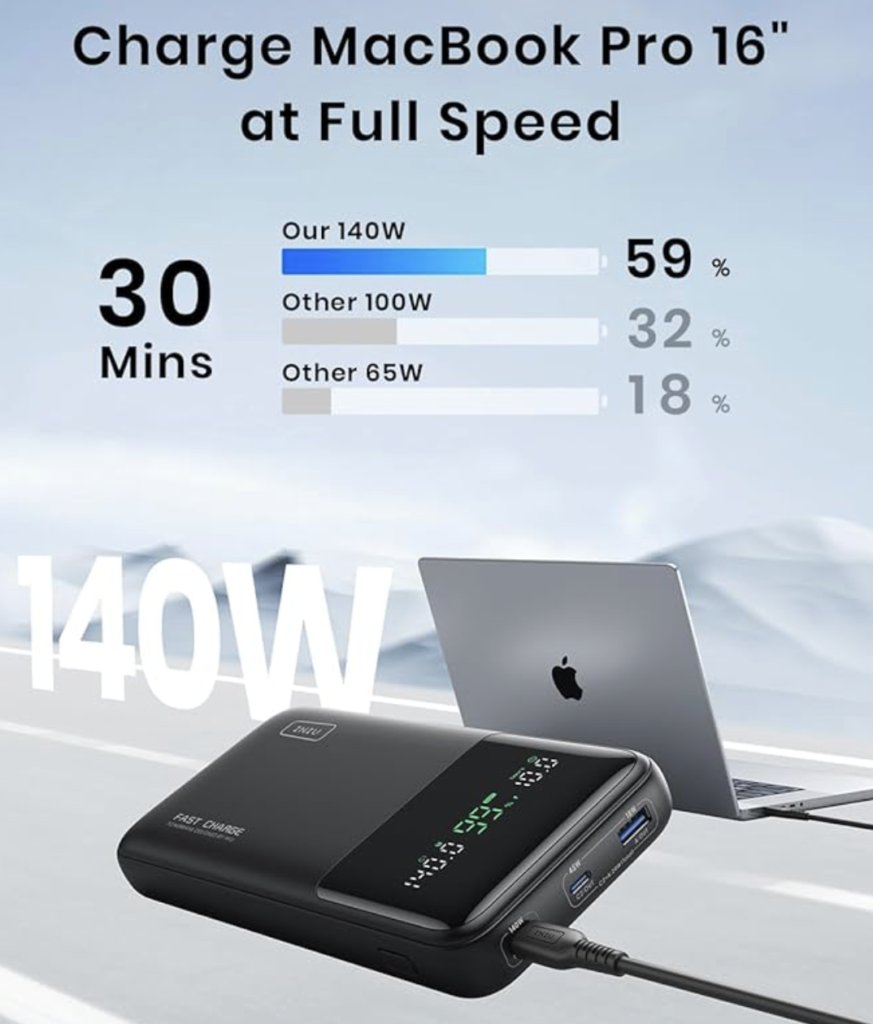
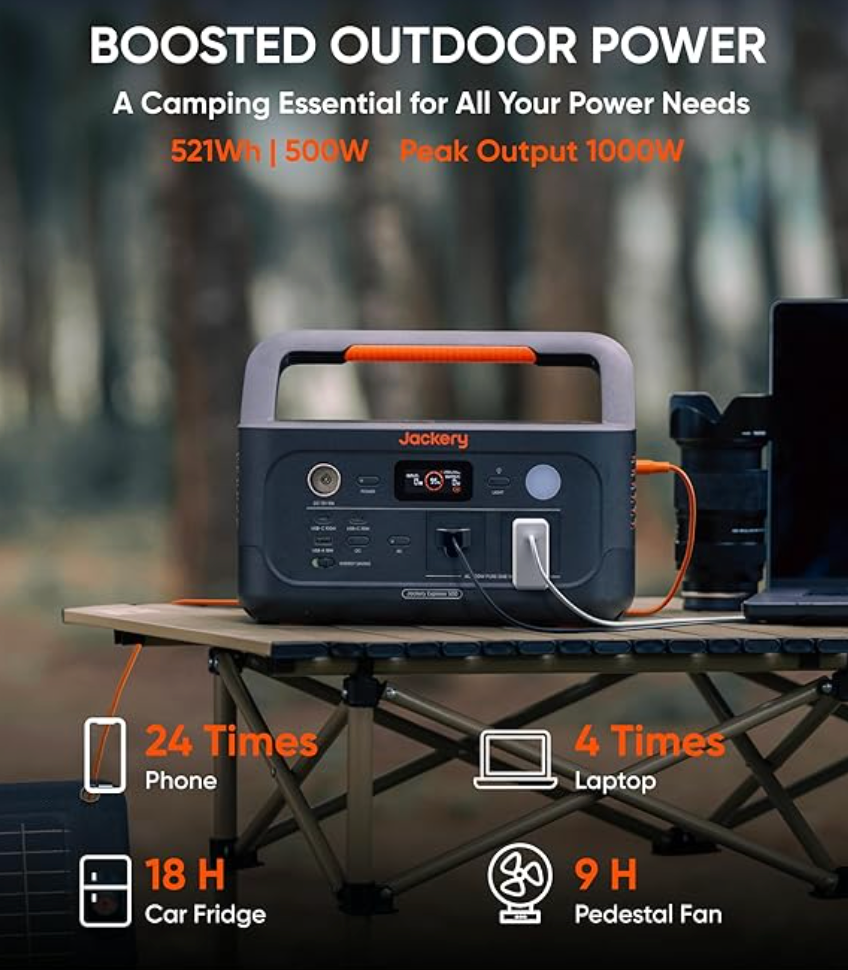
The 6 Best Power Banks for Andes Trekking and South America Travel 2026

Power Bank Temperature Performance at High Altitude
Lithium batteries — in both your power bank and your devices — lose charge capacity in cold temperatures. This is a specific and often overlooked challenge for Andes trekking, where pre-dawn temperatures at 4,000+ metres regularly drop below 0°C. A power bank that shows 80% charge at your Cusco guesthouse may show 50% the next morning at a 4,200m campsite if it was left in an exterior pack pocket overnight.
The cold temperature effect: Lithium-ion cells operate optimally between 15°C and 35°C. Below 0°C, effective capacity drops to approximately 70–80% of rated capacity. Below -10°C, it drops further to 50–60%. This effect is temporary — the capacity returns when the battery warms up — but it means your power bank’s rated mAh is not available to you at the coldest points of the trek.
Cold-weather management strategies: Sleep with your power bank inside your sleeping bag or in a chest pocket against your body. Body heat keeps lithium cells above 10°C through the night, preserving capacity for the morning start. Carry the power bank in an interior jacket pocket rather than an exterior pack pocket during cold sections of the trek. If a power bank feels cold to the touch, warm it against your body for 10–15 minutes before attempting to charge devices — cold batteries charge inefficiently and can reduce overall cycle life.
Best Portable Solar Panels for Andes and Patagonia 2026
The companion power guide — how to generate power on the trail with portable solar panels that pair with the power banks in this article.
Charging Strategy for Multi-Day Off-Grid Andes Trekking
The difference between running out of power on day 4 and having adequate charge throughout a 7-day trek is usually not which power bank you bought — it is how you managed the charging sequence. A systematic approach to charging order and timing makes a significant difference to available power at the end of the trek.
Charge your power bank to 100% before leaving the last city with reliable electricity. This sounds obvious but is frequently forgotten — many trekkers arrive at the trailhead with a half-charged bank. In Cusco before the Inca Trail, in Uyuni town before the altiplano crossing, in Puerto Natales before the W Circuit: charge everything to 100% the night before departure.
Priority charging order: Headlamp first (safety critical, lowest capacity, fastest to charge), then phone (communication and GPS, highest daily draw), then camera batteries (performance critical for photographers but not safety critical). Never let your phone drop below 20% without charging — GPS and emergency communication require a functional phone above all else.
At refugios and mountain huts: Many multi-day Andes trek refugios and some mountain huts in Patagonia have charging outlets, but supply is limited and demand is high. Carry a short USB-C to USB-C cable in your hip belt pocket and charge opportunistically whenever an outlet is available, even for 30–45 minutes. A 30-minute top-up on a fast-charger-compatible phone at a refugio extends your power bank capacity by 1.5–2 full phone charges.
Best Base Layers for High-Altitude Andes Trekking 2026
Keep your electronics warm and your body warm with the right layering system — cold temperatures affect both.
Cables, Adapters, and Accessories for Andes Power Management
A power bank without the right cables is useless. South America uses a mix of plug types — Argentina, Uruguay, and Brazil use Type I (the distinctive three-flat-pin angled plug used in Australia); Peru, Bolivia, Colombia, Chile, and Ecuador use Type A and Type C (standard US two-flat-pin). A universal travel adapter covers all of these from one device.
Essential cables to pack: One USB-C to USB-C cable (for charging the power bank itself and for phone-to-bank transfer); one USB-C to Lightning if you use Apple devices alongside USB-C cameras; one short Micro-USB cable if any of your devices use the older standard (some older headlamps and GoPro accessories). Keep cables in a small zippered pouch in the top lid of your pack — accessible without unpacking everything.
Multi-port charger for city stays: A GaN (Gallium Nitride) multi-port wall charger — Anker, Baseus, and Ugreen all make compact 65W+ options — lets you charge your power bank and up to 3 devices simultaneously from a single wall outlet. This is particularly useful in guesthouses where outlets are limited. A 65W 3-port GaN charger weighs approximately 100g and eliminates the need for multiple wall adapters.
Power Banks vs Solar Panels: Which Is Right for Your Andes Trip?
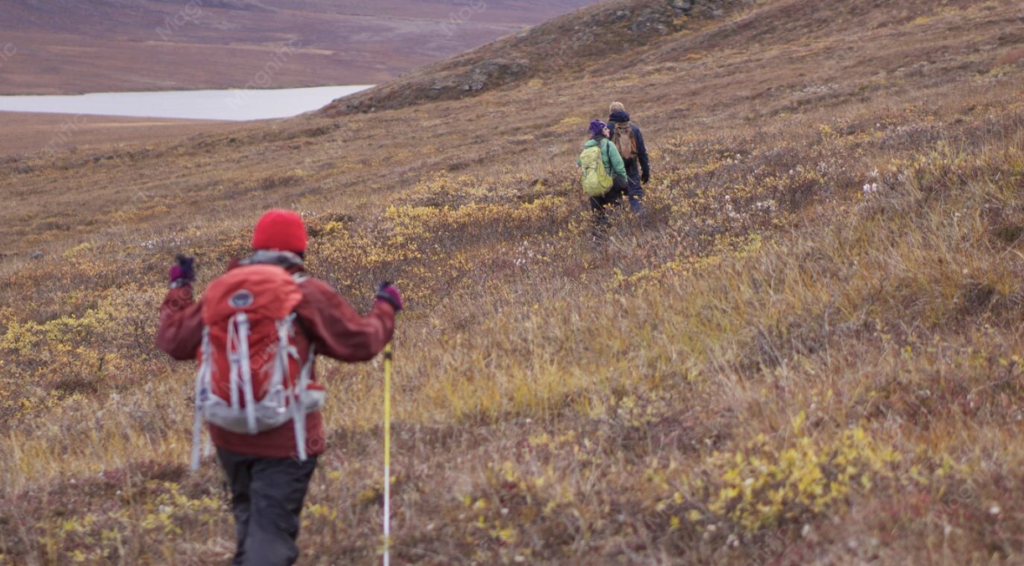
So Power banks and portable solar panels serve different roles in a travel power system, and understanding the distinction helps you decide whether to carry one, the other, or both.
Power banks store electricity and deliver it on demand, regardless of weather or time of day. They are reliable, predictable, and compact. Their limitation is finite capacity — once depleted, they need an electrical input to recharge. On the Inca Trail with 4 days off-grid, a 20,000 mAh bank plus conservative usage is sufficient. On a 10-day remote Patagonia crossing, it may not be.
Portable solar panels generate electricity from sunlight, which means theoretically unlimited energy for as long as the sun shines. Their limitation is dependency on weather and sunlight angle — in the Patagonian cloud and rain that covers 50%+ of W Circuit days, a solar panel is almost useless. On the Bolivian altiplano in dry season with 10–12 hours of direct sun per day, a solar panel can fully recharge a 20,000 mAh power bank in a single day of trekking.
The ideal Andes power system: A 20,000 mAh power bank as the primary store, plus a 21W portable solar panel for routes with reliable sun exposure (Peru dry season, Bolivia altiplano). The solar panel recharges the power bank on the go, effectively extending your off-grid capability indefinitely in good conditions. The companion guide to this article covers the best portable solar panels for exactly this use case.
Conclusion: Power Management Is Expedition Planning, Not an Afterthought
The trekkers who run out of phone battery at 4,200 metres on the Salkantay are not unlucky. They are underprepared. The information in this guide — how much capacity you need, which banks deliver it at the right weight, how to manage charging sequences off-grid, and how cold temperatures affect performance — gives you everything you need to arrive at the trailhead with the right system and the confidence that it will last.
A 20,000 mAh power bank, charged to 100% before the trek, managed with a sensible charging priority order, and kept warm in your inner layers at night, will cover the standard Inca Trail and Salkantay for the vast majority of trekkers. For extended expeditions, supplement with a portable solar panel — the companion guide to this article covers the best options for every Andes and Patagonia route.
The rest of your Andes gear system — boots, layering, backpacks, and destination guides — is covered throughout the Gear Lab Hub at Uncover the Andes. Everything is linked. Everything is tested against the specific conditions you will actually face. See you on the trail.